Story code: ST-001197
Part 1: The Fake Policy
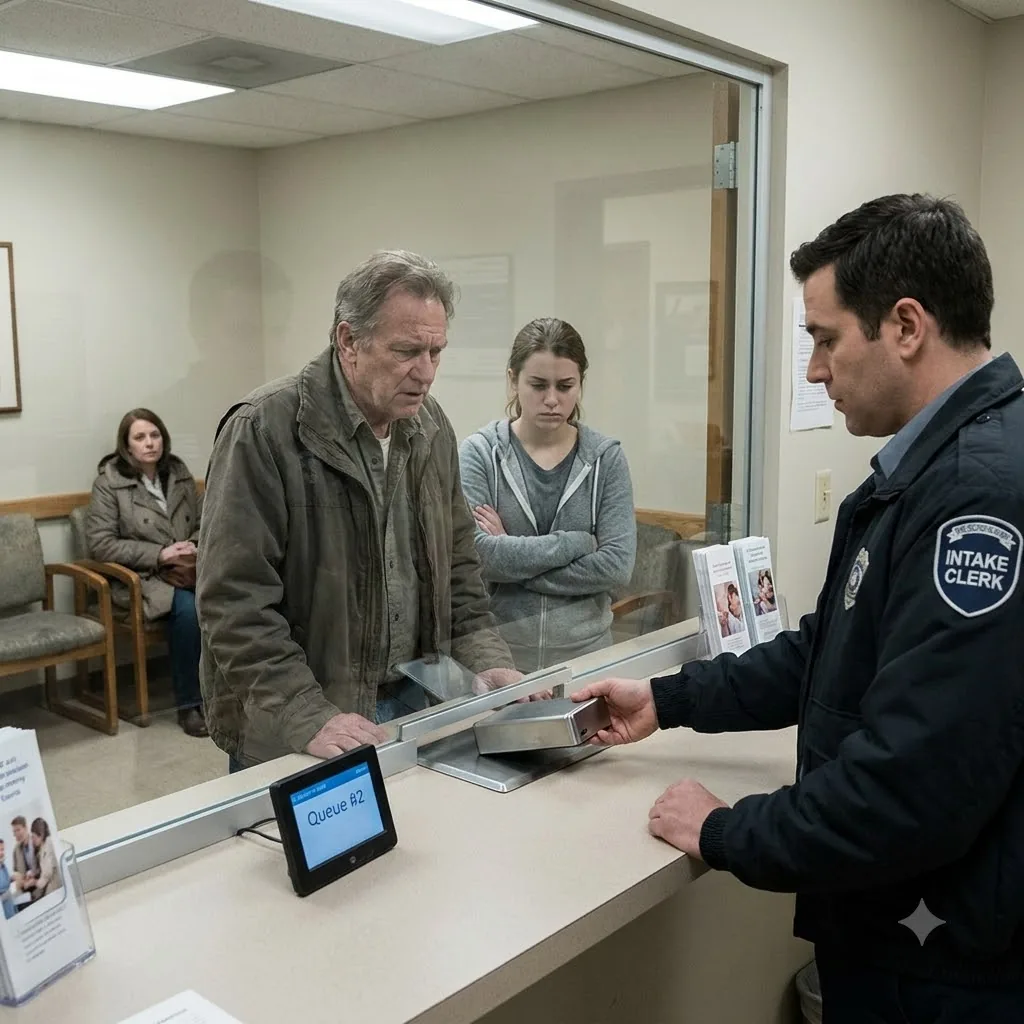
The security footage from the Elysium Upload Clinic Intake Lobby shows Vance Sterling sliding a brushed titanium Model-7 Consciousness Drive back behind the glass partition, confidently announcing a brand-new, unwritten regulatory update that blocks Sarah Miller from taking her deceased father’s mind home. This invented policy, delivered with smooth corporate authority, immediately denies Sarah her legal right to the drive containing David Miller’s consciousness, even though she is standing at the counter with the valid executor credentials already glowing on her terminal. In the background, the clinic’s pneumatic tubes hum with ordinary activity, masking the sudden stall tactic.
As the investigator reviewing these administrative logs and security recordings, I have verified the exact sequence of this interaction. Sarah does not raise her voice or gesture wildly. She stands perfectly still, her hands resting flat on the counter. “I need the system registration paperwork for this hold,” she says. The desk microphone captures her clear, level tone.
Vance taps his terminal screen with practiced ease, offering a patronizing smile. “It’s a recent security amendment, Ms. Miller. Section 404-B. It hasn’t populated on the public portal yet, but our system now requires a forty-eight-hour holding quarantine for all high-capacity consciousness drives to verify data integrity before physical release.”
My audit of the clinic’s database for that afternoon shows a completely different story. There was no Section 404-B. The clinic’s servers had already marked David Miller’s Model-7 drive as cleared for immediate pickup. Vance’s screen showed a green release prompt, which he manually minimized to keep the drive behind the counter. This was a classic retention stall-a tactic designed to keep valuable hardware in the clinic’s physical custody long enough to trigger daily storage and maintenance fees.
Sarah tilts her head slightly, her gaze fixed on the terminal screen Vance is shielding. “If it is a system requirement, the clinic registration terminal should display the pending hold code. Please turn the screen so I can verify the registry number.”
“I can’t do that, Ms. Miller,” Vance replies, his voice rising slightly in pitch. “Internal database views are restricted to staff. But I assure you, the policy is mandatory.”
Before Sarah can respond, the customer at the adjacent station, Marcus Thorne, interrupts. He has been waiting to retrieve diagnostic files for his wife’s telemetry unit. His face is flushed, and he taps a printout of his transaction receipt against the counter. “Excuse me, but I’ve been waiting forty minutes. You told me the exact same thing about Section 404-B. My wife’s telemetry unit is just a diagnostic sync, not a consciousness drive. How does a posthuman holding quarantine apply to a basic hardware log?”
Vance freezes. The security camera captures the sudden stillness in his shoulders. He looks from Marcus to Sarah, his mouth slightly open, completely unable to explain how a rule supposedly designed for delicate consciousness transfers suddenly applies to a standard, non-sentient medical device.
The security footage from the Elysium Upload Clinic Intake Lobby shows Vance Sterling sliding a brushed titanium Model-7 Consciousness Drive back behind the glass partition, confidently announcing a brand-new, unwritten regulatory update that blocks Sarah Miller from taking her deceased father’s mind home. This invented policy, delivered with smooth corporate authority, immediately denies Sarah her legal right to the drive containing David Miller’s consciousness, even though she is standing at the counter with the valid executor credentials already glowing on her terminal. In the background, the clinic’s pneumatic tubes hum with ordinary activity, masking the sudden stall tactic.
As the investigator reviewing these administrative logs and security recordings, I have verified the exact sequence of this interaction. Sarah does not raise her voice or gesture wildly. She stands perfectly still, her hands resting flat on the counter. “I need the system registration paperwork for this hold,” she says. The desk microphone captures her clear, level tone.
Vance taps his terminal screen with practiced ease, offering a patronizing smile. “It’s a recent security amendment, Ms. Miller. Section 404-B. It hasn’t populated on the public portal yet, but our system now requires a forty-eight-hour holding quarantine for all high-capacity consciousness drives to verify data integrity before physical release.”
My audit of the clinic’s database for that afternoon shows a completely different story. There was no Section 404-B. The clinic’s servers had already marked David Miller’s Model-7 drive as cleared for immediate pickup. Vance’s screen showed a green release prompt, which he manually minimized to keep the drive behind the counter. This was a classic retention stall-a tactic designed to keep valuable hardware in the clinic’s physical custody long enough to trigger daily storage and maintenance fees.
Sarah tilts her head slightly, her gaze fixed on the terminal screen Vance is shielding. “If it is a system requirement, the clinic registration terminal should display the pending hold code. Please turn the screen so I can verify the registry number.”
“I can’t do that, Ms. Miller,” Vance replies, his voice rising slightly in pitch. “Internal database views are restricted to staff. But I assure you, the policy is mandatory.”
Before Sarah can respond, the customer at the adjacent station, Marcus Thorne, interrupts. He has been waiting to retrieve diagnostic files for his wife’s telemetry unit. His face is flushed, and he taps a printout of his transaction receipt against the counter. “Excuse me, but I’ve been waiting forty minutes. You told me the exact same thing about Section 404-B. My wife’s telemetry unit is just a diagnostic sync, not a consciousness drive. How does a posthuman holding quarantine apply to a basic hardware log?”
Vance freezes. The security camera captures the sudden stillness in his shoulders. He looks from Marcus to Sarah, his mouth slightly open, completely unable to explain how a rule supposedly designed for delicate consciousness transfers suddenly applies to a standard, non-sentient medical device.