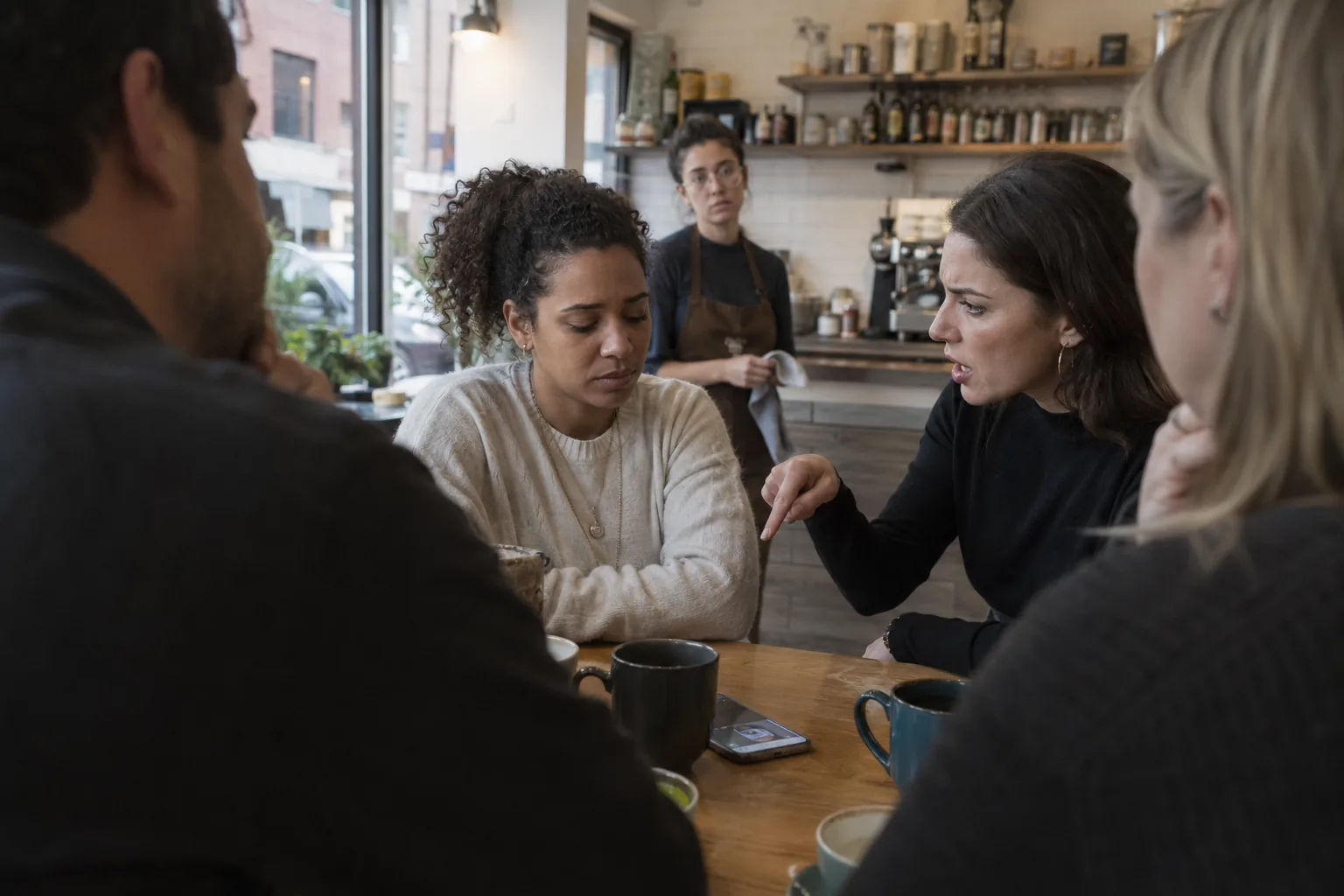
Story code: ST-000107
Part 3: The Backup Contact
Nina’s hand stayed on the chair back, but she did not sit. The words about the backup contact had landed harder than anything else in the room. Even from the counter, Mara could see the change in the line of Nina’s shoulders. She straightened, then leaned in again, as if choosing between pushing forward and stepping back.
“That doesn’t mean what you want it to mean,” Nina said.
Maya pulled the next page free with one careful motion and laid it flat beside the first. She did not scatter the papers. She kept them stacked and aligned, each date visible where it mattered. The top line showed Rosie’s name again. Below it, the same repeating blocks: morning meds, pickup, pharmacy, evening check-in. At the bottom right, under primary contact, Evan’s name was printed from an old form copied into the log. Under backup contact, Nina Hart was written in the same neat hand as the rest of the record.
No one at the table touched the page.
Evan looked down at the line with his name and then at Nina. The app profile still glowed on Maya’s phone beside the paper. His photo, his first name, the matched heart icon, all of it stayed in plain sight. The family resemblance that had first looked like coincidence now sat next to his last name in the care notes. The room did not need anyone to make a speech about it.
Nina spoke louder. “A backup contact is not a caregiver.”
“No,” Maya said. “But a backup contact gets the calls when they are offered.”
Nina opened her mouth, closed it, and then reached for the page as if she meant to flip it. Maya placed two fingers on the corner before Nina could touch it. The gesture was small and steady. Nina drew her hand back.
Mara watched Evan lift his cup again and set it down untouched. “You said Maya kept dropping things,” he said.
Nina gave a quick shake of her head. “I said Maya makes everything harder.”
Maya slid one more item onto the table: not a dramatic reveal, just her phone turned from the dating app to Rosie’s message thread. The screen showed routine, not argument. Pickup reminders. A photo of a prescription bag. A short text stamped 3:28 p.m. from two days earlier: Can you do today? Nina not answering. Another from the next morning: Still no reply from Nina. I already went.
The barista set down a to-go sleeve at a nearby table and kept looking over. The man with the half-closed laptop let it stay shut.
Nina pointed at the phone screen instead of the messages themselves. “You always do this,” she said. “You collect things so you can look innocent later.”
Maya did not answer right away. She tapped the top of the thread once, opening the contact details. Rosie’s number. The repeating alert times. A note under emergency support: if Nina unavailable, call Maya. That line sat there as plainly as the schedule.
Evan’s chair legs scraped again. “Unavailable when?” he asked.
Nina turned toward him fast. “Don’t start.”
“When?” he repeated.
Mara could not see Nina’s eyes from where she stood, but she could see the pause. It was longer than any of the others. Nina shifted her weight, looked toward the front door, and then reached for the simplest target left. “This is still about the app,” she said to Maya. “You matched with him and dragged family into it.”
Maya finally touched the dating profile again. She enlarged the photo, then lowered the phone to the level of the care log, side by side. Profile picture. Evan’s face across the table. The Brooks name printed in the contact line. She did not announce the connection. She let the objects do the work.
Mara saw the moment the arrangement boxed Nina in. Nina stopped pointing. Her voice lost the easy rise it had started with. “Put that away,” she said.
“Why?” Maya asked.
Nina answered the question she had not been asked. “Because this doesn’t belong here.”
That was the first thing she had said that sounded like an admission. Not of motive, not of intent, just of scope. The matched profile belonged exactly here because it sat on the same table as the care record she had tried to wave off.
Evan stood so abruptly that his cup tipped and sent a line of coffee into the receipt. He steadied it with one hand and looked at the wet paper, then at Maya’s log, then at Nina. “How many times did you leave her calls sitting there?”
Nina grabbed her bag from the empty chair. “We are not doing this in public.”
Maya folded the log once, crisp and exact, and slipped it back into her bag without breaking eye contact. Then she picked up the receipt with the coffee stain spreading across the pharmacy time and said, in the same even voice she had used all along, “Good. Then don’t come by Rosie’s place tonight. Your code stops working in twenty minutes.”