Story code: ST-001235
Part 1: The Emergency in the Hallway
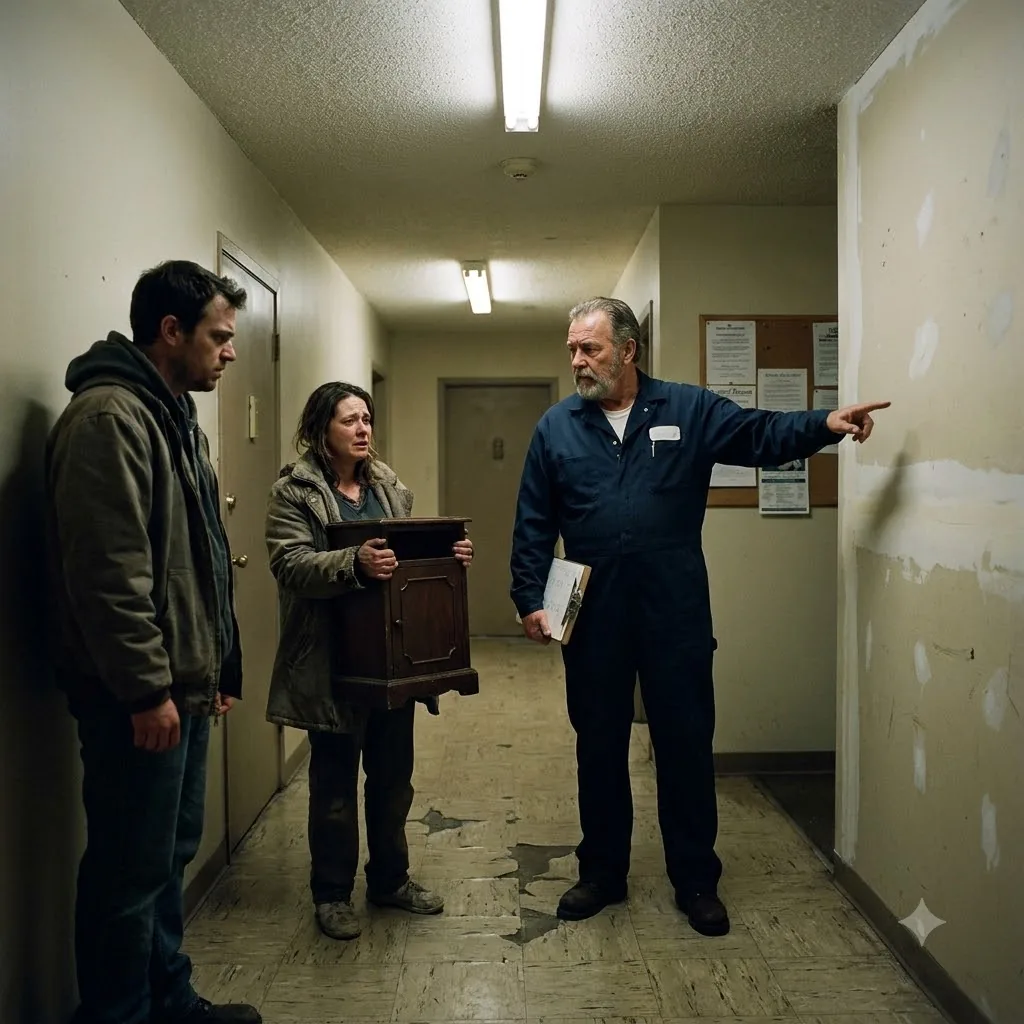
When our building’s senior maintenance worker, Arthur, stood under the flickering fluorescent lights of the hallway and declared that an active pipe leak behind the drywall required the immediate disposal of Sarah’s vintage wooden storage box, I stepped out of my apartment to watch. Sarah stood frozen in her doorway, her fingers tightly gripping the brass corner guards of the locked chest that held her family diaries, visibly paralyzed by his demand to clear the alcove within ten minutes. As a long-time resident who knew the building’s strict guidelines regarding personal property, I watched Arthur point aggressively at the dry linoleum floorboards, his face red and his master key ring rattling in his hand, giving her no time to think or find another place for her heavy belongings.
The hallway alcove had housed that box for two years without issue, but now Arthur was treating it like a ticking bomb. The fluorescent light directly above us hummed a low, irritating note, casting long shadows across the green linoleum floor. On the adjacent wall, the building’s laminated safety guidelines placard hung straight and clean, stating clearly that tenants were entitled to standard notices before property removal. Yet, Arthur was bypassing all of it.
“The pipe is about to burst, Sarah,” Arthur said, his voice echoing in the narrow corridor. He tapped his pen against his clipboard, his eyes darting toward the ceiling but never quite resting on the utility closet door. “If we don’t clear this alcove right now, the water damage is going to ruin the entire floor’s subflooring. Building policy for active emergencies dictates that any obstruction must be removed immediately to the trash chute. I’m doing you a favor by letting you help me carry it, but it has to go.”
I walked closer, my sneakers squeaking on the linoleum. “Arthur,” I said, keeping my tone level. “A water leak of that scale usually triggers the emergency alarms in the basement. I didn’t hear the main pumps turn on. Shouldn’t we wait for the official notice?”
Arthur did not look at me. He shifted his weight, his boots scraping against the floor. “The sensors are delayed on this floor, Leo. I’m the one who handles the physical interventions here. Sarah, if you don’t unlock this box so we can empty it and throw the chest down the service elevator, I will have to log this as a refusal to cooperate with emergency services. That carries a heavy fine on your next lease renewal.”
Sarah looked from Arthur to the locked wooden box. Her breathing was shallow. She reached into her pocket and pulled out her smartphone. “I’ll call the emergency dispatch line,” she said, her thumb hovering over the screen. “They can send up the assistant manager with a handcart, and we can move it down to the lobby instead of throwing it away. They have a log of the active work orders.”
I watched the color drain from Sarah’s face as Arthur loomed in front of her. The hallway was completely dry; there was no sound of rushing water, no damp smell of drywall rot, and no moisture seeping from the baseboards. I took a step closer, my hand resting on the cool metal frame of my own doorway. “Arthur, she has a right to verify the emergency protocol,” I said, keeping my voice loud enough to carry down the corridor. “Under the lease terms, third-party inspection or management verification is standard if property destruction is threatened.”
Arthur turned his head slightly toward me, though his eyes remained fixed on Sarah’s phone. A bead of sweat rolled down his temple, disappearing into the collar of his blue maintenance uniform. He adjusted his grip on the heavy clipboard, the metal clip snapping shut with a sharp crack that made Sarah jump. “This isn’t a standard maintenance call, Leo,” he muttered, his tone clipped. “This is an active hazard. If I have to wait for management to log this, the water will have already ruined the ceiling below us. I’m trying to save us all the paperwork, but if you want to make this difficult, I’ll just write the violation now.”
Sarah looked down at the lock on her box, then back at Arthur. “If it’s an active hazard, then why can’t I call them? They need to know the water needs to be shut off anyway.”
Arthur’s knuckles turned white around the clipboard. “Do not call dispatch,” he repeated, his voice dropping to a harsh whisper. He stared at her phone, his breathing loud in the narrow space, his fingers twitching against the side of his clipboard. His sudden movement blocked the doorway entirely, leaving Sarah pinned against her own doorframe, her screen still glowing with the unplaced call.
When our building’s senior maintenance worker, Arthur, stood under the flickering fluorescent lights of the hallway and declared that an active pipe leak behind the drywall required the immediate disposal of Sarah’s vintage wooden storage box, I stepped out of my apartment to watch. Sarah stood frozen in her doorway, her fingers tightly gripping the brass corner guards of the locked chest that held her family diaries, visibly paralyzed by his demand to clear the alcove within ten minutes. As a long-time resident who knew the building’s strict guidelines regarding personal property, I watched Arthur point aggressively at the dry linoleum floorboards, his face red and his master key ring rattling in his hand, giving her no time to think or find another place for her heavy belongings.
The hallway alcove had housed that box for two years without issue, but now Arthur was treating it like a ticking bomb. The fluorescent light directly above us hummed a low, irritating note, casting long shadows across the green linoleum floor. On the adjacent wall, the building’s laminated safety guidelines placard hung straight and clean, stating clearly that tenants were entitled to standard notices before property removal. Yet, Arthur was bypassing all of it.
“The pipe is about to burst, Sarah,” Arthur said, his voice echoing in the narrow corridor. He tapped his pen against his clipboard, his eyes darting toward the ceiling but never quite resting on the utility closet door. “If we don’t clear this alcove right now, the water damage is going to ruin the entire floor’s subflooring. Building policy for active emergencies dictates that any obstruction must be removed immediately to the trash chute. I’m doing you a favor by letting you help me carry it, but it has to go.”
I walked closer, my sneakers squeaking on the linoleum. “Arthur,” I said, keeping my tone level. “A water leak of that scale usually triggers the emergency alarms in the basement. I didn’t hear the main pumps turn on. Shouldn’t we wait for the official notice?”
Arthur did not look at me. He shifted his weight, his boots scraping against the floor. “The sensors are delayed on this floor, Leo. I’m the one who handles the physical interventions here. Sarah, if you don’t unlock this box so we can empty it and throw the chest down the service elevator, I will have to log this as a refusal to cooperate with emergency services. That carries a heavy fine on your next lease renewal.”
Sarah looked from Arthur to the locked wooden box. Her breathing was shallow. She reached into her pocket and pulled out her smartphone. “I’ll call the emergency dispatch line,” she said, her thumb hovering over the screen. “They can send up the assistant manager with a handcart, and we can move it down to the lobby instead of throwing it away. They have a log of the active work orders.”
I watched the color drain from Sarah’s face as Arthur loomed in front of her. The hallway was completely dry; there was no sound of rushing water, no damp smell of drywall rot, and no moisture seeping from the baseboards. I took a step closer, my hand resting on the cool metal frame of my own doorway. “Arthur, she has a right to verify the emergency protocol,” I said, keeping my voice loud enough to carry down the corridor. “Under the lease terms, third-party inspection or management verification is standard if property destruction is threatened.”
Arthur turned his head slightly toward me, though his eyes remained fixed on Sarah’s phone. A bead of sweat rolled down his temple, disappearing into the collar of his blue maintenance uniform. He adjusted his grip on the heavy clipboard, the metal clip snapping shut with a sharp crack that made Sarah jump. “This isn’t a standard maintenance call, Leo,” he muttered, his tone clipped. “This is an active hazard. If I have to wait for management to log this, the water will have already ruined the ceiling below us. I’m trying to save us all the paperwork, but if you want to make this difficult, I’ll just write the violation now.”
Sarah looked down at the lock on her box, then back at Arthur. “If it’s an active hazard, then why can’t I call them? They need to know the water needs to be shut off anyway.”
Arthur’s knuckles turned white around the clipboard. “Do not call dispatch,” he repeated, his voice dropping to a harsh whisper. He stared at her phone, his breathing loud in the narrow space, his fingers twitching against the side of his clipboard. His sudden movement blocked the doorway entirely, leaving Sarah pinned against her own doorframe, her screen still glowing with the unplaced call.