Story code: ST-001335
Part 1: The Hazard Flag
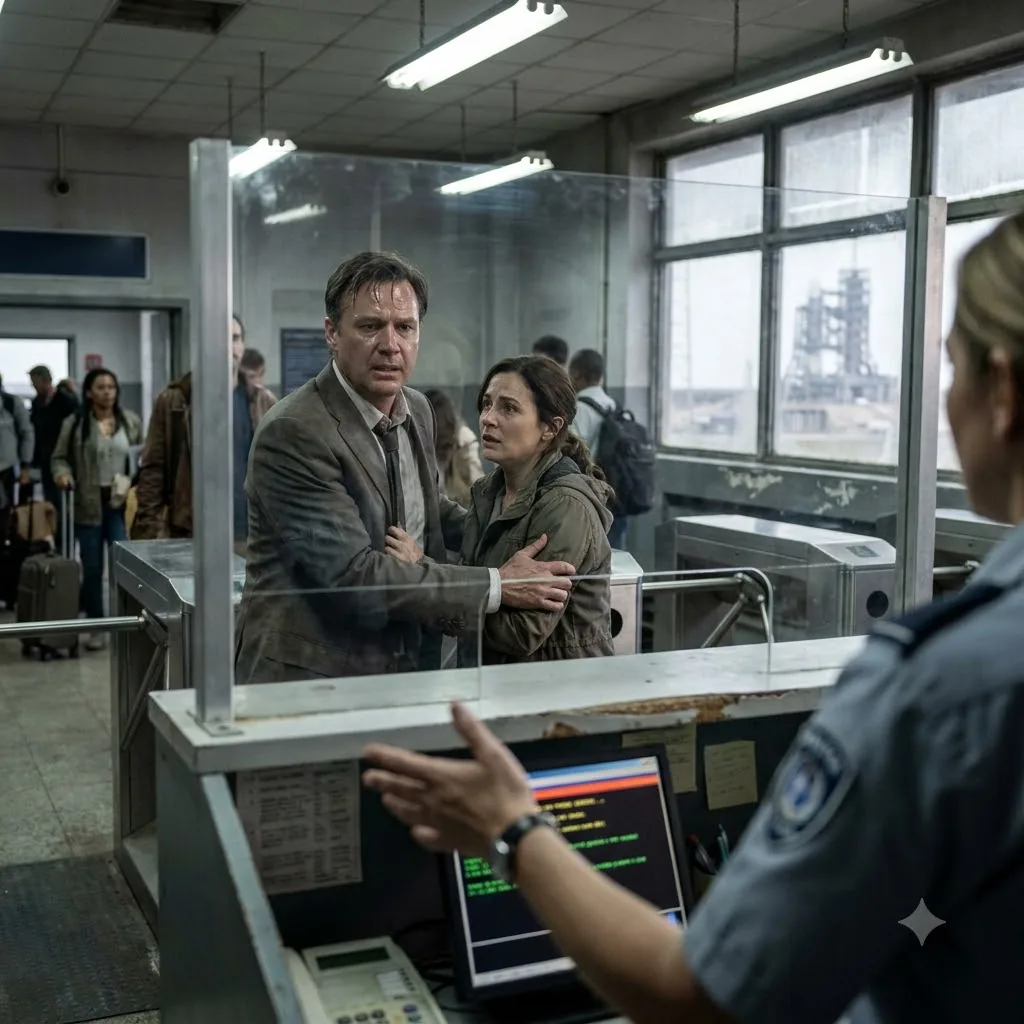
At Launch Terminal Gate 14, mission sponsor Donald Vance pushed his sister Clara toward the boarding portal, demanding I bypass the final bio-clearance check because a toxic leak alert had just triggered in her sector. Clara clutched her physical, chip-enabled Sector 3 Boarding Pass with white knuckles, her eyes darting between the flashing console and the ticking launch deadline monitor. The red hazard warning pulsed across my gate console, yet the terminal’s ambient atmospheric monitors hummed quietly, indicating normal oxygen levels in the main departure lounge.
“Swipe her through, Sam,” Donald said, his voice loud and fast. He wore high-end civilian space wear, his custom sponsor slate held in his right hand. “The Sector Three line has a secondary coolant leak. If she doesn’t enter the decompression vestibule right now, she’s going to inhale the particulate.”
Clara did not move. Her shoulders were tense. She looked at the heavy steel door of the decompression vestibule, then down at the blue chip embedded in her boarding pass. “Donald, the alarms aren’t sounding in the rest of the terminal,” she said, her breathing shallow. “Why is it only showing on your screen?”
“The automated sirens are delayed to prevent a terminal-wide stampede,” Donald said. He tapped his slate aggressively, pointing the screen at me. “I have sponsor clearance. Override the gate lock. I’m taking responsibility for her safety.”
I kept my hands resting flat on the console. In the launch terminal, safety protocols are managed by automated terminal law, but sponsors hold high administrative authority to log manual overrides. I glanced at my system logs. The flashing red alert on my monitor did not originate from the terminal’s environmental control system. It was flagged with a localized cryptographic handshake.
“Sponsor Vance, procedure requires me to log the source of the manual override before opening the vestibule during an active bio-hazard flag,” I said, my tone level and unhurried.
“I just gave you the source. It’s my sponsor slate,” Donald said. A bead of sweat ran down his temple. He stepped closer, his body blocking the view of the passengers waiting in the queue behind him. “Do your job and press the release button. We have three minutes before the hatch locks permanently.”
Clara took a step backward, away from the boarding hatch. “Donald, if the air is contaminated, we should go back to the transit lobby, not shut ourselves inside a sealed compartment.”
“The lobby is downwind, Clara! The vestibule has isolated air scrubbers,” Donald shouted, his hand twitching on the edge of his slate. “You have to go in. Now.”
I looked down at the console’s detailed network log. The system trace had just finished resolving the incoming hazard flag. The green text on my screen displayed the origin IP. It was not a remote sensor in Sector Three. The alert had been sent directly from the local MAC address of Donald’s personal slate. Donald’s slate was the source of the emergency alert flag.
“I must contact the terminal’s bio-containment team to verify the containment protocol,” I said, reaching toward the intercom panel to summon the outside hazmat units.
Donald lunged forward, slamming his hand flat over the receiver to cut off the connection. “No hazmat teams,” he snapped, his voice sharp.
At Launch Terminal Gate 14, mission sponsor Donald Vance pushed his sister Clara toward the boarding portal, demanding I bypass the final bio-clearance check because a toxic leak alert had just triggered in her sector. Clara clutched her physical, chip-enabled Sector 3 Boarding Pass with white knuckles, her eyes darting between the flashing console and the ticking launch deadline monitor. The red hazard warning pulsed across my gate console, yet the terminal’s ambient atmospheric monitors hummed quietly, indicating normal oxygen levels in the main departure lounge.
“Swipe her through, Sam,” Donald said, his voice loud and fast. He wore high-end civilian space wear, his custom sponsor slate held in his right hand. “The Sector Three line has a secondary coolant leak. If she doesn’t enter the decompression vestibule right now, she’s going to inhale the particulate.”
Clara did not move. Her shoulders were tense. She looked at the heavy steel door of the decompression vestibule, then down at the blue chip embedded in her boarding pass. “Donald, the alarms aren’t sounding in the rest of the terminal,” she said, her breathing shallow. “Why is it only showing on your screen?”
“The automated sirens are delayed to prevent a terminal-wide stampede,” Donald said. He tapped his slate aggressively, pointing the screen at me. “I have sponsor clearance. Override the gate lock. I’m taking responsibility for her safety.”
I kept my hands resting flat on the console. In the launch terminal, safety protocols are managed by automated terminal law, but sponsors hold high administrative authority to log manual overrides. I glanced at my system logs. The flashing red alert on my monitor did not originate from the terminal’s environmental control system. It was flagged with a localized cryptographic handshake.
“Sponsor Vance, procedure requires me to log the source of the manual override before opening the vestibule during an active bio-hazard flag,” I said, my tone level and unhurried.
“I just gave you the source. It’s my sponsor slate,” Donald said. A bead of sweat ran down his temple. He stepped closer, his body blocking the view of the passengers waiting in the queue behind him. “Do your job and press the release button. We have three minutes before the hatch locks permanently.”
Clara took a step backward, away from the boarding hatch. “Donald, if the air is contaminated, we should go back to the transit lobby, not shut ourselves inside a sealed compartment.”
“The lobby is downwind, Clara! The vestibule has isolated air scrubbers,” Donald shouted, his hand twitching on the edge of his slate. “You have to go in. Now.”
I looked down at the console’s detailed network log. The system trace had just finished resolving the incoming hazard flag. The green text on my screen displayed the origin IP. It was not a remote sensor in Sector Three. The alert had been sent directly from the local MAC address of Donald’s personal slate. Donald’s slate was the source of the emergency alert flag.
“I must contact the terminal’s bio-containment team to verify the containment protocol,” I said, reaching toward the intercom panel to summon the outside hazmat units.
Donald lunged forward, slamming his hand flat over the receiver to cut off the connection. “No hazmat teams,” he snapped, his voice sharp.