Story code: ST-001338
Part 1: The Shared Workspace Status Weapon
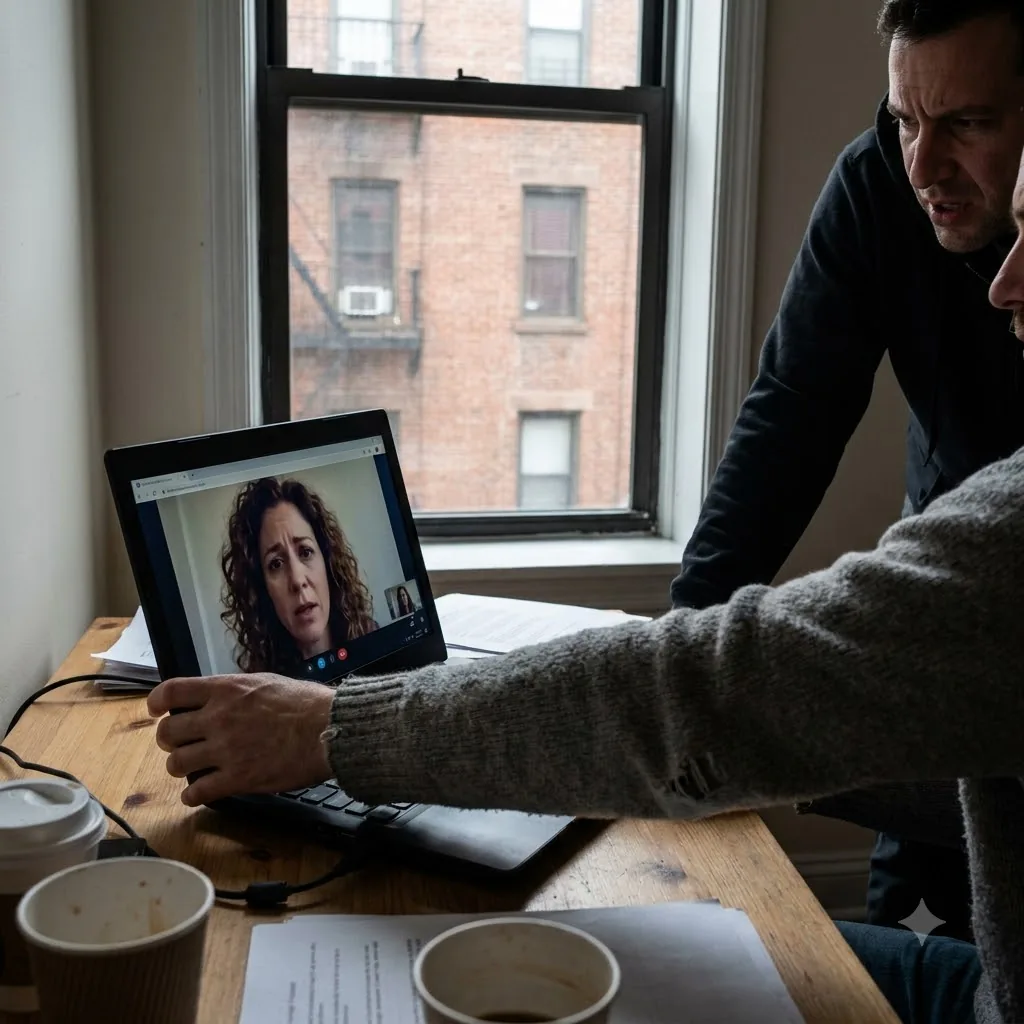
Sitting at my desk in our cramped shared home office, I adjusted my laptop camera just in time to watch my roommate, Julian, lean over my shoulder and interrupt my Zoom sync with Sarah, our systems engineer, by telling her that her latency analysis was “fundamentally archaic.” He adjusted his collar and spoke directly into my headset microphone, using dense, fabricated systems jargon to shame Sarah into silence before she could even finish displaying her error logs on the shared screen. I sat with my hands hovering over my blue mechanical keyboard, watching Sarah’s video feed freeze as she stared at the camera in a long, quiet pause.
Our shared workspace was small, barely fitting two desks and a wall of dual monitors. We split the high rent of our two-bedroom apartment down the middle, a setup that meant I spent eight hours a day listening to Julian practice his tech-consulting pitches to empty rooms. He had no official role in my company, but since we shared the physical space, he frequently treated my video calls as his personal stage. Today was no different. The hum of the computer fans and the glare of the fluorescent lights highlighted the strain in our small room.
On the monitor, Sarah cleared her throat. She was a systems engineer who spent her days refactoring complex databases, while Julian spent his reading tech blogs and practicing buzzwords. “Alex,” she said, addressing me while ignoring Julian’s face hovering in the corner of my camera frame. “The logs show a database deadlock at the transition boundary. If we deploy the new build now, we risk dropping client transactions. The replication latency is already climbing.”
Julian scoffed, a loud, sharp sound that vibrated through the mic. He pulled his rolling chair closer, invading my screen’s field of view. He tapped his fingers on his desk, creating a rhythmic clicking noise. “Sarah, you’re looking at legacy telemetry,” he said, waving a hand dismissively. “The modern deployment pipeline doesn’t suffer from database deadlocks unless you’re failing to account for the core routing layer. Alex knows this, but he’s too polite to point out that your staging environment is misconfigured.”
I did not nod. I kept my eyes on the line of code on my screen, refusing to look at Julian’s self-assured smile. “The error is consistent across three test runs, Julian,” I said, keeping my voice level.
“It’s a false positive,” Julian replied, his voice rising in that confident, rhythmic cadence he used during his client pitches. He leaned closer to my laptop camera, tapping the edge of my monitor. “You’re overlooking the standard architecture protocols. When you have concurrency issues of this scale, the solution isn’t to roll back the build. You simply execute a predictive cache-throttling bypass.”
Sarah’s eyes narrowed on screen. She leaned back, her face partially obscured by the shadow of her monitor. The silence stretched between us, heavy and awkward. Julian remained leaning into my camera frame, his teeth showing in a confident grin, waiting for her to concede to his superior, invented vocabulary.
Sitting at my desk in our cramped shared home office, I adjusted my laptop camera just in time to watch my roommate, Julian, lean over my shoulder and interrupt my Zoom sync with Sarah, our systems engineer, by telling her that her latency analysis was “fundamentally archaic.” He adjusted his collar and spoke directly into my headset microphone, using dense, fabricated systems jargon to shame Sarah into silence before she could even finish displaying her error logs on the shared screen. I sat with my hands hovering over my blue mechanical keyboard, watching Sarah’s video feed freeze as she stared at the camera in a long, quiet pause.
Our shared workspace was small, barely fitting two desks and a wall of dual monitors. We split the high rent of our two-bedroom apartment down the middle, a setup that meant I spent eight hours a day listening to Julian practice his tech-consulting pitches to empty rooms. He had no official role in my company, but since we shared the physical space, he frequently treated my video calls as his personal stage. Today was no different. The hum of the computer fans and the glare of the fluorescent lights highlighted the strain in our small room.
On the monitor, Sarah cleared her throat. She was a systems engineer who spent her days refactoring complex databases, while Julian spent his reading tech blogs and practicing buzzwords. “Alex,” she said, addressing me while ignoring Julian’s face hovering in the corner of my camera frame. “The logs show a database deadlock at the transition boundary. If we deploy the new build now, we risk dropping client transactions. The replication latency is already climbing.”
Julian scoffed, a loud, sharp sound that vibrated through the mic. He pulled his rolling chair closer, invading my screen’s field of view. He tapped his fingers on his desk, creating a rhythmic clicking noise. “Sarah, you’re looking at legacy telemetry,” he said, waving a hand dismissively. “The modern deployment pipeline doesn’t suffer from database deadlocks unless you’re failing to account for the core routing layer. Alex knows this, but he’s too polite to point out that your staging environment is misconfigured.”
I did not nod. I kept my eyes on the line of code on my screen, refusing to look at Julian’s self-assured smile. “The error is consistent across three test runs, Julian,” I said, keeping my voice level.
“It’s a false positive,” Julian replied, his voice rising in that confident, rhythmic cadence he used during his client pitches. He leaned closer to my laptop camera, tapping the edge of my monitor. “You’re overlooking the standard architecture protocols. When you have concurrency issues of this scale, the solution isn’t to roll back the build. You simply execute a predictive cache-throttling bypass.”
Sarah’s eyes narrowed on screen. She leaned back, her face partially obscured by the shadow of her monitor. The silence stretched between us, heavy and awkward. Julian remained leaning into my camera frame, his teeth showing in a confident grin, waiting for her to concede to his superior, invented vocabulary.