Story code: ST-000127
Part 1: The Jacket on the Rack
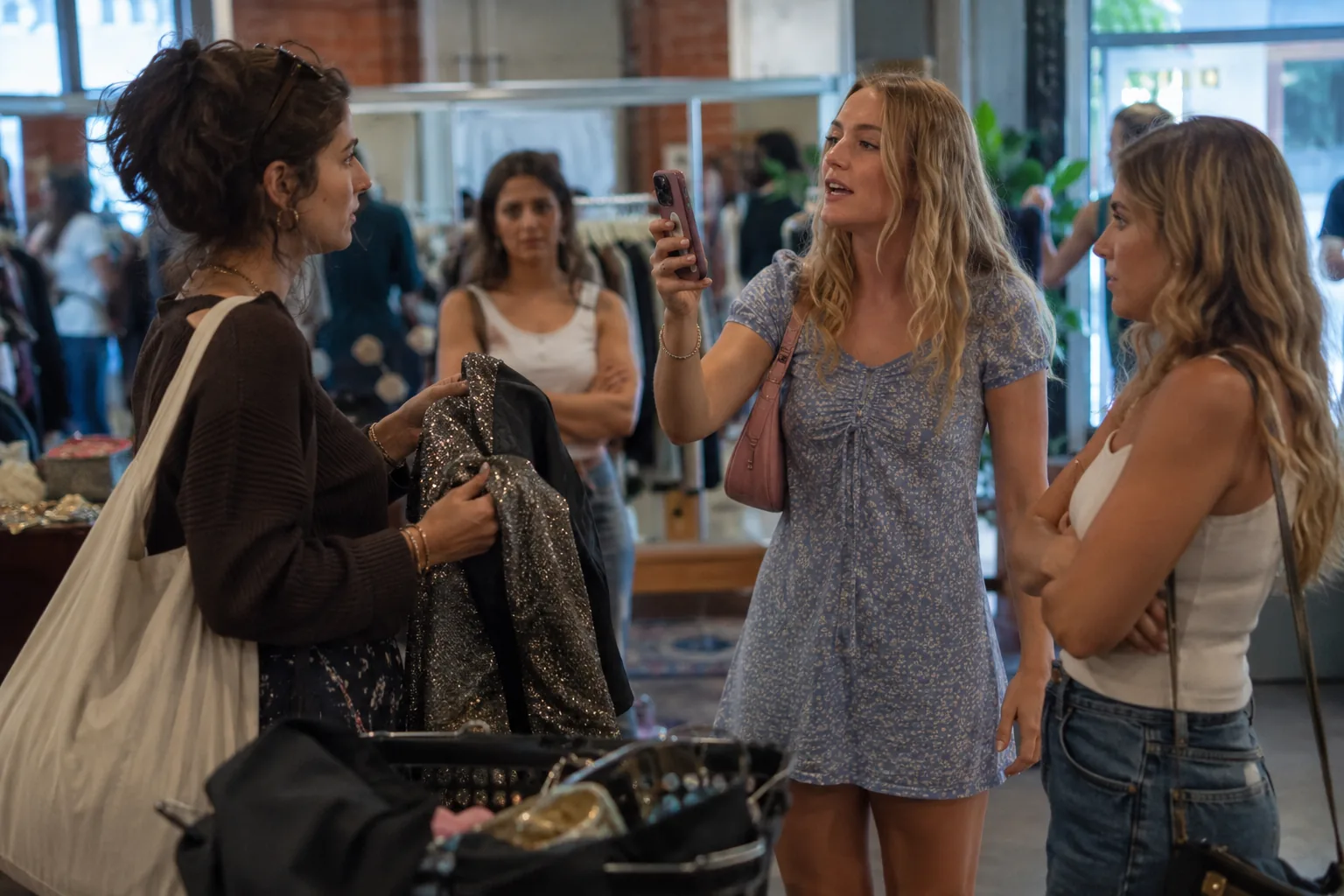
Tessa Lane took one look at the designer jacket in my hands at the thrift pop-up and raised her phone like I was the problem, right there in the middle of the checkout lane near the accessory bins. I had just finished steaming the sleeves and retagging the price card when she stepped between me and the rack, told three volunteers I was “hoarding” donated stock, and pointed at the jacket as if my careful handling of it was some kind of selfish stunt.
The pop-up was packed. People were moving through the aisle with canvas totes and reusable coffee cups, stopping to inspect denim, linen blouses, and folded sweaters. A local speaker was setting up a little table near the front, and the barcode scanner at the inventory station kept chirping every few seconds. I was still holding the jacket on its hanger, one hand under the collar so the shoulder line would not crease. The lining was clean. The tag was straight. The condition card was clipped to the sleeve with my initials and the time I had checked it.
Tessa leaned in close enough that I could see the reflection of the fluorescent lights in her screen. “You’ve been sitting on that piece all afternoon,” she said, loud enough for the people at the checkout table to hear. “Some of us are trying to move sustainable fashion forward, and you’re treating it like your personal prize.”
I set the jacket back on the rolling rack before anyone could jostle it. “I’m keeping it clean,” I said. “That’s what you asked me to do.”
She did not lower the phone. “No, you’re keeping it from the people who could actually use it.”
That got attention. Nina Patel, who was sorting accessories by the register, looked up from a bowl of buttons and small scarves. Rafael Cole, standing at the inventory cart with a clipboard and scanner, glanced over without saying a word. One volunteer paused with a stack of tote bags half folded in her hands. The jacket stayed in the center of it all, hanging where everybody could see the label, the seam detail, and the little bright tag that marked it as premium.
I had brought it in that morning after checking the hem, brushing off lint, and making sure no one had bent the hanger. Tessa had asked me to stay near the rack because she said the jacket needed a careful eye. I had spent the day doing exactly that. I had re-clipped the condition sheet after a customer handled the sleeve with a sticky hand. I had moved the hanger out of the sun from the front window. I had written down the time when the steam iron leaked and I wiped the spot dry before it touched the fabric.
None of that stopped her.
She kept talking over me, telling a small crowd that real sustainability meant trust, access, and shared responsibility. Her voice got sharper each time she said “responsibility,” like the word itself proved her case. She pointed at my notebook tucked under my arm and said people like me always made a project look tidy while blocking everyone else out.
I opened the notebook and turned it around so she could see the page I had been filling all afternoon. It had the jacket’s item number, the care notes, the time stamps, and Rafael’s initials from the first condition check. It also had the line I had written after lunch when Tessa walked away from the rack for almost an hour to film herself talking about ethical resale near the front window.
“Then tell Rafael to log it,” I said. “If you think I skipped the work, check the record.”
Tessa laughed once, short and hard, and said I was trying to hide behind paperwork. That was when Rafael finally stepped closer, scanner still in his hand, and asked me for the jacket’s tag number. I handed it over. He looked down at the clipboard, then back at the sheet clipped to the sleeve, and his face changed in a way that made the whole aisle go quiet.
He did not say who was right. He just said, “This entry doesn’t match what she’s saying.”
And when I looked at the line he was reading, I saw my initials beside a checkmark I had not written that morning.
Tessa Lane took one look at the designer jacket in my hands at the thrift pop-up and raised her phone like I was the problem, right there in the middle of the checkout lane near the accessory bins. I had just finished steaming the sleeves and retagging the price card when she stepped between me and the rack, told three volunteers I was “hoarding” donated stock, and pointed at the jacket as if my careful handling of it was some kind of selfish stunt.
The pop-up was packed. People were moving through the aisle with canvas totes and reusable coffee cups, stopping to inspect denim, linen blouses, and folded sweaters. A local speaker was setting up a little table near the front, and the barcode scanner at the inventory station kept chirping every few seconds. I was still holding the jacket on its hanger, one hand under the collar so the shoulder line would not crease. The lining was clean. The tag was straight. The condition card was clipped to the sleeve with my initials and the time I had checked it.
Tessa leaned in close enough that I could see the reflection of the fluorescent lights in her screen. “You’ve been sitting on that piece all afternoon,” she said, loud enough for the people at the checkout table to hear. “Some of us are trying to move sustainable fashion forward, and you’re treating it like your personal prize.”
I set the jacket back on the rolling rack before anyone could jostle it. “I’m keeping it clean,” I said. “That’s what you asked me to do.”
She did not lower the phone. “No, you’re keeping it from the people who could actually use it.”
That got attention. Nina Patel, who was sorting accessories by the register, looked up from a bowl of buttons and small scarves. Rafael Cole, standing at the inventory cart with a clipboard and scanner, glanced over without saying a word. One volunteer paused with a stack of tote bags half folded in her hands. The jacket stayed in the center of it all, hanging where everybody could see the label, the seam detail, and the little bright tag that marked it as premium.
I had brought it in that morning after checking the hem, brushing off lint, and making sure no one had bent the hanger. Tessa had asked me to stay near the rack because she said the jacket needed a careful eye. I had spent the day doing exactly that. I had re-clipped the condition sheet after a customer handled the sleeve with a sticky hand. I had moved the hanger out of the sun from the front window. I had written down the time when the steam iron leaked and I wiped the spot dry before it touched the fabric.
None of that stopped her.
She kept talking over me, telling a small crowd that real sustainability meant trust, access, and shared responsibility. Her voice got sharper each time she said “responsibility,” like the word itself proved her case. She pointed at my notebook tucked under my arm and said people like me always made a project look tidy while blocking everyone else out.
I opened the notebook and turned it around so she could see the page I had been filling all afternoon. It had the jacket’s item number, the care notes, the time stamps, and Rafael’s initials from the first condition check. It also had the line I had written after lunch when Tessa walked away from the rack for almost an hour to film herself talking about ethical resale near the front window.
“Then tell Rafael to log it,” I said. “If you think I skipped the work, check the record.”
Tessa laughed once, short and hard, and said I was trying to hide behind paperwork. That was when Rafael finally stepped closer, scanner still in his hand, and asked me for the jacket’s tag number. I handed it over. He looked down at the clipboard, then back at the sheet clipped to the sleeve, and his face changed in a way that made the whole aisle go quiet.
He did not say who was right. He just said, “This entry doesn’t match what she’s saying.”
And when I looked at the line he was reading, I saw my initials beside a checkmark I had not written that morning.