Story code: ST-000126
Part 1: The Bags He Said Were Gone
Mara had the donation bags lined up by the sofa in the decluttered living room, labels facing out, when Evan told her they were already handled and not to touch them. The problem was right there in the same room: the bags were still there, the labels still read the thrift center name, and his phone screen showed a timestamp that made his claim look impossible. Nina stood near the open hallway with a paper cup in her hand, watching the whole thing while Evan used house rules like a stop sign.
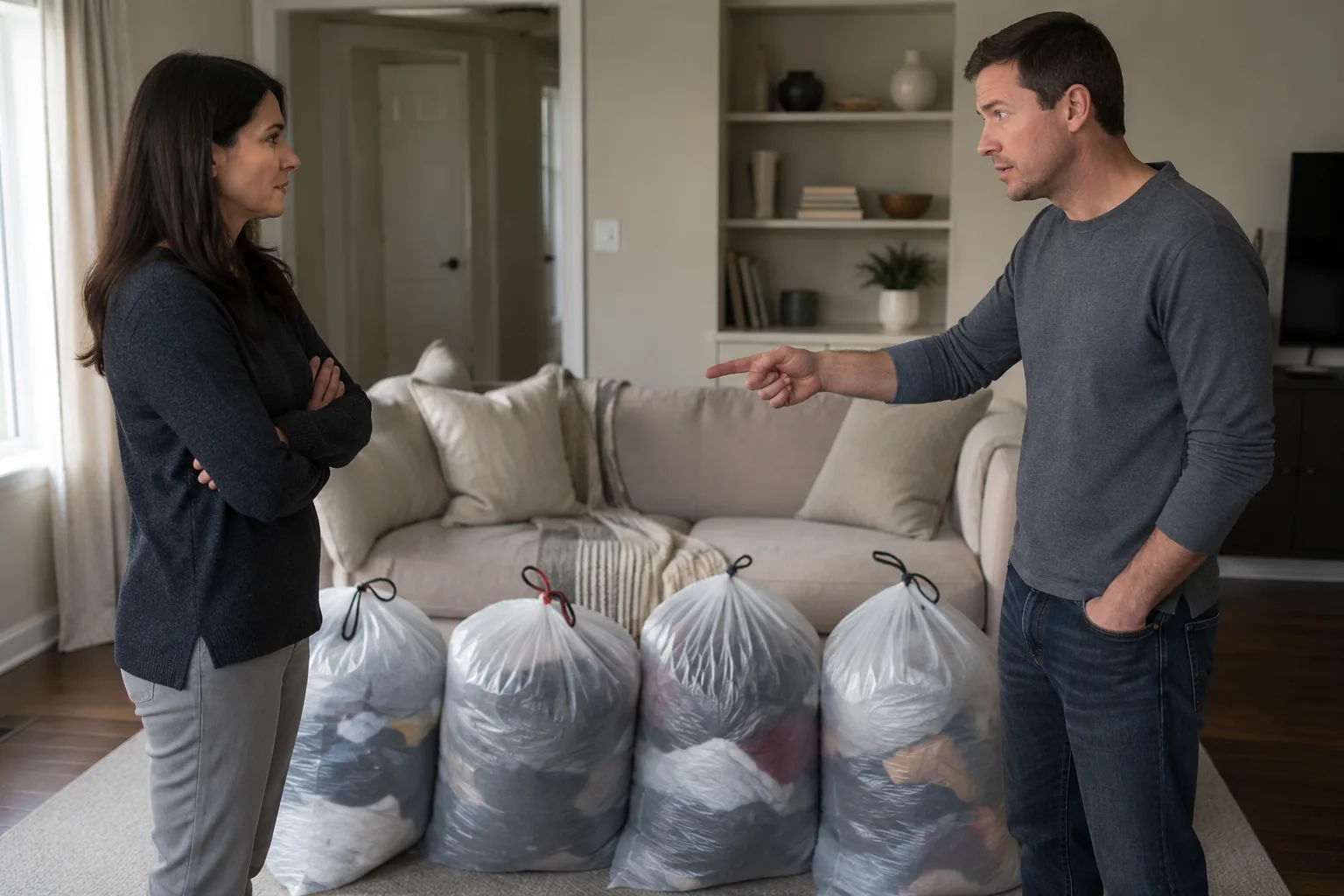
The living room looked stripped down the way Evan liked it. One low table. Two chairs. No stacked magazines, no extra baskets, no spare decor on the shelves. The donation bags sat on the rug in a neat row, all three tied shut with masking tape across the handles. Mara had pulled them from the hall closet after lunch, checked the labels again, and set them beside the front door so she could load them before the donation center closed.
Evan stepped in front of the bags before she could lift the first one. He did not touch them. He pointed at the labels instead, then at the phone in his hand. “Those were processed this morning,” he said. “We are not moving anything until the system is updated.”
Mara looked at the labels. Each one had the same neat black marker handwriting: kitchen, books, winter coats. Each one had the same intake slip tucked under the tape, the same printed time stamp from the donation center. The times did not match his sentence. The drop-off window on the slip was after noon. The clock on the microwave over the kitchen counter showed 10:42.
Nina glanced from the bags to Evan. She said, “He said they were already dropped off?”
Evan did not answer Nina. He kept his eyes on Mara and spoke in the same flat tone he used when he wanted a rule to sound final. “The schedule is the schedule. You keep moving things and it makes the whole house look unmanaged.”
Mara reached for the top bag. Evan slid one step over, just enough to block her hand without grabbing her wrist. He folded his arms and nodded toward the labels like they carried more weight than either of them did. “The donor log is clear,” he said. “We already did the run.”
Mara picked up the nearest slip instead. It was warm from sitting in the sun through the window, and the print was sharp enough to read. Intake time. Item count. Center location. Nothing on it said the bags had been processed before lunch. Nothing on it said they had left the house at all.
Nina set her cup down on the windowsill. “That says the center took them at 1:15,” she said.
Evan gave a short laugh with no humor in it. “That’s the receipt time, not the actual sequence.”
Mara looked at him then. He stood square to the bags, shoulders set, one hand still near his phone as if the screen could settle the argument by itself. He was not raising his voice. He did not need to. The room was quiet except for the refrigerator motor and the soft rustle of the taped bags when the air from the vent moved them.
Mara lifted the middle bag by its handle. It felt full enough to tilt her arm. She looked at the label again and then at the timestamp on the slip. The sequence did not fit. If the bags had been donated already, they should not still be on the rug. If they had not been donated, the center time could not be true. There was no way for both to hold at once.
Evan tapped the phone screen once and turned it slightly away. “You are making this bigger than it needs to be,” he said.
But Nina was still staring at the slips, and Mara was still holding the bag that should not have been there if his version was real. The room had gone very still around the same question: if the bags were already gone, why did every label and timestamp say they had never left the house?
Mara had the donation bags lined up by the sofa in the decluttered living room, labels facing out, when Evan told her they were already handled and not to touch them. The problem was right there in the same room: the bags were still there, the labels still read the thrift center name, and his phone screen showed a timestamp that made his claim look impossible. Nina stood near the open hallway with a paper cup in her hand, watching the whole thing while Evan used house rules like a stop sign.
The living room looked stripped down the way Evan liked it. One low table. Two chairs. No stacked magazines, no extra baskets, no spare decor on the shelves. The donation bags sat on the rug in a neat row, all three tied shut with masking tape across the handles. Mara had pulled them from the hall closet after lunch, checked the labels again, and set them beside the front door so she could load them before the donation center closed.
Evan stepped in front of the bags before she could lift the first one. He did not touch them. He pointed at the labels instead, then at the phone in his hand. “Those were processed this morning,” he said. “We are not moving anything until the system is updated.”
Mara looked at the labels. Each one had the same neat black marker handwriting: kitchen, books, winter coats. Each one had the same intake slip tucked under the tape, the same printed time stamp from the donation center. The times did not match his sentence. The drop-off window on the slip was after noon. The clock on the microwave over the kitchen counter showed 10:42.
Nina glanced from the bags to Evan. She said, “He said they were already dropped off?”
Evan did not answer Nina. He kept his eyes on Mara and spoke in the same flat tone he used when he wanted a rule to sound final. “The schedule is the schedule. You keep moving things and it makes the whole house look unmanaged.”
Mara reached for the top bag. Evan slid one step over, just enough to block her hand without grabbing her wrist. He folded his arms and nodded toward the labels like they carried more weight than either of them did. “The donor log is clear,” he said. “We already did the run.”
Mara picked up the nearest slip instead. It was warm from sitting in the sun through the window, and the print was sharp enough to read. Intake time. Item count. Center location. Nothing on it said the bags had been processed before lunch. Nothing on it said they had left the house at all.
Nina set her cup down on the windowsill. “That says the center took them at 1:15,” she said.
Evan gave a short laugh with no humor in it. “That’s the receipt time, not the actual sequence.”
Mara looked at him then. He stood square to the bags, shoulders set, one hand still near his phone as if the screen could settle the argument by itself. He was not raising his voice. He did not need to. The room was quiet except for the refrigerator motor and the soft rustle of the taped bags when the air from the vent moved them.
Mara lifted the middle bag by its handle. It felt full enough to tilt her arm. She looked at the label again and then at the timestamp on the slip. The sequence did not fit. If the bags had been donated already, they should not still be on the rug. If they had not been donated, the center time could not be true. There was no way for both to hold at once.
Evan tapped the phone screen once and turned it slightly away. “You are making this bigger than it needs to be,” he said.
But Nina was still staring at the slips, and Mara was still holding the bag that should not have been there if his version was real. The room had gone very still around the same question: if the bags were already gone, why did every label and timestamp say they had never left the house?