Story code: ST-001386
Part 4: The Final Manifest
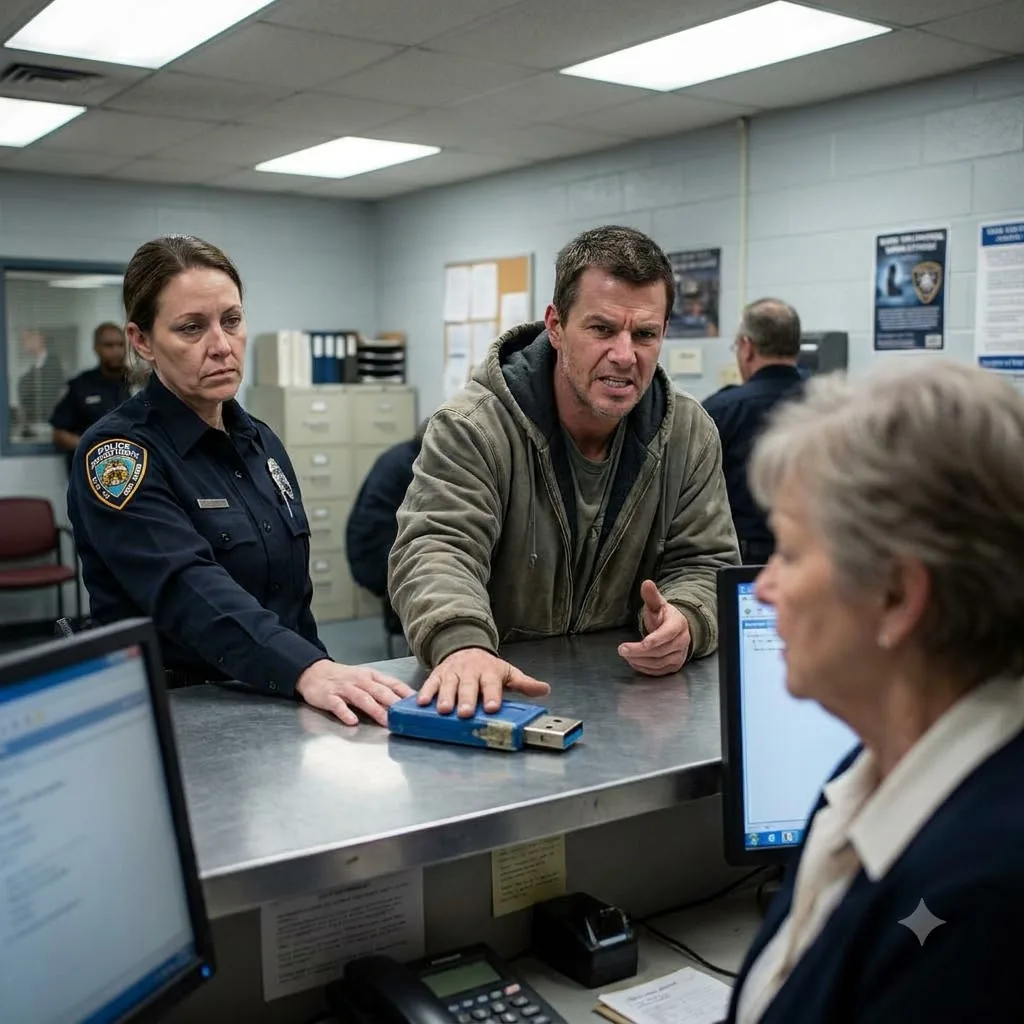
Officer Davis did not look up as he moved his hand. “The drive remains in custody, Mr. Vance,” he said. His voice was level, devoid of any accusatory tone, operating entirely within the rhythm of standard precinct procedure. “Once digital evidence is submitted and logged into the terminal, it cannot be returned during an active intake evaluation.” Marcus pulled his hand back, his fingers curling into a loose fist. “I am the complainant here. I brought that evidence to file a report. You have no legal right to withhold my property.” “Under Municipal Code section four-eighty,” Davis replied, pulling a printed standard intake form from the tray beside him, “any physical media submitted to support a criminal complaint becomes part of the official file. Riley, print the transaction manifest.” I clicked the print command. The terminal readout showing the timestamp mismatch-specifically detailing the 7:32 AM login and the 7:35 AM manual deletion from Marcus’s IP address next to the drive’s 7:30 AM hardware initialization-began feeding through the printer behind me. The paper made a dry, rhythmic clicking sound as it emerged. I pulled the USB drive from the terminal port, placed it inside a clear plastic evidence bag, and sealed the top adhesive strip. I slid the sealed bag and the printed manifest across the desk to Davis. Marcus watched the blue drive slide into the officer’s hands. “This is administrative overreach,” he said, his voice rising again, though he kept his eyes on the sealed bag. “I will file a formal grievance. The timeline is correct. The files were deleted, and she is responsible.” “The physical evidence contradicts your statement, Mr. Vance,” Davis said. He stamped the intake form with a blue ink pad, the sound sharp in the quiet room. He signed the bottom line, then scanned the document into the system. “The terminal has flagged this transaction as an invalid sequence. The system will not generate a complaint file against Ms. Miller.” Sarah looked at the officer, then at the sealed bag. “Do I need to remain here?” she asked. “No, Ms. Miller,” Davis said. “Your statement has been recorded, and the device logs have been archived. You are free to leave.” Sarah turned without looking at Marcus, her coat rustling as she walked toward the heavy glass doors of the lobby. Marcus took a step to follow her, but Davis cleared his throat. “Mr. Vance, your access to the citizen filing portal is suspended pending a review of this submission. A formal report for filing a false police record has been initiated.” Marcus stopped. His face was pale. “I want my drive,” he repeated, his voice dropping to a whisper. “The intake process is complete,” Davis said, sliding the file folder containing the printed manifest into the drawer below the counter. He turned his back to the glass, picking up a fresh stack of routing slips. “You may contact the clerk’s office during business hours next week. Please step away from the counter.” Marcus stood at the counter for several seconds, his hand resting on his leather portfolio. He did not speak. Finally, he turned and walked toward the exit, his shoes squeaking against the clean tile floor. I cleared the terminal screen, returning the interface to the blank log-in prompt for the next shift.