Story code: ST-000127
Part 3: The Missing Hour
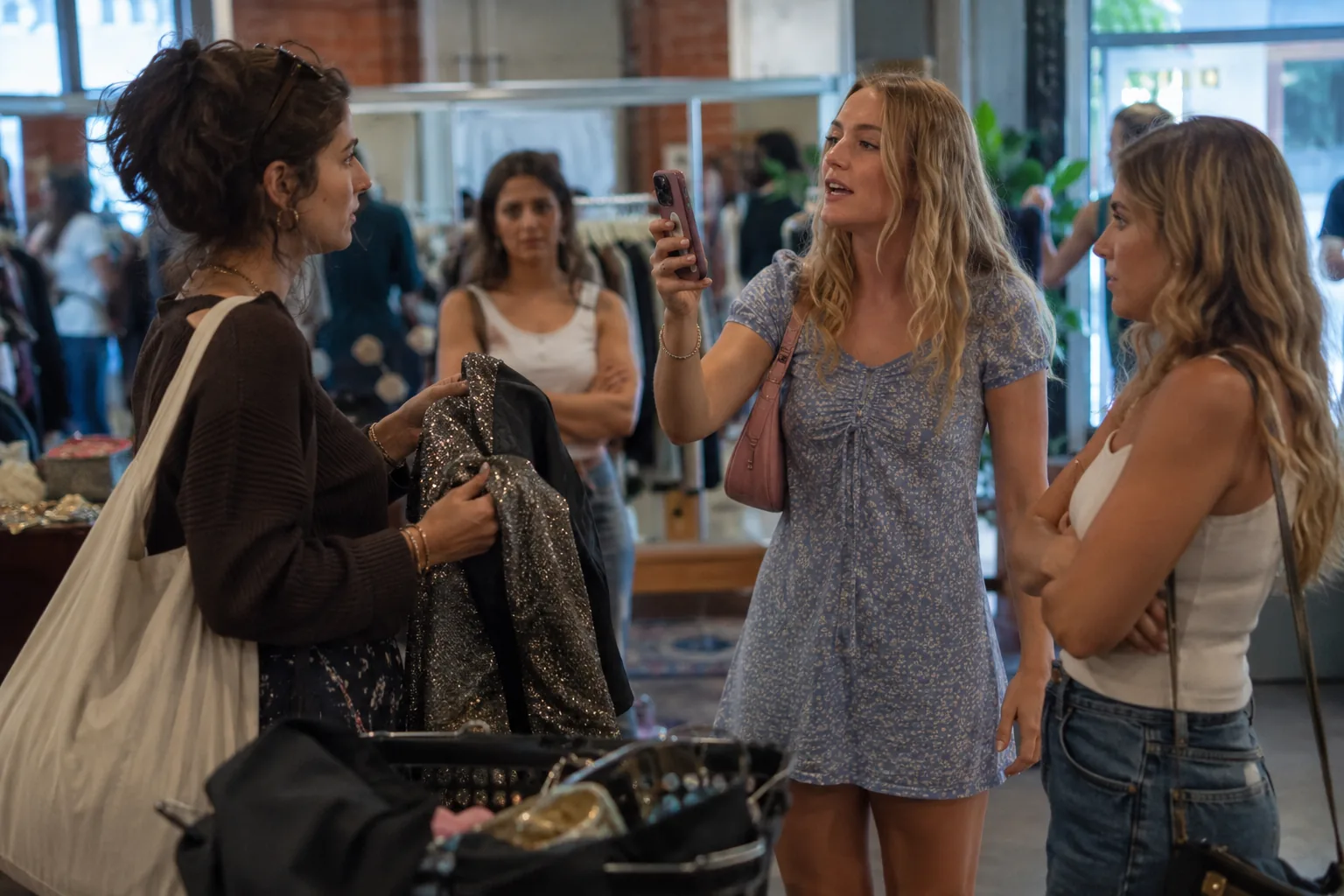
Rafael left the clipboard on the inventory cart, but he did not walk away from the rack. He stood under the hanging lights with his scanner in one hand and the other palm flat against the cart handle, reading the same lines again like he was comparing the page to the jacket itself. Tessa kept her phone up now. The red recording dot stayed on. No one in the aisle said a word loud enough to matter.
I took the jacket down and checked the sleeve seam with my thumb. The fabric still felt smooth where I had brushed it earlier, but one cuff was turned just enough to show the inside edge. I remembered fixing that fold before lunch. I remembered clipping the card back on after a customer asked to see the brand label. I remembered Tessa coming through the aisle with two volunteers behind her, talking about ethical resale and then moving away when the steaming board was crowded.
Nina came around the accessory table with a small stack of condition slips. She set them beside the cart without making a show of it. “I found the earlier sheet,” she said. “It was filed with the premium rack notes.”
Rafael took the top slip and compared the times. His scanner beeped once, then again. He turned the page so I could see the sequence: checked at 10:14, rechecked at 11:03, rehung at 11:18, sleeve corrected at 11:41. My initials were beside each line except the last one, where the handwriting changed. A small note at the bottom said the hanger had been swapped after a front-table photo call, and the note was signed with Tessa’s initials.
Tessa stepped in fast. “That doesn’t mean anything,” she said. “I was helping promote the piece.”
“Then why is the jacket still here while the rest of the premium rack moved?” Nina asked.
Tessa looked at her, then at me, then at the crowd that had collected in loose pieces around the checkout lane. There were shoppers with tote bags, two volunteers with folded denim, and a woman in a sunhat holding a candle jar she had not paid for yet. The pop-up noise kept going at the front tables, but the air by the rack had gone tight and plain.
I held the jacket by the collar and turned it toward Rafael. “Run the item number again,” I said. “Check the scan history, not just the tags.”
He did it without argument. The scanner chirped, and he read the screen with his face still. Then he said, “There was a gap.”
That got everyone looking up. He tipped the screen toward me. The jacket had been checked out of the rack for twenty-three minutes while Tessa was away from the steamer table. During that gap, the inventory system showed one re-shelve request and one condition check, both entered from the station where I had been working. Another line appeared under it: temporary hold canceled, item returned to display, care log updated. The entry was time-stamped by the pop-up record system, not by a hand note.
Tessa started talking over the screen. She said the system could be wrong. She said volunteers made mistakes. She said I had probably asked Rafael to cover for me because I liked controlling things. None of that touched the screen in his hand.
Rafael looked at the bottom of the page and then at the jacket. “The hold was canceled by the person who had it,” he said. “And the handler note says the sleeve was fixed before the photo post went up.”
Tessa’s phone dipped a little. She adjusted her grip and gave a short, sharp laugh. “You all care more about entries than people,” she said.
Nina did not raise her voice. “People are the reason entries matter,” she said.
I watched Tessa glance toward the front of the store, where a small sign near the checkout said every premium item had to stay in its documented care lane until assigned. She had been the one who taped that sign up that morning. She had pointed at it when she asked me to keep the jacket near the rack and said the process would protect it from bad handling. Now her own initials were sitting in the margin beside the canceled hold.
Rafael tore the top copy from the clipboard, folded it once, and put it in the sleeve pocket of the jacket. He did not hand it to Tessa. He handed it to me.
“I need you to stay with the item,” he said.
That was the first time anyone had said it that plainly all day. Not because I wanted the jacket. Not because I was making a scene. Because the record showed I had been the one doing the upkeep, and the item needed someone who would keep following the steps.
Tessa moved one pace closer. Her voice changed when she spoke again, quieter but still hard. “You can’t just keep it out of circulation because you want credit for it.”
Before I could answer, Rafael reached for the tablet at the inventory cart and tapped a setting I had seen him use for damaged goods and recalled donations. The screen flashed a short message in plain black text: premium item under verified care hold. Access restricted pending supervisor review.
The jacket was still hanging in my hand. But the route around it had just changed. And Tessa saw it happen on the screen before she saw it in me.