Story code: ST-000127
Part 4: Verified Care Hold
The new screen message stayed up on Rafael’s tablet while people kept moving around us with their baskets and folded clothes. Nobody asked him to explain it twice. The words were clear enough: premium item under verified care hold. Access restricted pending supervisor review. He set the tablet down beside the scanner and clipped the jacket’s card to the hanger again, this time with a bright orange ribbon that marked it out from the rest of the premium rack.
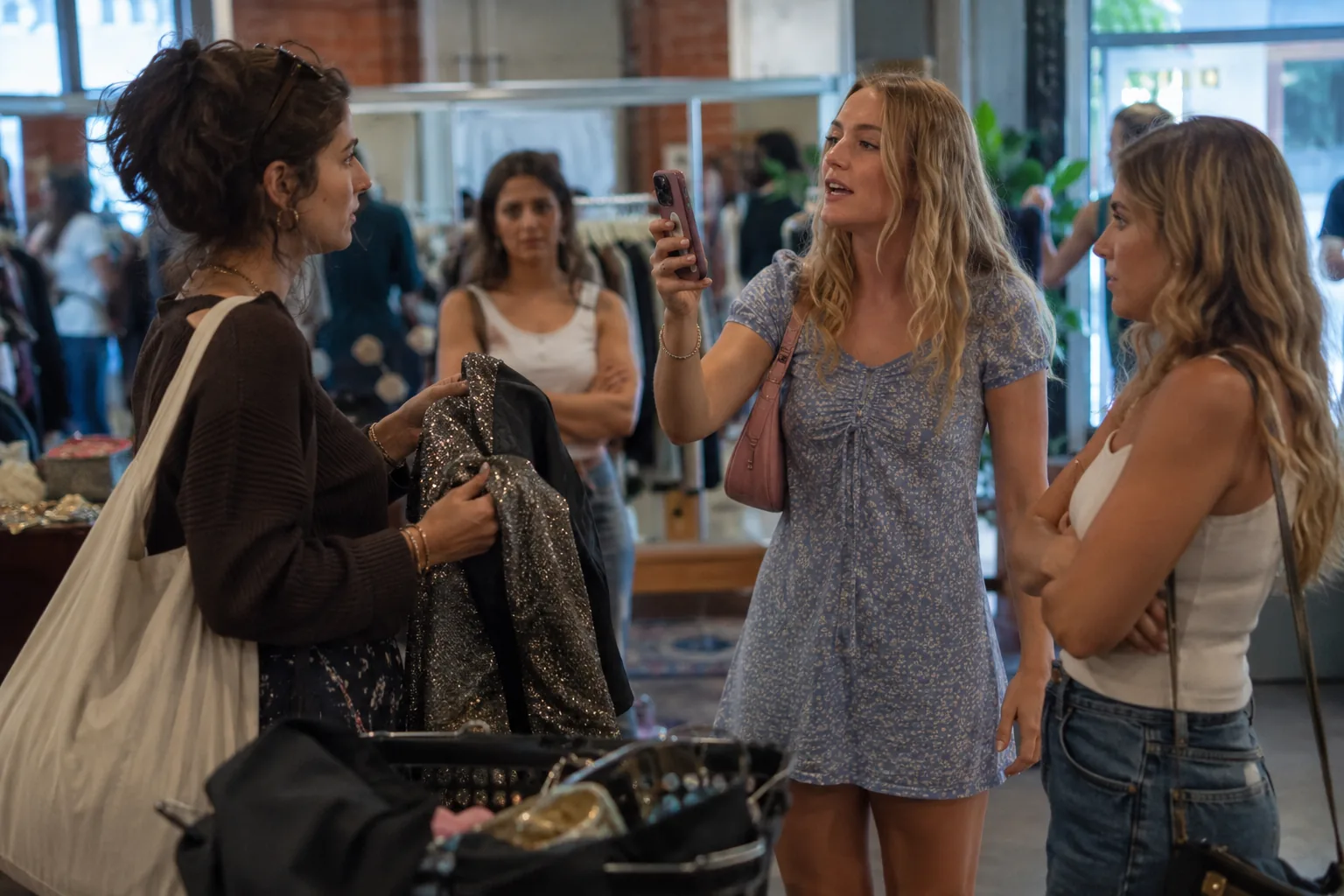
Tessa stared at the ribbon like it had been added just to spite her. She lifted her phone and kept recording, but her thumb was moving across the glass now instead of resting still. The video light stayed on. Her other hand went to the pocket of her jeans, came back empty, then hovered over the tablet without touching it.
Rafael read from the care sheet one more time. His voice stayed flat, almost bored. “Condition verified at each check. Hanger swap logged. Sleeve correction logged. Hold requested for continued care.”
“By who?” Tessa said.
He did not look at her when he answered. “By the inventory station.”
That was enough for the people nearby. Nina turned back to the accessories table and started matching price tags again. One volunteer took a stack of folded shirts to the front display. A shopper asked if the denim was still buy-one-get-one. The moment did not break open into cheering or arguing. It just settled into work.
Tessa took a breath and tried to step around me toward the jacket. I shifted with it without thinking, keeping the hanger between her hand and the sleeve. She stopped and looked at Rafael instead.
“You are really doing this?” she said.
“I’m following the record,” he said.
The screen on his tablet still showed the hold notice. Below it, a new line had appeared from the inventory system: reassignment blocked until current caregiver signs off. It was not dramatic. It was not loud. It was a simple rule, and it sat there plain as a receipt.
I looked at Tessa and waited for her to say she had been the one doing the checks, or that she had made the note, or that she had stayed near the rack when she said she would. She did not say any of that. She just kept her phone up and watched Rafael tap one more field into the system.
He held out the stylus, not to her, but to me. “Sign the care continuation,” he said.
I did. My name went onto the tablet beneath the hold notice, and the orange ribbon stayed on the hanger. The pop-up’s shared inventory system flashed a short confirmation and then auto-printed a new tag from the station behind the checkout table. It came out with my initials, the jacket number, and a note in small type: not for release without documented check.
Tessa finally spoke in a voice that carried farther than she meant it to. “This is ridiculous. She shouldn’t get to lock it down just because she likes being in charge.”
Nina looked up from the accessories table. “She has been in charge of the care work,” she said. “That’s what the log says.”
Tessa’s mouth tightened. She reached for the phone again and, for the first time, I saw the screen reflection in her face before she angled it down. Whatever she had been recording, the tablet’s message was in the frame now, and so was the printed tag with my initials.
Rafael slid one more paper from the printer tray and clipped it to the cart. It was a formal correction notice for the premium rack, typed in the pop-up’s own record format. It said the jacket was under verified care hold until assigned handling could be restored, and that any future display use had to pass through the inventory desk.
That was the consequence, plain and visible. The jacket was still the center of the table, but it was no longer available for Tessa to use as a prop. It had been pulled out of her control and back into the record where it belonged.
She looked from the notice to me and then to Rafael. No one spoke for a second. Then she tried to laugh, but it came out thin and unfinished. She lowered the phone at last, not in defeat exactly, just because the screen had already told the story for her.
I tucked the printed tag into my notebook and rested my hand on the jacket’s shoulder seam. The rack no longer needed me to prove I had worked on it. The system had already done that. What it had done next was colder than an apology and harder to undo: it cut her access off at the source.
The pop-up kept moving around us, steady and ordinary, while the orange ribbon marked the jacket as mine to protect and nobody’s to spin. That was the final shape of it.