Story code: ST-000136
Part 1: The Notebook Always Landed on Elena
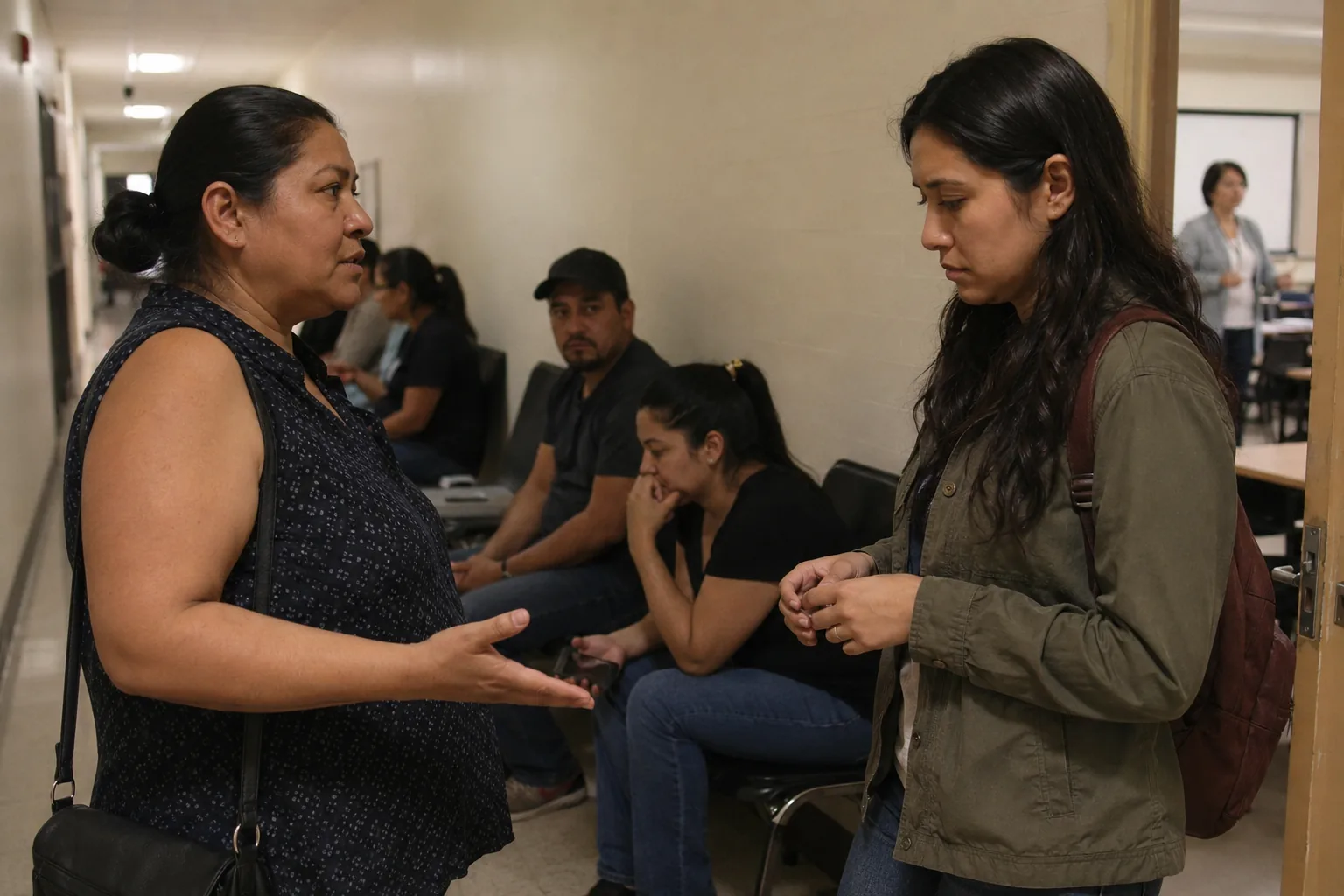
Aunt Rosa made Elena pay for the mistake before the class door even opened. Right there in the plastic chair row by the bulletin board, with people sounding out civics questions under their breath, Rosa took the blue practice notebook, ruined the easiest page on purpose, and shoved it back into Elena’s hands like the whole mess was hers. I was three steps away with my lanyard pen and check-in sheet, and the part that stayed with me was not the wrong answer. It was how fast Rosa blamed Elena for it in public.
I work the hallway outside the citizenship class, so I hear the same pages over and over. Name. Address. What is one right from the First Amendment. What do we call the first ten amendments. Most people practice softly while they wait. Some tap the notebook with a finger first, then answer. Some use the phone timer and race each other for fun. That morning Elena had the notebook open across her knees, her tote bag hanging from one wrist, phone balanced on top of it, already carrying everything before class even started.
“Ask me,” Rosa said.
Elena looked down at the page. “Okay. What is the supreme law of the land?”
Rosa squinted at the notebook like it had insulted her. “The… super… long?”
Elena lowered her voice. “No. Constitution. We did this one yesterday.”
Rosa clicked her tongue. “If you explain bad, of course I say it bad. Give me.”
She snatched the notebook, uncapped Elena’s pen with her teeth, and wrote across the line in big crooked letters. I could see it from where I stood because she held the page flat against her thigh: CONSITUTION, then a scratch-out, then CONSTITUTON. She pushed the notebook back so hard Elena had to catch it against her tote.
“See? Nothing stays in my head because you rush me,” Rosa said, loud enough for the man at the water fountain to turn. “You don’t know how to teach.”
Elena’s mouth opened, then closed. She took the pen and turned the page like the goal was to keep things moving before more people listened.
That was the pattern I kept seeing with them. Elena carried the notebook, Elena read every prompt, Elena held the timer, Elena got corrected. Rosa sat back and announced what Elena had failed to do for her.
Mr. Bennett stepped out of the classroom doorway with his clipboard and called, “Five more minutes, everybody. If you’re waiting in the hall, keep your voices low.”
“Tell her that,” Rosa said, pointing at Elena without looking at him. “She confuses me on purpose.”
Mr. Bennett gave them the same neutral nod he gives everybody and went back inside.
Elena tried again. “Let’s do the address page. Say your street number first.”
Rosa waved one hand. “I can’t. Numbers in English, my head gets mixed.”
“You said it to the bus driver last week,” Elena said before she could stop herself.
Rosa turned so sharply the notebook slid half off Elena’s lap. “And whose fault if I forget now? You never practice right.”
Two women by the bulletin board went quiet. Elena bent, caught the notebook, and smoothed the curled page with both hands. Her voice got smaller, practical, fast.
“Fine. We can skip to reading.”
“No, write it for me first,” Rosa said. “If you cared, you would write the answers bigger.”
So Elena wrote. Rosa watched. Every few seconds she stopped Elena to criticize a letter or say a word again after Elena had already said it once. When Elena wrote too small, Rosa blamed her eyes. When Elena wrote too large, Rosa said the page looked childish. The whole time Rosa kept saying she couldn’t do simple English, couldn’t remember one line, couldn’t hold onto one little answer.
Then the classroom door opened wider and Mr. Bennett called for the eleven o’clock group to line up. Elena slid the notebook closed and stood in one motion, phone, tote, pen, everything gathered to her chest.
Rosa stayed seated.
“My card,” she said.
Elena froze. “It’s in your wallet.”
Rosa made a helpless face and spread her empty hands. “You know I can’t find things when people rush me.”
Elena set the tote down, crouched, opened Rosa’s purse, and moved aside a packet of tissues and a bus receipt. Before she could reach the inner pocket, Rosa leaned over, pinched two fingers into the zipper seam without even looking, opened the exact section, and pulled out the attendance card clean and fast.
Not fumbling. Not guessing. Just one crisp movement, like someone who knew exactly what she was doing.
She handed the card to me for check-in and went right back to her soft, confused voice.
“See? I get lost with these things,” she said.
Elena was still crouched on the floor with the blue notebook pressed against her shin when I looked at her, then at Rosa, and then at the purse pocket Rosa had found on the first try.
Aunt Rosa made Elena pay for the mistake before the class door even opened. Right there in the plastic chair row by the bulletin board, with people sounding out civics questions under their breath, Rosa took the blue practice notebook, ruined the easiest page on purpose, and shoved it back into Elena’s hands like the whole mess was hers. I was three steps away with my lanyard pen and check-in sheet, and the part that stayed with me was not the wrong answer. It was how fast Rosa blamed Elena for it in public.
I work the hallway outside the citizenship class, so I hear the same pages over and over. Name. Address. What is one right from the First Amendment. What do we call the first ten amendments. Most people practice softly while they wait. Some tap the notebook with a finger first, then answer. Some use the phone timer and race each other for fun. That morning Elena had the notebook open across her knees, her tote bag hanging from one wrist, phone balanced on top of it, already carrying everything before class even started.
“Ask me,” Rosa said.
Elena looked down at the page. “Okay. What is the supreme law of the land?”
Rosa squinted at the notebook like it had insulted her. “The… super… long?”
Elena lowered her voice. “No. Constitution. We did this one yesterday.”
Rosa clicked her tongue. “If you explain bad, of course I say it bad. Give me.”
She snatched the notebook, uncapped Elena’s pen with her teeth, and wrote across the line in big crooked letters. I could see it from where I stood because she held the page flat against her thigh: CONSITUTION, then a scratch-out, then CONSTITUTON. She pushed the notebook back so hard Elena had to catch it against her tote.
“See? Nothing stays in my head because you rush me,” Rosa said, loud enough for the man at the water fountain to turn. “You don’t know how to teach.”
Elena’s mouth opened, then closed. She took the pen and turned the page like the goal was to keep things moving before more people listened.
That was the pattern I kept seeing with them. Elena carried the notebook, Elena read every prompt, Elena held the timer, Elena got corrected. Rosa sat back and announced what Elena had failed to do for her.
Mr. Bennett stepped out of the classroom doorway with his clipboard and called, “Five more minutes, everybody. If you’re waiting in the hall, keep your voices low.”
“Tell her that,” Rosa said, pointing at Elena without looking at him. “She confuses me on purpose.”
Mr. Bennett gave them the same neutral nod he gives everybody and went back inside.
Elena tried again. “Let’s do the address page. Say your street number first.”
Rosa waved one hand. “I can’t. Numbers in English, my head gets mixed.”
“You said it to the bus driver last week,” Elena said before she could stop herself.
Rosa turned so sharply the notebook slid half off Elena’s lap. “And whose fault if I forget now? You never practice right.”
Two women by the bulletin board went quiet. Elena bent, caught the notebook, and smoothed the curled page with both hands. Her voice got smaller, practical, fast.
“Fine. We can skip to reading.”
“No, write it for me first,” Rosa said. “If you cared, you would write the answers bigger.”
So Elena wrote. Rosa watched. Every few seconds she stopped Elena to criticize a letter or say a word again after Elena had already said it once. When Elena wrote too small, Rosa blamed her eyes. When Elena wrote too large, Rosa said the page looked childish. The whole time Rosa kept saying she couldn’t do simple English, couldn’t remember one line, couldn’t hold onto one little answer.
Then the classroom door opened wider and Mr. Bennett called for the eleven o’clock group to line up. Elena slid the notebook closed and stood in one motion, phone, tote, pen, everything gathered to her chest.
Rosa stayed seated.
“My card,” she said.
Elena froze. “It’s in your wallet.”
Rosa made a helpless face and spread her empty hands. “You know I can’t find things when people rush me.”
Elena set the tote down, crouched, opened Rosa’s purse, and moved aside a packet of tissues and a bus receipt. Before she could reach the inner pocket, Rosa leaned over, pinched two fingers into the zipper seam without even looking, opened the exact section, and pulled out the attendance card clean and fast.
Not fumbling. Not guessing. Just one crisp movement, like someone who knew exactly what she was doing.
She handed the card to me for check-in and went right back to her soft, confused voice.
“See? I get lost with these things,” she said.
Elena was still crouched on the floor with the blue notebook pressed against her shin when I looked at her, then at Rosa, and then at the purse pocket Rosa had found on the first try.