Story code: ST-000137
Part 1: Evan Announces a Rule Nobody Can Find
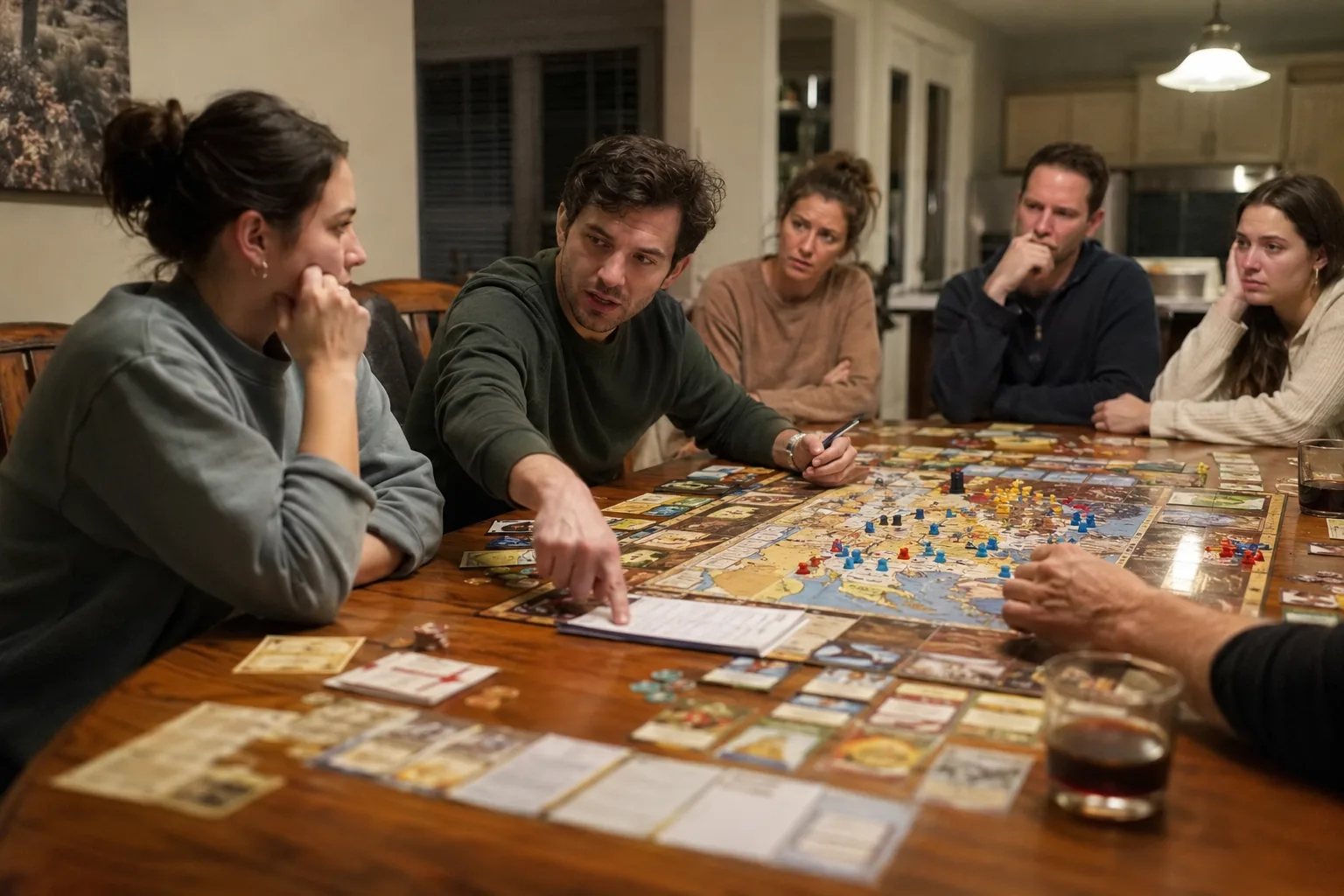
My cousin Evan stopped my turn in the middle of game night, tapped the score pad like it was a court file, and told the whole table I had lost the right to trade because of a “standing house rule” nobody else remembered. We were at my aunt’s dining table with snack bowls open, drinks sweating rings into coasters, and Marisa holding the pen over the score pad while everybody waited for me to just accept it. The worst part was how official he sounded, because when somebody says something in that tone at a family table, people freeze first and question it later.
We were three rounds into a long board game we play most holidays. Nothing fancy. Board spread out across the middle, pieces creeping around the edges, a turn marker passing clockwise, and Marisa keeping points on a yellow pad near the chips and pretzels. It was my turn. I had the exact cards to make a trade that would keep me in the game.
I reached for the trade pile.
Evan put two fingers on the table and said, “Nope. You can’t do that after taking points off a family-owned space. House rule. Once you score off shared territory, you lose trade access until your next full round.”
He said it flat, like he had repeated it a hundred times.
I left my hand where it was and looked at him. “Since when?”
“Since always,” he said. “It’s to keep people from double-dipping a turn.”
Nobody moved. Derek had a cracker halfway to his mouth. Aunt Colleen blinked at the board, then at Evan, like she was trying to place where she had heard that before. Marisa kept the pen poised over the pad but didn’t write yet.
I said, “We’ve played this game at this table for years. I have never heard that rule in my life.”
Evan shrugged once. “That doesn’t mean it isn’t the rule.”
That was the whole structure of it. He wasn’t pointing to the box. He wasn’t pointing to a note. He wasn’t even naming a night when we supposedly adopted it. He was just using that clipped referee voice and the fact that everyone wanted the game to keep moving.
Aunt Colleen said, “I don’t remember us ever doing that.”
Evan answered her without looking away from the board. “It’s one of those fairness rules we all started using because the regular game lets aggressive players stack actions.”
“Who is we all?” I asked.
He gave a short smile that didn’t explain anything. “The table.”
That could have started a whole loud family argument, which was exactly what I didn’t want. So I kept my voice even.
“Okay,” I said. “If that’s a standing house rule, where is it on the score pad? Marisa writes down all the weird stuff we change.”
That made everybody look at the pad.
Marisa flipped back a page with the pen and then another. She wasn’t searching for long written rules, just the little side notes she always makes when we change a point value or skip a setup step to save time. She said, “I have tie-breaker note, first-round redraw note, and that thing from Thanksgiving where Derek knocked over the resource pile and we restarted. Nothing about losing trade access.”
Evan jumped in before the silence could do anything useful. “Not every standing rule needs to be written down. Some are just table practice.”
That was the first time the score pad changed shape in the room. Until then it had just been a running list of totals and sloppy arrows. The second he had to explain why his rule wasn’t on it, the pad became the only clean object on the table.
I said, “Then show me table practice. Which round tonight did anybody else lose trade access after scoring?”
He pointed vaguely toward the center of the board. “It hasn’t come up the same way.”
Derek lowered the cracker and said, “I scored off a shared space in round one and still traded for wood right after.”
Marisa looked down and traced a line on the pad with the pen. “You did. I wrote points first, then your trade, then Nina’s turn.”
Evan leaned back and folded his arms. “That’s because nobody caught it in time. Missed enforcement doesn’t erase a rule.”
There it was. He had an answer for memory, an answer for the missing note, and now an answer for the written sequence too. Every answer pushed the rule farther away from anything we could actually check.
I said, “Fine. Write it down now, then. Exact wording.”
Marisa looked up. “You want me to note the dispute?”
“Yes,” I said. “Write: ‘Evan says players who score off shared territory cannot trade until next full round.’ Put my name next to denied trade.”
Evan’s mouth tightened at that, but he didn’t stop her. Marisa wrote it in the margin beside the current totals, careful and square, like she was labeling leftovers.
Then I pushed my cards back from the trade pile and took the weaker move he left me with.
The game kept going, but not smoothly. Every turn after that had a new little pause in it. People started checking the pad before they did anything. Aunt Colleen kept glancing at the note. Derek started joking less and asking more exact questions.
By the time the turn marker got around the table again, the problem wasn’t just that Evan had blocked me. The problem was that the same note sitting beside my score now had to mean something for everybody else too.
And when Derek landed on the same kind of shared space on his next turn, he looked straight at Evan and asked the one question Evan had not prepared to answer: whether Derek had just lost his trade too.
My cousin Evan stopped my turn in the middle of game night, tapped the score pad like it was a court file, and told the whole table I had lost the right to trade because of a “standing house rule” nobody else remembered. We were at my aunt’s dining table with snack bowls open, drinks sweating rings into coasters, and Marisa holding the pen over the score pad while everybody waited for me to just accept it. The worst part was how official he sounded, because when somebody says something in that tone at a family table, people freeze first and question it later.
We were three rounds into a long board game we play most holidays. Nothing fancy. Board spread out across the middle, pieces creeping around the edges, a turn marker passing clockwise, and Marisa keeping points on a yellow pad near the chips and pretzels. It was my turn. I had the exact cards to make a trade that would keep me in the game.
I reached for the trade pile.
Evan put two fingers on the table and said, “Nope. You can’t do that after taking points off a family-owned space. House rule. Once you score off shared territory, you lose trade access until your next full round.”
He said it flat, like he had repeated it a hundred times.
I left my hand where it was and looked at him. “Since when?”
“Since always,” he said. “It’s to keep people from double-dipping a turn.”
Nobody moved. Derek had a cracker halfway to his mouth. Aunt Colleen blinked at the board, then at Evan, like she was trying to place where she had heard that before. Marisa kept the pen poised over the pad but didn’t write yet.
I said, “We’ve played this game at this table for years. I have never heard that rule in my life.”
Evan shrugged once. “That doesn’t mean it isn’t the rule.”
That was the whole structure of it. He wasn’t pointing to the box. He wasn’t pointing to a note. He wasn’t even naming a night when we supposedly adopted it. He was just using that clipped referee voice and the fact that everyone wanted the game to keep moving.
Aunt Colleen said, “I don’t remember us ever doing that.”
Evan answered her without looking away from the board. “It’s one of those fairness rules we all started using because the regular game lets aggressive players stack actions.”
“Who is we all?” I asked.
He gave a short smile that didn’t explain anything. “The table.”
That could have started a whole loud family argument, which was exactly what I didn’t want. So I kept my voice even.
“Okay,” I said. “If that’s a standing house rule, where is it on the score pad? Marisa writes down all the weird stuff we change.”
That made everybody look at the pad.
Marisa flipped back a page with the pen and then another. She wasn’t searching for long written rules, just the little side notes she always makes when we change a point value or skip a setup step to save time. She said, “I have tie-breaker note, first-round redraw note, and that thing from Thanksgiving where Derek knocked over the resource pile and we restarted. Nothing about losing trade access.”
Evan jumped in before the silence could do anything useful. “Not every standing rule needs to be written down. Some are just table practice.”
That was the first time the score pad changed shape in the room. Until then it had just been a running list of totals and sloppy arrows. The second he had to explain why his rule wasn’t on it, the pad became the only clean object on the table.
I said, “Then show me table practice. Which round tonight did anybody else lose trade access after scoring?”
He pointed vaguely toward the center of the board. “It hasn’t come up the same way.”
Derek lowered the cracker and said, “I scored off a shared space in round one and still traded for wood right after.”
Marisa looked down and traced a line on the pad with the pen. “You did. I wrote points first, then your trade, then Nina’s turn.”
Evan leaned back and folded his arms. “That’s because nobody caught it in time. Missed enforcement doesn’t erase a rule.”
There it was. He had an answer for memory, an answer for the missing note, and now an answer for the written sequence too. Every answer pushed the rule farther away from anything we could actually check.
I said, “Fine. Write it down now, then. Exact wording.”
Marisa looked up. “You want me to note the dispute?”
“Yes,” I said. “Write: ‘Evan says players who score off shared territory cannot trade until next full round.’ Put my name next to denied trade.”
Evan’s mouth tightened at that, but he didn’t stop her. Marisa wrote it in the margin beside the current totals, careful and square, like she was labeling leftovers.
Then I pushed my cards back from the trade pile and took the weaker move he left me with.
The game kept going, but not smoothly. Every turn after that had a new little pause in it. People started checking the pad before they did anything. Aunt Colleen kept glancing at the note. Derek started joking less and asking more exact questions.
By the time the turn marker got around the table again, the problem wasn’t just that Evan had blocked me. The problem was that the same note sitting beside my score now had to mean something for everybody else too.
And when Derek landed on the same kind of shared space on his next turn, he looked straight at Evan and asked the one question Evan had not prepared to answer: whether Derek had just lost his trade too.