Story code: ST-000155
Part 1: The Card on the Desk
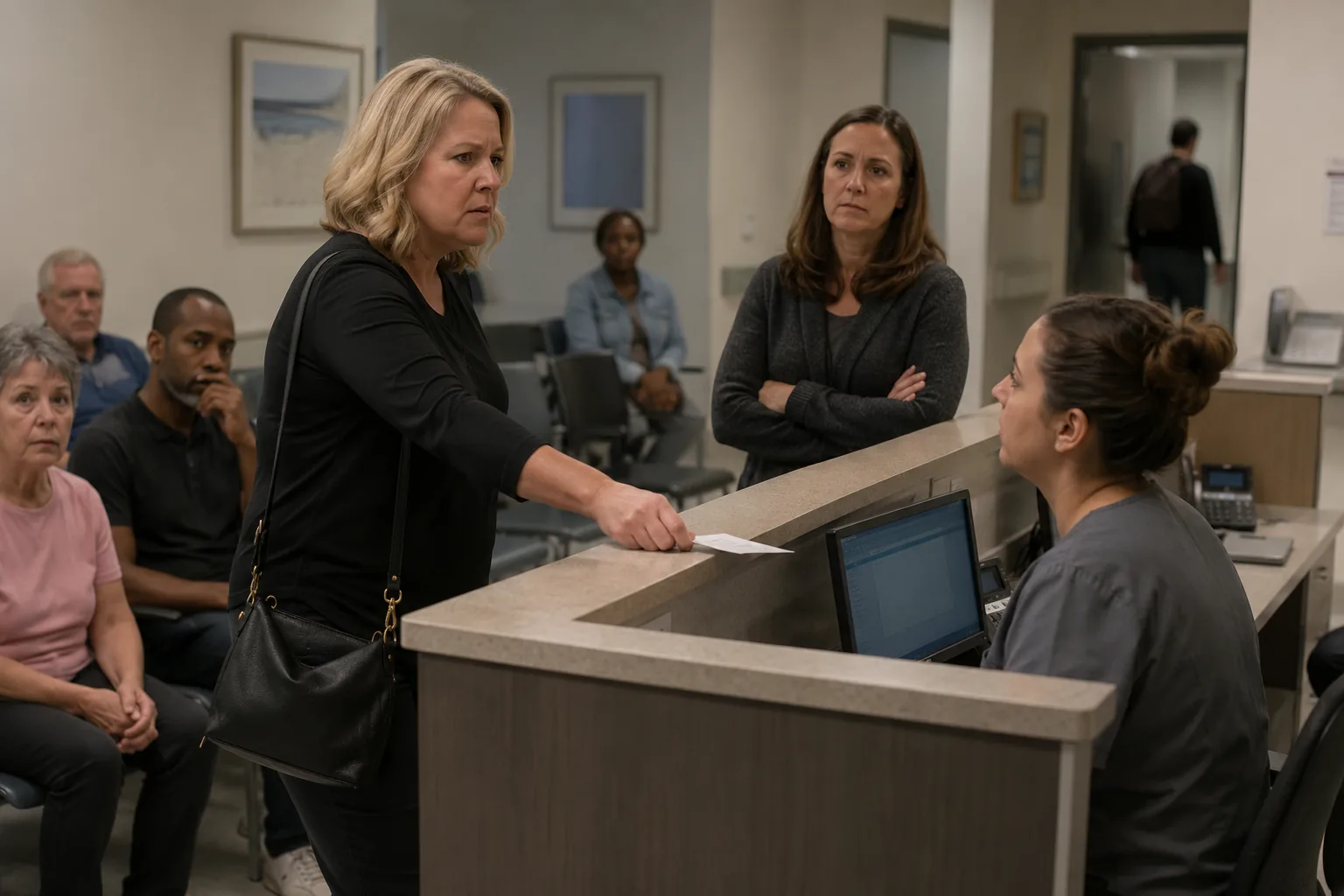
Marla Vance slapped a folded appointment card onto the front desk in the clinic waiting room and told everyone, loud enough for the seated patients to hear, that this could not wait and I needed to break the normal process right now. Derrick Lewis stood beside her with his phone in one hand and that same card in the other, while the intake area went tight around them and the card became the whole point of the room. I was at the desk with my badge clipped at my waist and a pen behind my ear, trying to keep my voice even while Marla used clipped sentences and sharp hand motions to push for immediate compliance.
It was the kind of morning where people were already stacked along the wall with clipboards in their laps, a toddler kicking one chair leg, an older man staring at the TV with no sound, and the front desk line moving in small, careful steps. Marla did not move in small steps. She leaned over the counter, pointed at the card again, and said the appointment had been missed on our side, that the delay had already gone too far, and that somebody needed to handle it before the next patient was called back. She said it like a deadline had grown teeth.
Derrick kept glancing from her hand to the desk screen and back to the card. He did not hand the phone to anyone. He did not put the card away. He just held both, waiting for the next direction. Marla cut off my first question before I finished it. She said, “We do not have time for that,” and tapped the appointment card against the counter like the paper itself was proof enough.
I asked for the name and time so I could check the chart against the schedule. Marla answered too fast, telling me the time had been confirmed, the window had been missed, and that if I made them sit there any longer, the problem would get worse. She used the word emergency twice in less than ten seconds. A woman two seats down looked over at the desk. The man by the TV shifted in his chair. Nobody said anything, but the whole room started listening.
I kept my tone level and repeated the one thing I could see for sure: the appointment card. It was creased down the middle, thumbed soft at the edges, with a handwritten time and a printed clinic logo at the top. I held my hand out for it so I could compare it to the intake list. Marla pulled it back half an inch, then set it flat on the desk where everyone could see the date and time. That was the first visible harm in the room: not pain, not blood, just the pressure of being told the rules had to move because this one paper said so.
When I asked whether they had checked in earlier that day, Derrick finally spoke. He said, “She said we didn’t need to wait.” Marla shot him a look so quick it was almost nothing, then turned back to me and said the clinic had to make an exception. She said she had already explained it upstairs, which made no sense in the waiting room because nobody upstairs was there to hear her. The words came out clipped and thin, like she was trying to keep the room from asking the same question twice.
I rang the intake bell and asked for the charge nurse to step up. Marla’s voice got flatter. She asked why I needed to do that when the answer was already in front of me. I said because the card was in front of me, not the reason behind it. That was the first time she stopped talking for a beat.
Then Derrick’s phone lit up in his hand, and Marla saw it at the same time I did. She reached for the phone before he did anything with it, and said, too quickly, “Do not call anybody else yet.” Right after that, she told me to forget the nurse and just move them through now, which was strange because a second earlier she had been acting like the claim could not survive another minute of waiting. If it was really an emergency, why was the exact help she asked for suddenly the one thing she did not want checked?
Marla Vance slapped a folded appointment card onto the front desk in the clinic waiting room and told everyone, loud enough for the seated patients to hear, that this could not wait and I needed to break the normal process right now. Derrick Lewis stood beside her with his phone in one hand and that same card in the other, while the intake area went tight around them and the card became the whole point of the room. I was at the desk with my badge clipped at my waist and a pen behind my ear, trying to keep my voice even while Marla used clipped sentences and sharp hand motions to push for immediate compliance.
It was the kind of morning where people were already stacked along the wall with clipboards in their laps, a toddler kicking one chair leg, an older man staring at the TV with no sound, and the front desk line moving in small, careful steps. Marla did not move in small steps. She leaned over the counter, pointed at the card again, and said the appointment had been missed on our side, that the delay had already gone too far, and that somebody needed to handle it before the next patient was called back. She said it like a deadline had grown teeth.
Derrick kept glancing from her hand to the desk screen and back to the card. He did not hand the phone to anyone. He did not put the card away. He just held both, waiting for the next direction. Marla cut off my first question before I finished it. She said, “We do not have time for that,” and tapped the appointment card against the counter like the paper itself was proof enough.
I asked for the name and time so I could check the chart against the schedule. Marla answered too fast, telling me the time had been confirmed, the window had been missed, and that if I made them sit there any longer, the problem would get worse. She used the word emergency twice in less than ten seconds. A woman two seats down looked over at the desk. The man by the TV shifted in his chair. Nobody said anything, but the whole room started listening.
I kept my tone level and repeated the one thing I could see for sure: the appointment card. It was creased down the middle, thumbed soft at the edges, with a handwritten time and a printed clinic logo at the top. I held my hand out for it so I could compare it to the intake list. Marla pulled it back half an inch, then set it flat on the desk where everyone could see the date and time. That was the first visible harm in the room: not pain, not blood, just the pressure of being told the rules had to move because this one paper said so.
When I asked whether they had checked in earlier that day, Derrick finally spoke. He said, “She said we didn’t need to wait.” Marla shot him a look so quick it was almost nothing, then turned back to me and said the clinic had to make an exception. She said she had already explained it upstairs, which made no sense in the waiting room because nobody upstairs was there to hear her. The words came out clipped and thin, like she was trying to keep the room from asking the same question twice.
I rang the intake bell and asked for the charge nurse to step up. Marla’s voice got flatter. She asked why I needed to do that when the answer was already in front of me. I said because the card was in front of me, not the reason behind it. That was the first time she stopped talking for a beat.
Then Derrick’s phone lit up in his hand, and Marla saw it at the same time I did. She reached for the phone before he did anything with it, and said, too quickly, “Do not call anybody else yet.” Right after that, she told me to forget the nurse and just move them through now, which was strange because a second earlier she had been acting like the claim could not survive another minute of waiting. If it was really an emergency, why was the exact help she asked for suddenly the one thing she did not want checked?