Story code: ST-000157
Part 1: The Envelope at the Lobby Desk
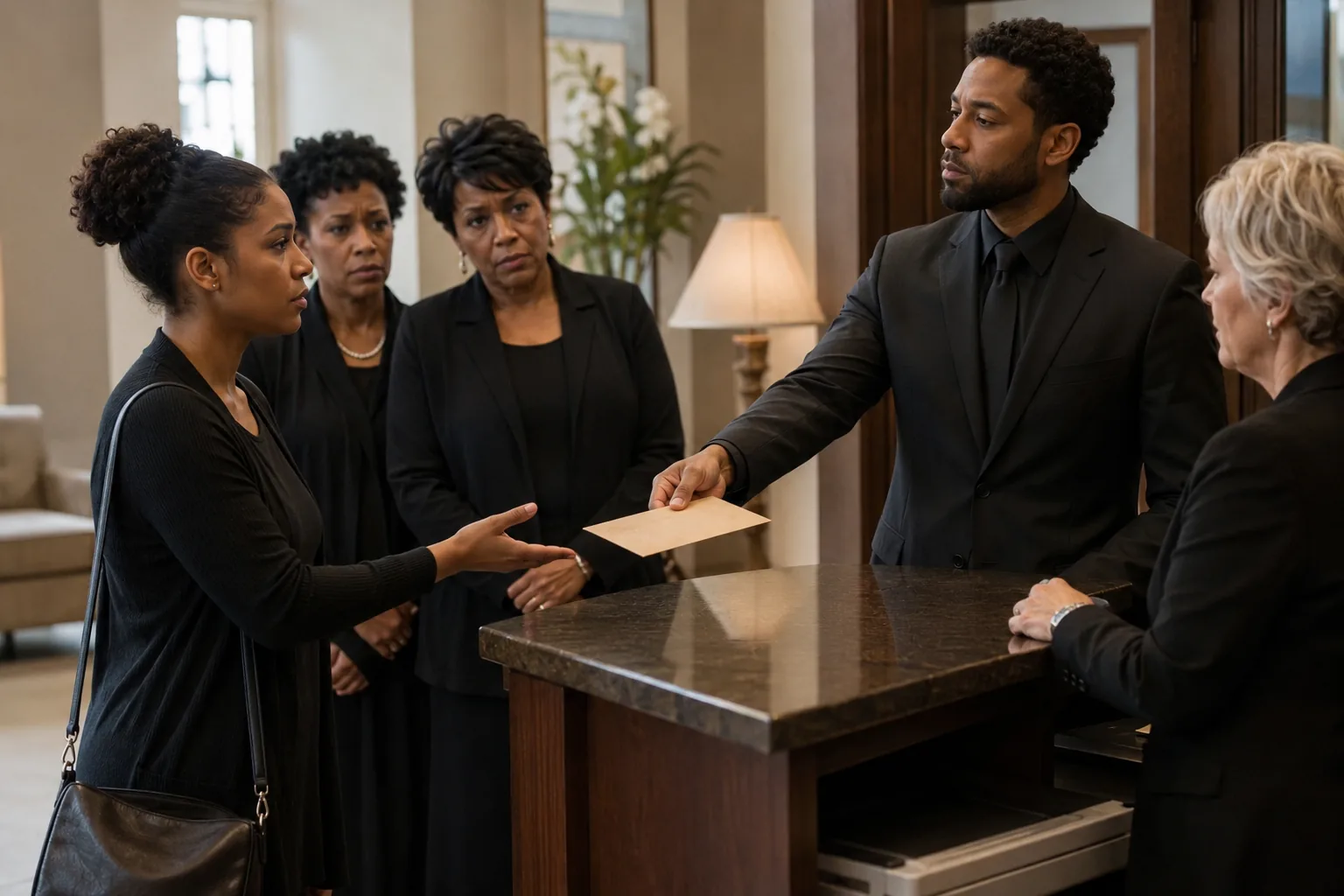
Maya Carter reached the funeral home lobby desk with her hand out for Mom’s keepsake envelope, and Evan Carter cut across it before Ms. Bell could slide the cream folder forward. He said there was a rule now, right there in the lobby, over the polished counter and the quiet shuffle of people signing guest cards: no family envelope released until the “primary heir” signed first. The envelope sat in plain view with the same ribbon loop Mom had tucked around it years ago, but Evan laid his palm over the file and treated it like he owned the room.
The lobby was still doing ordinary things around them. A staffer straightened brochures. Someone near the chapel doors adjusted a black tie. A printer in the back spat out a page. None of it changed the fact that Evan had just invented a gate and put it in front of a thing Maya had been told was hers to collect.
Maya did not raise her voice. She kept both hands still at her sides and looked at Ms. Bell instead of at him. “What rule?” she asked. “Can you show me where it says that?”
Evan answered too fast, like he had already prepared the sentence. “It’s standard. Family release. No exceptions.”
Ms. Bell looked down at the folder, then at the forms on her desk, and then back up. She did not reach for a printed policy sheet. She did not point to a posted notice. She just nodded once, the kind of nod people use when they want a claim to sound older than it is. “We usually have the listed next-of-kin handle keepsakes,” she said.
Maya lifted her chin a fraction. “Usually isn’t the same as policy.”
Evan’s jaw tightened. He tapped the edge of the folder with one finger, a small, neat gesture that tried to look official. “This isn’t a debate. Mom would have wanted it handled properly.”
That was the first visible harm: the envelope was there, in reach, and still blocked. Maya could see the seal, the folded edge, the thin white label with Mom’s handwriting on it. She had come for one object, one small thing tied to the rest of the inheritance paperwork and the family split that had already been eating up every call. Now it had become a test of whether Evan could say a sentence loudly enough to make it true.
Ms. Bell turned one page on her clipboard. “If there’s a family instruction, I need to see it,” she said.
“There is one,” Evan said.
“Where?” Maya asked.
He did not answer that part. He shifted his stance and kept his body angled between her and the desk. He pointed instead to the folder. “Not until this gets settled.”
Maya watched the exchange, not the faces but the order of the moves. Evan named a rule without naming its source. Ms. Bell repeated a softer version of it without showing a source either. The envelope stayed under the same hand that had not been there when Maya walked in. That was enough to see the shape of the problem: a claim with no paper behind it, but enough confidence to slow the room.
A woman in the seating area glanced over and then lowered her eyes to the folded program in her lap. A man near the coffee table stopped stirring his cup. The lobby did what public spaces do when someone starts using procedure as a weapon. It kept going and made room for the pressure.
Maya said, “So show me the instruction.”
Ms. Bell’s fingers moved over the top page on her clipboard. “If there is one in the file, I’ll follow it.”
Evan spoke before she could look further. “There isn’t time for this.”
Then Ms. Bell stopped mid-turn, eyes down on the paperwork, because the line she had started to use did not seem to match what she was reading. She looked once at the desk phone, once toward the back office, and once at the envelope, like she had just hit a place where the standard answer no longer fit the room. And when Maya asked the same question again, slower this time, Ms. Bell could not name where the rule came from without sounding unsure. That was the contradiction sitting in the lobby: if the rule was real, why did it need Evan to hold the envelope to make it appear?
Maya Carter reached the funeral home lobby desk with her hand out for Mom’s keepsake envelope, and Evan Carter cut across it before Ms. Bell could slide the cream folder forward. He said there was a rule now, right there in the lobby, over the polished counter and the quiet shuffle of people signing guest cards: no family envelope released until the “primary heir” signed first. The envelope sat in plain view with the same ribbon loop Mom had tucked around it years ago, but Evan laid his palm over the file and treated it like he owned the room.
The lobby was still doing ordinary things around them. A staffer straightened brochures. Someone near the chapel doors adjusted a black tie. A printer in the back spat out a page. None of it changed the fact that Evan had just invented a gate and put it in front of a thing Maya had been told was hers to collect.
Maya did not raise her voice. She kept both hands still at her sides and looked at Ms. Bell instead of at him. “What rule?” she asked. “Can you show me where it says that?”
Evan answered too fast, like he had already prepared the sentence. “It’s standard. Family release. No exceptions.”
Ms. Bell looked down at the folder, then at the forms on her desk, and then back up. She did not reach for a printed policy sheet. She did not point to a posted notice. She just nodded once, the kind of nod people use when they want a claim to sound older than it is. “We usually have the listed next-of-kin handle keepsakes,” she said.
Maya lifted her chin a fraction. “Usually isn’t the same as policy.”
Evan’s jaw tightened. He tapped the edge of the folder with one finger, a small, neat gesture that tried to look official. “This isn’t a debate. Mom would have wanted it handled properly.”
That was the first visible harm: the envelope was there, in reach, and still blocked. Maya could see the seal, the folded edge, the thin white label with Mom’s handwriting on it. She had come for one object, one small thing tied to the rest of the inheritance paperwork and the family split that had already been eating up every call. Now it had become a test of whether Evan could say a sentence loudly enough to make it true.
Ms. Bell turned one page on her clipboard. “If there’s a family instruction, I need to see it,” she said.
“There is one,” Evan said.
“Where?” Maya asked.
He did not answer that part. He shifted his stance and kept his body angled between her and the desk. He pointed instead to the folder. “Not until this gets settled.”
Maya watched the exchange, not the faces but the order of the moves. Evan named a rule without naming its source. Ms. Bell repeated a softer version of it without showing a source either. The envelope stayed under the same hand that had not been there when Maya walked in. That was enough to see the shape of the problem: a claim with no paper behind it, but enough confidence to slow the room.
A woman in the seating area glanced over and then lowered her eyes to the folded program in her lap. A man near the coffee table stopped stirring his cup. The lobby did what public spaces do when someone starts using procedure as a weapon. It kept going and made room for the pressure.
Maya said, “So show me the instruction.”
Ms. Bell’s fingers moved over the top page on her clipboard. “If there is one in the file, I’ll follow it.”
Evan spoke before she could look further. “There isn’t time for this.”
Then Ms. Bell stopped mid-turn, eyes down on the paperwork, because the line she had started to use did not seem to match what she was reading. She looked once at the desk phone, once toward the back office, and once at the envelope, like she had just hit a place where the standard answer no longer fit the room. And when Maya asked the same question again, slower this time, Ms. Bell could not name where the rule came from without sounding unsure. That was the contradiction sitting in the lobby: if the rule was real, why did it need Evan to hold the envelope to make it appear?