Story code: ST-000167
Part 1: She Called the Help the Problem
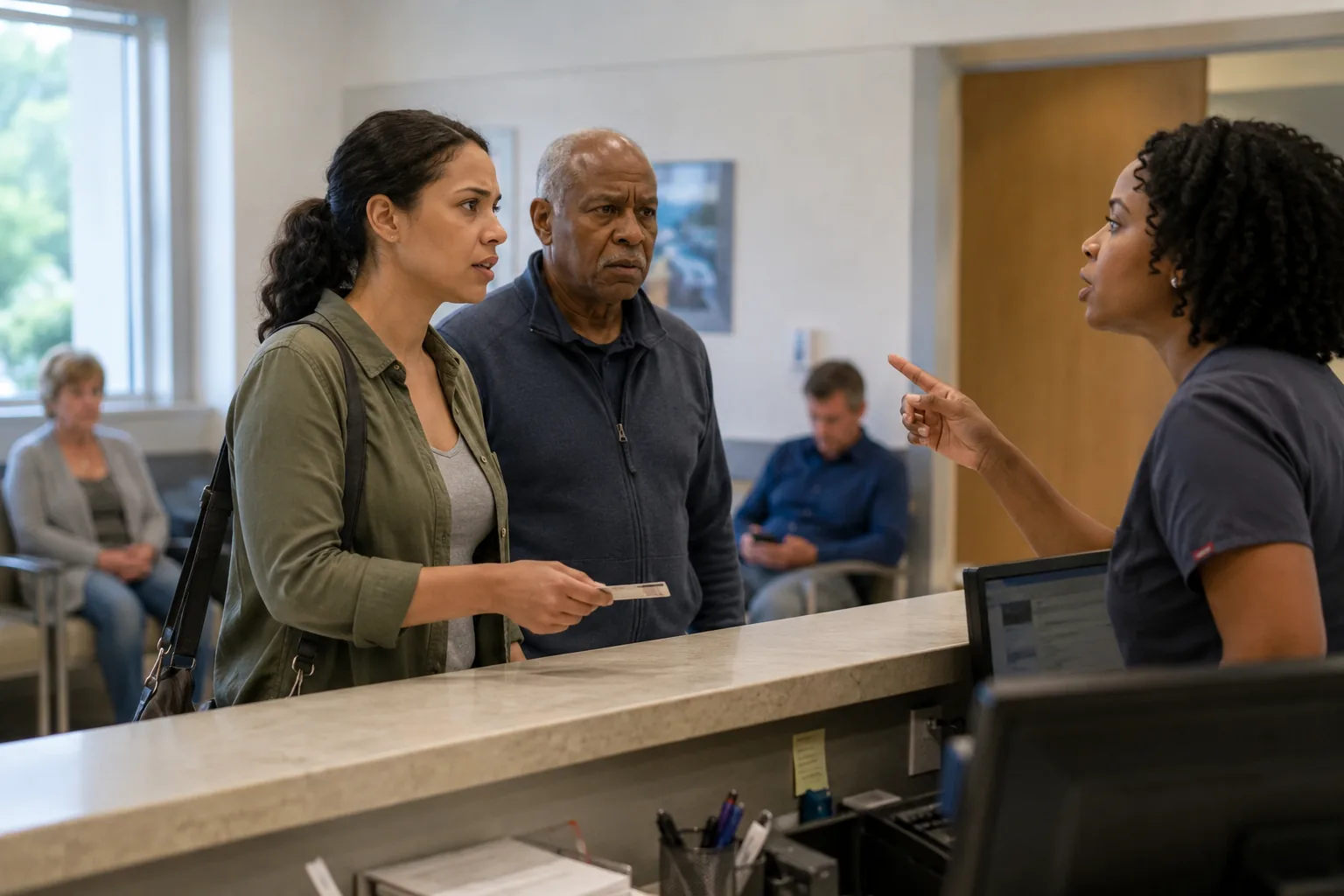
The clerk at the urgent care counter looked straight at Dana Mercer, glanced at the insurance card already in Dana’s hand, and said, loud enough for the waiting room to hear, “If you spent half as much time letting him answer for himself as you do taking over, we could get him checked in.” Earl Mercer was bent over the counter with one hand flat on the laminate edge, and Dana was the one keeping him upright while a cartoon fish tank loop played on the lobby TV and the scanner light blinked beside Trina Bell’s keyboard. The unfair part was immediate. The stranger behind the screen was treating the person doing the lifting, the remembering, and the card handling like she was the obstacle.
That much was visible before anyone said another word.
Dana stood close enough that Earl could lean into her shoulder without falling sideways. She had practical clothes on, crossbody bag shoved behind her hip, a folded medication list tucked under her phone, and the insurance card pinched between two fingers like she had already learned that anything not physically displayed would somehow become unavailable. Earl tried once to reach for his wallet, fumbled at the pocket opening, then stopped and put his hand back on the counter.
“He can answer if you ask him directly,” Dana said. Her voice stayed level. “He just can’t stand here long without support. Here’s his card.”
Trina did not take it right away. She kept typing, eyes on her monitor. “Family members make this harder all the time,” she said. “If the insurance wasn’t handled before you got here, that’s not our delay.”
There were two things in that sentence that could be checked, and Dana reacted like she knew it. She set the card on the counter instead of waving it. Then she unlocked her phone with one thumb and kept it faceup beside the medication list.
“I called the insurer from the parking lot when your line was backed up,” she said. “And before that from home when his primary sent us here.”
Trina finally picked up the card, swiped it once, then again. The scanner gave a short tone the second time. She frowned at the screen and pushed the card back with two fingers. “This plan is showing a problem. You should have verified urgent care coverage before dragging him in and trying to rush the desk.”
That landed the way those public corrections are meant to land. A man in a work hoodie looked up from his clipboard. A little boy in the seating area stopped kicking the leg of a plastic chair. Luis Chen, moving between the scale and the doorway with a tablet tucked against his forearm, paused and looked toward the counter because Earl was clearly ready to sit down or go back, but not stand there through a lecture.
Dana did not raise her voice. She slid the card back toward Trina. “I am not rushing you. I’m trying not to leave my father on his feet while you ask for the same thing twice.”
Earl lifted his head enough to speak. His words came in short pieces. “She called. She has my list.”
Trina answered Dana, not him. “If he’s the patient, he needs to be the one engaged here. You’re inserting yourself into a process that has to be clean.”
That line would have sounded procedural to anyone not watching the physical facts. Earl was using the counter to stay steady. Dana was the one tracking his balance, his phone, his card, and his medication list at the same time. Calling that interference required ignoring what was in front of the screen.
Luis stepped closer by half a pace. “Do you need him seated while benefits finishes?” he asked.
“Not until I get a clean eligibility hit,” Trina said, still typing.
Dana looked at the monitor, then at the printed sign clipped beside it that told patients to have insurance cards ready at check-in. “You have the card. You had it a minute ago. What exactly isn’t clean?”
“I’m not debating my workflow at the front desk,” Trina said. “If there was confusion on the policy, that’s usually because family waits until the last minute and then wants staff to fix it.”
Again, the blame went where the labor was already happening.
Dana turned her phone so the screen faced outward. The call log was bright enough to see from the near side of the counter. Two insurer calls sat near the top with time stamps from that afternoon. She did not push the phone into Trina’s face. She just placed it beside the card and said, “I didn’t wait until the last minute.”
For the first time, Trina stopped speaking long enough to click through more than one screen. Her eyes moved left to right, then back again. She reached for the card a third time and rescanned it. The scanner flashed green, but she did not announce anything different.
Earl’s knees bent slightly. Dana shifted her stance and caught his elbow before he dropped into the counter. Luis looked from Earl to Trina’s monitor and then to the seating area, clearly waiting for somebody to authorize the obvious.
“You told me I failed to handle his insurance,” Dana said. “So say exactly what’s missing.”
Trina pressed her lips together, opened another window, and said, “I’m seeing notes.” That was all.
Dana’s phone was still on the counter. The card was still between them. And whatever Trina had just opened did not match the speech she’d been giving the room for the last five minutes, because she stopped accusing Dana long enough to read in silence.
The problem now wasn’t just the insult. It was that the screen had started saying something different.
The clerk at the urgent care counter looked straight at Dana Mercer, glanced at the insurance card already in Dana’s hand, and said, loud enough for the waiting room to hear, “If you spent half as much time letting him answer for himself as you do taking over, we could get him checked in.” Earl Mercer was bent over the counter with one hand flat on the laminate edge, and Dana was the one keeping him upright while a cartoon fish tank loop played on the lobby TV and the scanner light blinked beside Trina Bell’s keyboard. The unfair part was immediate. The stranger behind the screen was treating the person doing the lifting, the remembering, and the card handling like she was the obstacle.
That much was visible before anyone said another word.
Dana stood close enough that Earl could lean into her shoulder without falling sideways. She had practical clothes on, crossbody bag shoved behind her hip, a folded medication list tucked under her phone, and the insurance card pinched between two fingers like she had already learned that anything not physically displayed would somehow become unavailable. Earl tried once to reach for his wallet, fumbled at the pocket opening, then stopped and put his hand back on the counter.
“He can answer if you ask him directly,” Dana said. Her voice stayed level. “He just can’t stand here long without support. Here’s his card.”
Trina did not take it right away. She kept typing, eyes on her monitor. “Family members make this harder all the time,” she said. “If the insurance wasn’t handled before you got here, that’s not our delay.”
There were two things in that sentence that could be checked, and Dana reacted like she knew it. She set the card on the counter instead of waving it. Then she unlocked her phone with one thumb and kept it faceup beside the medication list.
“I called the insurer from the parking lot when your line was backed up,” she said. “And before that from home when his primary sent us here.”
Trina finally picked up the card, swiped it once, then again. The scanner gave a short tone the second time. She frowned at the screen and pushed the card back with two fingers. “This plan is showing a problem. You should have verified urgent care coverage before dragging him in and trying to rush the desk.”
That landed the way those public corrections are meant to land. A man in a work hoodie looked up from his clipboard. A little boy in the seating area stopped kicking the leg of a plastic chair. Luis Chen, moving between the scale and the doorway with a tablet tucked against his forearm, paused and looked toward the counter because Earl was clearly ready to sit down or go back, but not stand there through a lecture.
Dana did not raise her voice. She slid the card back toward Trina. “I am not rushing you. I’m trying not to leave my father on his feet while you ask for the same thing twice.”
Earl lifted his head enough to speak. His words came in short pieces. “She called. She has my list.”
Trina answered Dana, not him. “If he’s the patient, he needs to be the one engaged here. You’re inserting yourself into a process that has to be clean.”
That line would have sounded procedural to anyone not watching the physical facts. Earl was using the counter to stay steady. Dana was the one tracking his balance, his phone, his card, and his medication list at the same time. Calling that interference required ignoring what was in front of the screen.
Luis stepped closer by half a pace. “Do you need him seated while benefits finishes?” he asked.
“Not until I get a clean eligibility hit,” Trina said, still typing.
Dana looked at the monitor, then at the printed sign clipped beside it that told patients to have insurance cards ready at check-in. “You have the card. You had it a minute ago. What exactly isn’t clean?”
“I’m not debating my workflow at the front desk,” Trina said. “If there was confusion on the policy, that’s usually because family waits until the last minute and then wants staff to fix it.”
Again, the blame went where the labor was already happening.
Dana turned her phone so the screen faced outward. The call log was bright enough to see from the near side of the counter. Two insurer calls sat near the top with time stamps from that afternoon. She did not push the phone into Trina’s face. She just placed it beside the card and said, “I didn’t wait until the last minute.”
For the first time, Trina stopped speaking long enough to click through more than one screen. Her eyes moved left to right, then back again. She reached for the card a third time and rescanned it. The scanner flashed green, but she did not announce anything different.
Earl’s knees bent slightly. Dana shifted her stance and caught his elbow before he dropped into the counter. Luis looked from Earl to Trina’s monitor and then to the seating area, clearly waiting for somebody to authorize the obvious.
“You told me I failed to handle his insurance,” Dana said. “So say exactly what’s missing.”
Trina pressed her lips together, opened another window, and said, “I’m seeing notes.” That was all.
Dana’s phone was still on the counter. The card was still between them. And whatever Trina had just opened did not match the speech she’d been giving the room for the last five minutes, because she stopped accusing Dana long enough to read in silence.
The problem now wasn’t just the insult. It was that the screen had started saying something different.