Story code: ST-000174
Part 1: He Said We Owed Him for Protecting Us
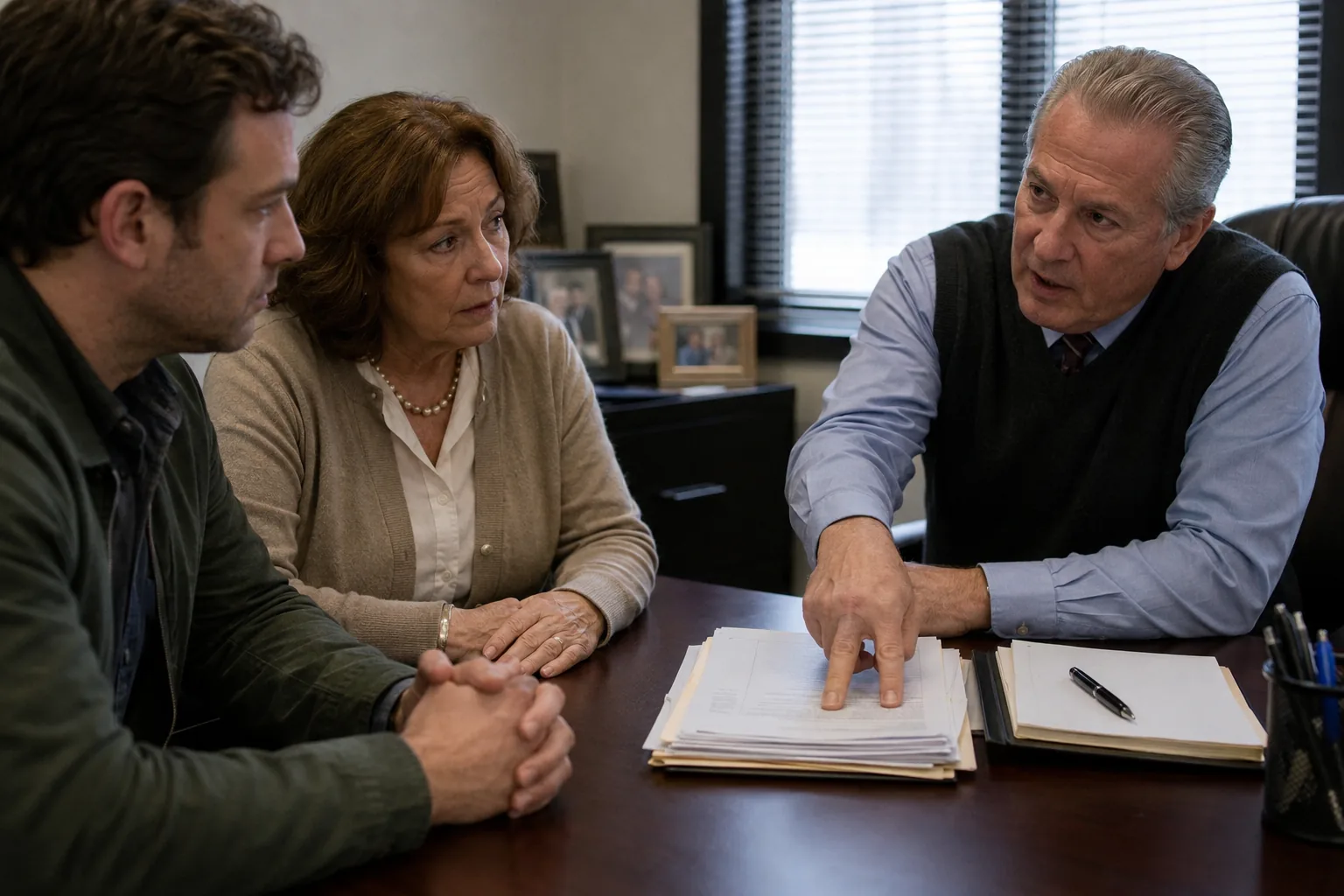
Gerald Pike tapped my grandmother’s estate ledger with two fingers and told me, in the middle of a tax preparer’s office, that my family owed him our silence because of what he had sacrificed for us. A printer was spitting out forms behind the front desk, somebody in the next cubicle was asking for a stapler, and my aunt Diane nodded like this was a normal thing to say over inherited money. I had come in expecting numbers and signatures. Instead, our family accountant was using my grandmother’s estate like a leash. We were seated in a little cluster of guest chairs near Gerald’s desk, the kind with fake leather that squeaks when you shift. The ledger sat open between us, thick and worn at the corners, with sticky tabs sticking out like little flags. Gerald kept one hand on it even when he wasn’t looking down. “Before we go any further,” he said, smoothing his tie, “I need all of you to understand what it cost me to keep this estate from becoming a disaster.” I looked at him because I thought maybe he meant fees. Maybe he was about to explain a filing issue or a delay. But then he leaned back and gave me that practiced, patient look he always used when he wanted to sound like the only adult in the room. “There were years,” he said, “when I took risks for this family that no one appreciated. I covered exposure. I kept things contained. I made choices that protected your grandmother, and now that she’s gone, I need cooperation instead of second-guessing.” Diane let out a breath and said, “He did a lot for us, Alyssa. More than you know.” That was the first moment it stopped sounding like an estate review and started sounding like a warning. I said, “What exactly are you asking for?” Gerald’s mouth tightened, but only for a second. “I’m asking you not to make this harder than it needs to be. There are ways of presenting things and ways of not presenting things. Families get through these situations by trusting the person who’s been carrying the burden.” He said burden like he expected us to thank him for lifting one. Evan had been half-looking at his phone when we sat down, but now it was facedown on his knee. He glanced at the ledger when Gerald turned it slightly, then back at Gerald. Diane folded her hands so tightly her knuckles showed white. The office around us kept moving. A receptionist laughed softly at something near the copier. A phone rang twice and stopped. It made Gerald’s voice sound even stranger, like he was trying to stage a private loyalty speech in a place designed for fluorescent honesty. “We’re here to review Grandma’s estate,” I said. “If there’s a tax issue, say the tax issue. If there’s a number, show the number.” He gave me a thin smile. “That’s exactly the kind of simplistic approach that creates damage. Your grandmother trusted me to handle delicate matters with discretion. I assumed that burden so you wouldn’t have to.” There it was again. Burden. Sacrifice. Trust. All arranged in a way that made a basic question sound disrespectful. Diane turned toward me. “Alyssa, please don’t do this here. Gerald is trying to help us finish this without a mess.” “I’m asking a question,” I said. “And he’s answering it,” she shot back. He wasn’t. He was circling it. Gerald slid the ledger closer to himself and flipped a page with careful fingers. I caught a few columns, dates, handwritten notes in blue ink, and one line with an amount crossed out and replaced. He flattened the page with his palm before I could read more. “This estate requires alignment,” he said. “Not every decision made over the years can be dragged out and picked apart by people who weren’t there carrying the pressure. If I had not stepped in when I did, your grandmother could have lost far more than any of you seem to understand.” I heard Diane say, “Exactly,” almost under her breath. And that was the part that got me. He wasn’t saying he had helped and wanted to be appreciated. He was saying his version of helping gave him the right to decide what questions we were allowed to ask now. “So because you say you protected her,” I said, keeping my voice level, “we’re supposed to just go along with whatever plan you’re putting in front of us?” His eyes stayed on me. “I’m saying gratitude would be appropriate. So would restraint.” There was no way to misunderstand that. Evan stopped nodding. He had been doing it automatically every few minutes whenever Gerald used one of those calm, professional phrases. Now he just sat still, watching. I looked at the open ledger again. “Then show me where restraint belongs in the numbers.” Gerald did not answer that directly. He tapped a section near the middle and started talking about timing, shielding the estate, keeping certain things from becoming bigger problems than they needed to be. Not one sentence landed on a clean line item. Every explanation drifted back to what he had supposedly carried for us. The more he said sacrifice, the less the ledger looked like proof of help and the more it looked like the thing he didn’t want us reading without him narrating it. I pointed to the crossed-out amount I had seen. “Why was that figure changed?” His hand covered the line immediately. “Context matters,” he said. “Then give the context.” Diane made a small cutting motion with her hand like she wanted me to stop before I said something unforgivable. Gerald’s chair creaked as he leaned forward. “Alyssa,” he said, very measured now, “after everything I absorbed for this family, I would think you could manage a little trust.” That was when I understood the real price he was naming. Not money. Not even agreement. He wanted us to act grateful.
Gerald Pike tapped my grandmother’s estate ledger with two fingers and told me, in the middle of a tax preparer’s office, that my family owed him our silence because of what he had sacrificed for us. A printer was spitting out forms behind the front desk, somebody in the next cubicle was asking for a stapler, and my aunt Diane nodded like this was a normal thing to say over inherited money. I had come in expecting numbers and signatures. Instead, our family accountant was using my grandmother’s estate like a leash. We were seated in a little cluster of guest chairs near Gerald’s desk, the kind with fake leather that squeaks when you shift. The ledger sat open between us, thick and worn at the corners, with sticky tabs sticking out like little flags. Gerald kept one hand on it even when he wasn’t looking down. “Before we go any further,” he said, smoothing his tie, “I need all of you to understand what it cost me to keep this estate from becoming a disaster.” I looked at him because I thought maybe he meant fees. Maybe he was about to explain a filing issue or a delay. But then he leaned back and gave me that practiced, patient look he always used when he wanted to sound like the only adult in the room. “There were years,” he said, “when I took risks for this family that no one appreciated. I covered exposure. I kept things contained. I made choices that protected your grandmother, and now that she’s gone, I need cooperation instead of second-guessing.” Diane let out a breath and said, “He did a lot for us, Alyssa. More than you know.” That was the first moment it stopped sounding like an estate review and started sounding like a warning. I said, “What exactly are you asking for?” Gerald’s mouth tightened, but only for a second. “I’m asking you not to make this harder than it needs to be. There are ways of presenting things and ways of not presenting things. Families get through these situations by trusting the person who’s been carrying the burden.” He said burden like he expected us to thank him for lifting one. Evan had been half-looking at his phone when we sat down, but now it was facedown on his knee. He glanced at the ledger when Gerald turned it slightly, then back at Gerald. Diane folded her hands so tightly her knuckles showed white. The office around us kept moving. A receptionist laughed softly at something near the copier. A phone rang twice and stopped. It made Gerald’s voice sound even stranger, like he was trying to stage a private loyalty speech in a place designed for fluorescent honesty. “We’re here to review Grandma’s estate,” I said. “If there’s a tax issue, say the tax issue. If there’s a number, show the number.” He gave me a thin smile. “That’s exactly the kind of simplistic approach that creates damage. Your grandmother trusted me to handle delicate matters with discretion. I assumed that burden so you wouldn’t have to.” There it was again. Burden. Sacrifice. Trust. All arranged in a way that made a basic question sound disrespectful. Diane turned toward me. “Alyssa, please don’t do this here. Gerald is trying to help us finish this without a mess.” “I’m asking a question,” I said. “And he’s answering it,” she shot back. He wasn’t. He was circling it. Gerald slid the ledger closer to himself and flipped a page with careful fingers. I caught a few columns, dates, handwritten notes in blue ink, and one line with an amount crossed out and replaced. He flattened the page with his palm before I could read more. “This estate requires alignment,” he said. “Not every decision made over the years can be dragged out and picked apart by people who weren’t there carrying the pressure. If I had not stepped in when I did, your grandmother could have lost far more than any of you seem to understand.” I heard Diane say, “Exactly,” almost under her breath. And that was the part that got me. He wasn’t saying he had helped and wanted to be appreciated. He was saying his version of helping gave him the right to decide what questions we were allowed to ask now. “So because you say you protected her,” I said, keeping my voice level, “we’re supposed to just go along with whatever plan you’re putting in front of us?” His eyes stayed on me. “I’m saying gratitude would be appropriate. So would restraint.” There was no way to misunderstand that. Evan stopped nodding. He had been doing it automatically every few minutes whenever Gerald used one of those calm, professional phrases. Now he just sat still, watching. I looked at the open ledger again. “Then show me where restraint belongs in the numbers.” Gerald did not answer that directly. He tapped a section near the middle and started talking about timing, shielding the estate, keeping certain things from becoming bigger problems than they needed to be. Not one sentence landed on a clean line item. Every explanation drifted back to what he had supposedly carried for us. The more he said sacrifice, the less the ledger looked like proof of help and the more it looked like the thing he didn’t want us reading without him narrating it. I pointed to the crossed-out amount I had seen. “Why was that figure changed?” His hand covered the line immediately. “Context matters,” he said. “Then give the context.” Diane made a small cutting motion with her hand like she wanted me to stop before I said something unforgivable. Gerald’s chair creaked as he leaned forward. “Alyssa,” he said, very measured now, “after everything I absorbed for this family, I would think you could manage a little trust.” That was when I understood the real price he was naming. Not money. Not even agreement. He wanted us to act grateful.