Story code: ST-000184
Part 1: The Tote on the Porch
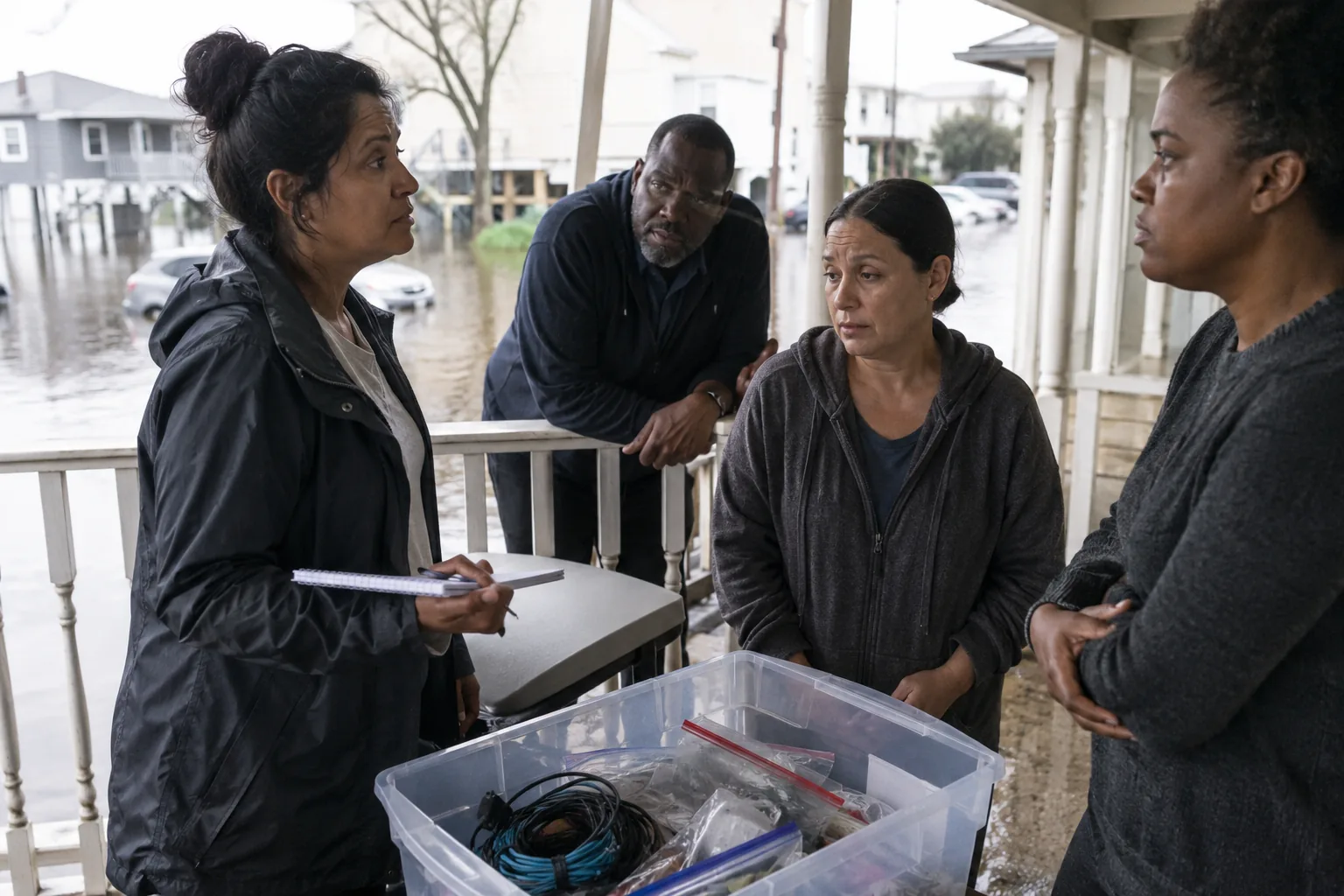
Nina Reyes set the evacuation tote beside Troy Bell on my flooded porch and asked for the lead name before she asked who had packed it, while the tote itself sat open with my labeled cords, zip bags, and receipt pouch in plain view. The water was still sloshing under the porch boards, and the whole job was happening in that tight strip between the front steps and the half-dry kitchen floor, with Len Bell standing back by the railing and watching every hand that touched the tote. Troy took the strap first. I was the one still kneeling over the wet cardboard under it, pulling out a charger and a roll of tape, but Nina kept her eyes on Troy and said, “Just put down Troy for the family lead. He can explain the rest.”
That was the first wrong line of the morning, and it came out like she was reading from a form. I had the tote open because the move list was still changing. We were in a coastal block where people have learned to keep shoes by the door and important papers in plastic, because the flood water comes up without asking. The tote was the one thing I kept ready: copies of utility letters, a taped bundle of IDs, spare phone cords, the small box with medication notes, the battery packs, and the orange tag Nina had asked for two days earlier because she said aid pickups went faster when the bag was clearly marked. I had marked it. I had packed it. I had carried it onto the porch when the stairwell started going soft.
Nina did not ask me any of that. She asked Troy if he had the family evacuation list. He looked at the tote, then at me, then back at her. “Yeah,” he said, and reached into the side pocket like he was checking off boxes he had not touched. Len made a small sound from the railing and said, “That zipper pouch came from Mara. I saw her tape it shut.” Nina did not look at him. She clipped the tote tag to the handle anyway and wrote Troy’s name on the line with a black pen.
I kept my hands on the straps because the wet fabric had started to pull loose on one side. The tote had been dragged through the kitchen, across the threshold, and down the porch step in the same sequence I had used the week before when the first rain cut the power. Troy had not been there for that. He had shown up after the generator was already humming and asked where the flashlight batteries went. Nina had been there then too, with her clipboard and her calm voice, and she had still asked him for the update when she needed to send the note to the relocation channel. Every time, she used his name first. Every time, he let her.
That morning, Nina pointed at the tote and asked me, not Troy, whether the smaller charging bank was in the side pocket or the front mesh. I said the front mesh. Troy leaned down, reached into the side pocket anyway, and came up with a wad of damp receipts and a dead pen. The pocket was empty except for the paper I had folded around the spare cord. Nina frowned at the bag like it had failed her. “The unit wants the lead to confirm what’s inside,” she said. “Troy, can you read off the kit contents?”
Troy shifted the tote higher on his shoulder and looked at the zipper. He pulled it open. He looked inside again. He did not say anything for a beat too long. Len’s head turned toward me, then toward the open bag. I watched Troy put two fingers into the front mesh, feel for the charger, and stop. The charger was clipped where I had left it, under the receipt pouch, with the label facing out. He touched the wrong pocket twice and still came up empty-handed.
Nina held out her hand for the list. Troy kept the tote on his shoulder and said, “I can get it in a second.” But the second did not fix what was missing. The charger needed to match the battery bank I had taped to the inside wall, and Troy’s hand went past it like he did not know the setup at all. Nina’s pen paused over the line with his name on it. Len said, loud enough for all of us to hear, “Then who packed the bank with the orange cord on top?”
Nina Reyes set the evacuation tote beside Troy Bell on my flooded porch and asked for the lead name before she asked who had packed it, while the tote itself sat open with my labeled cords, zip bags, and receipt pouch in plain view. The water was still sloshing under the porch boards, and the whole job was happening in that tight strip between the front steps and the half-dry kitchen floor, with Len Bell standing back by the railing and watching every hand that touched the tote. Troy took the strap first. I was the one still kneeling over the wet cardboard under it, pulling out a charger and a roll of tape, but Nina kept her eyes on Troy and said, “Just put down Troy for the family lead. He can explain the rest.”
That was the first wrong line of the morning, and it came out like she was reading from a form. I had the tote open because the move list was still changing. We were in a coastal block where people have learned to keep shoes by the door and important papers in plastic, because the flood water comes up without asking. The tote was the one thing I kept ready: copies of utility letters, a taped bundle of IDs, spare phone cords, the small box with medication notes, the battery packs, and the orange tag Nina had asked for two days earlier because she said aid pickups went faster when the bag was clearly marked. I had marked it. I had packed it. I had carried it onto the porch when the stairwell started going soft.
Nina did not ask me any of that. She asked Troy if he had the family evacuation list. He looked at the tote, then at me, then back at her. “Yeah,” he said, and reached into the side pocket like he was checking off boxes he had not touched. Len made a small sound from the railing and said, “That zipper pouch came from Mara. I saw her tape it shut.” Nina did not look at him. She clipped the tote tag to the handle anyway and wrote Troy’s name on the line with a black pen.
I kept my hands on the straps because the wet fabric had started to pull loose on one side. The tote had been dragged through the kitchen, across the threshold, and down the porch step in the same sequence I had used the week before when the first rain cut the power. Troy had not been there for that. He had shown up after the generator was already humming and asked where the flashlight batteries went. Nina had been there then too, with her clipboard and her calm voice, and she had still asked him for the update when she needed to send the note to the relocation channel. Every time, she used his name first. Every time, he let her.
That morning, Nina pointed at the tote and asked me, not Troy, whether the smaller charging bank was in the side pocket or the front mesh. I said the front mesh. Troy leaned down, reached into the side pocket anyway, and came up with a wad of damp receipts and a dead pen. The pocket was empty except for the paper I had folded around the spare cord. Nina frowned at the bag like it had failed her. “The unit wants the lead to confirm what’s inside,” she said. “Troy, can you read off the kit contents?”
Troy shifted the tote higher on his shoulder and looked at the zipper. He pulled it open. He looked inside again. He did not say anything for a beat too long. Len’s head turned toward me, then toward the open bag. I watched Troy put two fingers into the front mesh, feel for the charger, and stop. The charger was clipped where I had left it, under the receipt pouch, with the label facing out. He touched the wrong pocket twice and still came up empty-handed.
Nina held out her hand for the list. Troy kept the tote on his shoulder and said, “I can get it in a second.” But the second did not fix what was missing. The charger needed to match the battery bank I had taped to the inside wall, and Troy’s hand went past it like he did not know the setup at all. Nina’s pen paused over the line with his name on it. Len said, loud enough for all of us to hear, “Then who packed the bank with the orange cord on top?”