Story code: ST-000077
Part 1: The Drive Stayed on the Counter
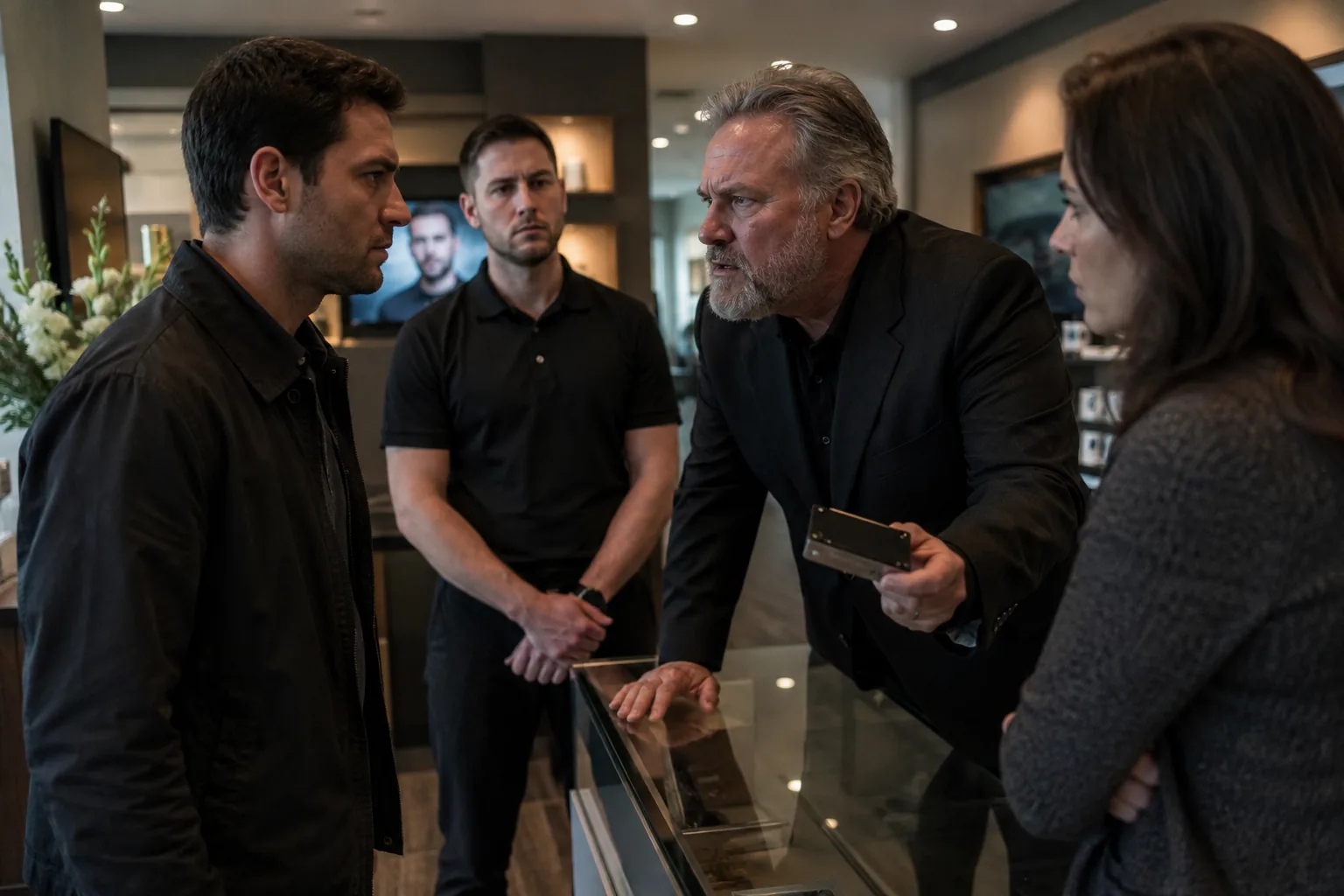
Dale Sutter stopped the pickup with one hand on the voice-model drive and the other on the glass counter in the memorial showroom on Fulton, like he had a right to keep my brother’s voice in place. The drive sat under the service desk light, labeled for our family, while he said a cross-application was required and could not be waived, and nobody in the room could get him to name the source. Nina was standing beside me in the micro-lane by the service desk, with the showroom display loop still playing a soft tribute on the wall behind us, and Dale kept repeating the same rule with the calm of a man reading from something that was supposed to exist.
The room was not crowded, but every sound carried. A printer kicked once and stopped. A terminal beeped from the desk clerk’s side. A man in a suit near the flower rack kept glancing over without stepping in. Dale held the drive at an angle, thumb on the edge of the case, and said, “I can’t release it without the cross-application.” He said it exactly the same way the second time. Then he said it a third time, with the same flat voice, as if repetition made it into a record.
I asked for the policy number.
He looked at the screen instead of at me. “It’s the showroom release process.”
“Where is it written?” I said.
He tapped once, then twice, on a monitor that was not showing anything I could read from where I stood. The service desk clerk leaned in from the next station and checked a different terminal. Neither of them answered that question directly. Dale said the cross-application tied to the drive, to the family file, to the memorial asset, and to the release lane. Each time he named a lane, his hand moved over a different screen, but no screen turned toward us long enough to verify what he was claiming.
Nina stepped closer to the counter. She did not raise her voice. She just asked, “Cross-application with what?”
Dale kept his eyes on the monitor. “With the matching record.”
“Show us the record,” I said.
He did not. He shifted the drive under the light, and I could see the plain plastic edge and the handwritten tag inside the sleeve. My brother’s voice had been transferred to that drive after the last appointment in the showroom’s private booth, the one with the stained glass panel and the padded chair and the little tray where they kept the consent forms. The drive was the only visible object between us and the release he was blocking, and he was treating it like an item that could be held back by tone alone.
The clerk finally said, without looking up from the terminal, “I’ve never seen it done without the release code.”
Dale cut in fast. “This is not that lane.”
That was the first time his wording changed. He had been calling everything a process until then. Now he started separating lanes that nobody had explained to us. Nina pointed at the drive. “Then what lane is this?”
He answered with another policy phrase that did not include a source, a line item, or a document name. It was all posture and no citation. He said the drive was controlled family property until the cross-application cleared. He said the showroom could not release it under a memorial pickup alone. He said that was corporate policy.
I asked him which corporation. He gave me the long version of a short answer and still did not name the document.
The man by the flower rack had stopped pretending not to listen. The clerk turned one printout over, then another, then slid both back into a tray. Nina watched every move. When Dale said the rule applied to all voice-model drives, I asked him to apply it somewhere else in the room. There was an intake kiosk ten feet away, another family desk on the far wall, and a second drive crate already marked for pickup on the shelf behind him.
He said that was not relevant.
I said, “If it’s policy, it should be relevant everywhere.”
That was enough to make the clerk look up. She looked from the drive to Dale, then toward the other desk, like she was checking whether the words would hold there too. Dale saw that look. He tightened his grip on the plastic case and repeated the rule again, slower this time, as if the speed of his voice was the only thing keeping the room from asking one more question.
Then the clerk asked him for the source, right there in front of the counter, and Dale could not give her a name, a number, or a page. He only said the cross-application had to be verified. He could not explain by whom.
That was the first crack. The second came when the same rule had to survive being named out loud in another lane, and nobody at the desk could say where it lived.
Dale Sutter stopped the pickup with one hand on the voice-model drive and the other on the glass counter in the memorial showroom on Fulton, like he had a right to keep my brother’s voice in place. The drive sat under the service desk light, labeled for our family, while he said a cross-application was required and could not be waived, and nobody in the room could get him to name the source. Nina was standing beside me in the micro-lane by the service desk, with the showroom display loop still playing a soft tribute on the wall behind us, and Dale kept repeating the same rule with the calm of a man reading from something that was supposed to exist.
The room was not crowded, but every sound carried. A printer kicked once and stopped. A terminal beeped from the desk clerk’s side. A man in a suit near the flower rack kept glancing over without stepping in. Dale held the drive at an angle, thumb on the edge of the case, and said, “I can’t release it without the cross-application.” He said it exactly the same way the second time. Then he said it a third time, with the same flat voice, as if repetition made it into a record.
I asked for the policy number.
He looked at the screen instead of at me. “It’s the showroom release process.”
“Where is it written?” I said.
He tapped once, then twice, on a monitor that was not showing anything I could read from where I stood. The service desk clerk leaned in from the next station and checked a different terminal. Neither of them answered that question directly. Dale said the cross-application tied to the drive, to the family file, to the memorial asset, and to the release lane. Each time he named a lane, his hand moved over a different screen, but no screen turned toward us long enough to verify what he was claiming.
Nina stepped closer to the counter. She did not raise her voice. She just asked, “Cross-application with what?”
Dale kept his eyes on the monitor. “With the matching record.”
“Show us the record,” I said.
He did not. He shifted the drive under the light, and I could see the plain plastic edge and the handwritten tag inside the sleeve. My brother’s voice had been transferred to that drive after the last appointment in the showroom’s private booth, the one with the stained glass panel and the padded chair and the little tray where they kept the consent forms. The drive was the only visible object between us and the release he was blocking, and he was treating it like an item that could be held back by tone alone.
The clerk finally said, without looking up from the terminal, “I’ve never seen it done without the release code.”
Dale cut in fast. “This is not that lane.”
That was the first time his wording changed. He had been calling everything a process until then. Now he started separating lanes that nobody had explained to us. Nina pointed at the drive. “Then what lane is this?”
He answered with another policy phrase that did not include a source, a line item, or a document name. It was all posture and no citation. He said the drive was controlled family property until the cross-application cleared. He said the showroom could not release it under a memorial pickup alone. He said that was corporate policy.
I asked him which corporation. He gave me the long version of a short answer and still did not name the document.
The man by the flower rack had stopped pretending not to listen. The clerk turned one printout over, then another, then slid both back into a tray. Nina watched every move. When Dale said the rule applied to all voice-model drives, I asked him to apply it somewhere else in the room. There was an intake kiosk ten feet away, another family desk on the far wall, and a second drive crate already marked for pickup on the shelf behind him.
He said that was not relevant.
I said, “If it’s policy, it should be relevant everywhere.”
That was enough to make the clerk look up. She looked from the drive to Dale, then toward the other desk, like she was checking whether the words would hold there too. Dale saw that look. He tightened his grip on the plastic case and repeated the rule again, slower this time, as if the speed of his voice was the only thing keeping the room from asking one more question.
Then the clerk asked him for the source, right there in front of the counter, and Dale could not give her a name, a number, or a page. He only said the cross-application had to be verified. He could not explain by whom.
That was the first crack. The second came when the same rule had to survive being named out loud in another lane, and nobody at the desk could say where it lived.