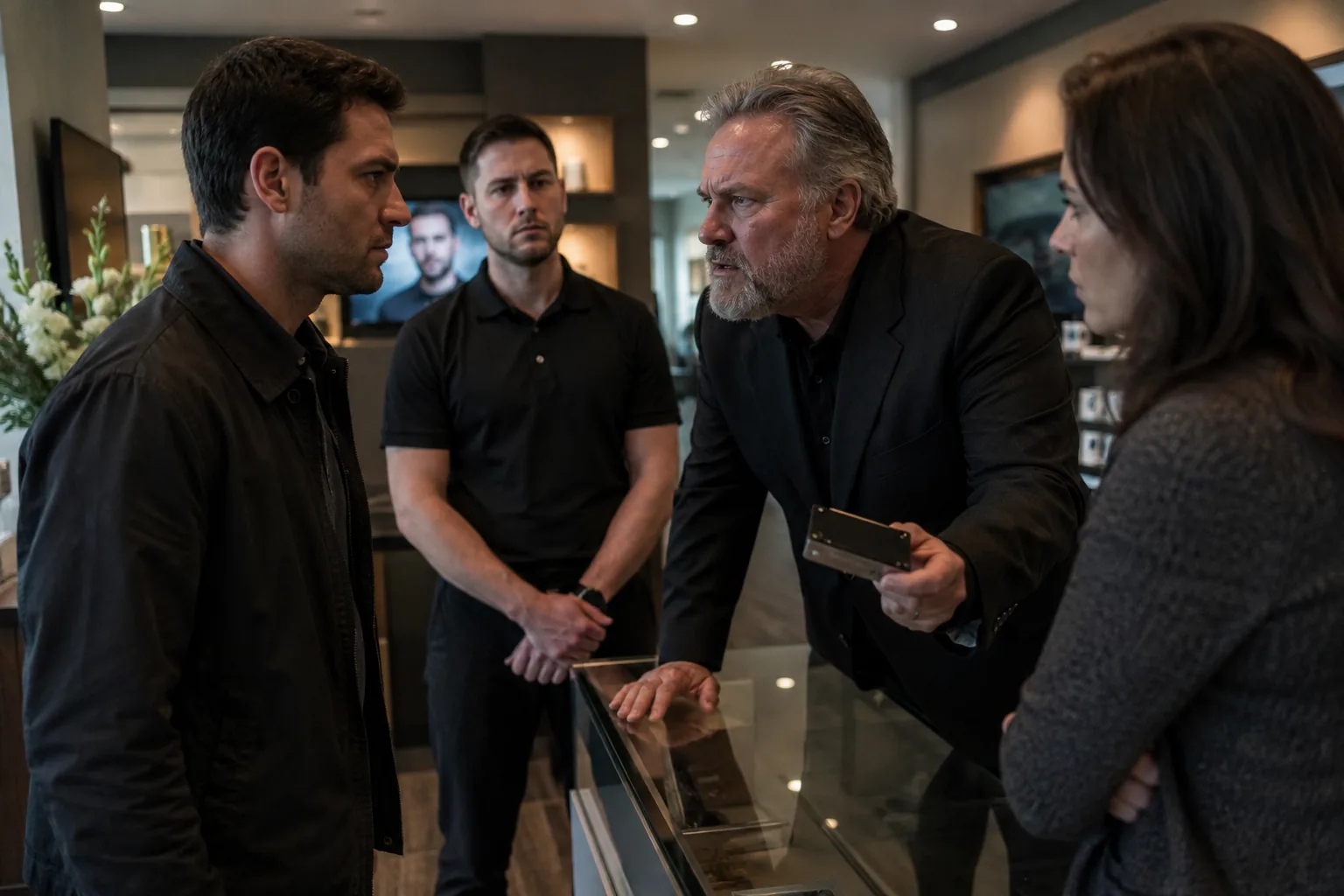
Story code: ST-000077
Part 3: The Hold Became a Function
The clerk did not lower her hand from the tray. She kept the drive where it was and asked Dale one more time to name the source line. He looked at the blank monitor, then at the other desk, then at the shelf crate behind him, as if the answer might be sitting in one of those places with a label on it. None of them moved.
He said, “I need the cross-application to clear before release.”
“Then show the cross-application,” she said.
Nina reached for the paper on the desk, but the clerk had already taken it back. She slid it under the lamp and pointed to the line where the request category and the release category did not match. The paper had a printed code in the corner, but not the one Dale had been citing. The clerk turned to the terminal and entered the family file number again. The screen gave her the same answer as before: no matching source attached to the refusal.
That was the first time the room saw the system answer him back.
The man by the flower rack stopped pretending to shop. The woman near the bereavement cards moved one step closer, not enough to crowd the desk, just enough to hear the clerk read the screen aloud. Dale kept his jaw set and said the screen did not reflect the full policy set. The clerk did not look at him when she answered. She read another line, then another, and each one showed the same thing: the drive was flagged for pickup, the pickup was paused, and the pause had no documented reason that matched the lane he had named.
I asked, “If the rule is real, what is it called in the system?”
He did not answer right away. He reached for the mouse, stopped, and then tapped the desk twice with two fingers. The clerk entered the same request in the intake lane by the blue lamp. The result came back different in one way only: there, the drive was eligible for transfer to a supervised archive copy. No cross-application was listed. No prohibition was listed either.
The clerk looked up at him for the first time without the screen between them.
“So the rule only exists on your counter,” she said.
Dale said, “That’s not what I said.”
But nobody in the room repeated his words. They were all looking at the two screens now, one beside the main counter and one beside the family desk, with the same drive number and two different outcomes. The mismatch was plain enough that the clerk printed both pages and laid them side by side. She did not explain them. She did not need to. One page blocked release. The other page offered a controlled version of it. The difference was the lane, not the asset.
Nina took a step forward and pointed at the second page. “That one wasn’t there a minute ago.”
“It was always there,” Dale said, too fast.
The clerk answered, “No, it wasn’t. Not in the lane you used.” Then she turned to the monitor again and keyed in the release options. The screen brought up a new field I had not seen before: restricted memorial transfer, family playback only, no raw drive release. She read the field aloud once, flatly, and the room went still in the practical way it does when a bad answer becomes a usable one.
That was the shape of the pressure now. Not no. Not yes. A narrower yes with a lock on it.
Dale stared at the line on the screen. He did not deny it. He clicked into the field and hesitated there with his hand over the mouse. The clerk said if he could not support the old refusal, he had to either release the drive under the restricted option or note the block with a source he could produce. He did neither. He kept his hand on the mouse and looked at the printed pages as if one of them might change on its own.
I said, “Pick one.”
He looked at me then, not long, just enough to register the question. The clerk was waiting for the same thing. So was the line of quiet people who had drifted closer to the desk without meaning to. The showroom display kept playing its soft loop over the wall, a voice with a brighter body than the room around it, and under that sound I could hear the printer warming up again.
Dale finally clicked the restricted transfer option. A gray confirmation box opened. The clerk read the warning aloud: the family would receive a monitored memorial playback key instead of the original drive. The raw asset would remain in showroom custody until the restricted handoff cleared. She did not soften the words. She spoke them the way a desk clerk speaks a policy that has already been made final.
Nina put both hands on the counter edge and looked at the box on the screen. I watched Dale move the mouse to the confirmation field, then stop again when the clerk asked him to enter his operator ID under the restriction note. He typed it in. The system accepted it.
That was the irreversible part. The rule had failed in front of its own process, and now the only path left was the one it had been blocking from the start. Dale still had one thing left to do, and the screen had already told him what it was.