Story code: ST-000077
Part 4: The Handoff Had to Be Signed Down
Dale sat with the mouse in his right hand and the confirmation box open on the monitor while the clerk waited for the next field to fill. The showroom had settled into a tighter kind of silence, the kind that comes after everyone has seen enough to know the next click will matter more than the last argument.
The clerk read the confirmation box again, then slid the two printed pages back toward the counter. One showed the refusal he had been repeating. The other showed the restricted transfer now standing in its place. She kept her finger on the second page and said, “This is the available lane.” Not a correction. Not a compromise. Just the lane the system would accept.
Dale asked, “And if I don’t complete it?”
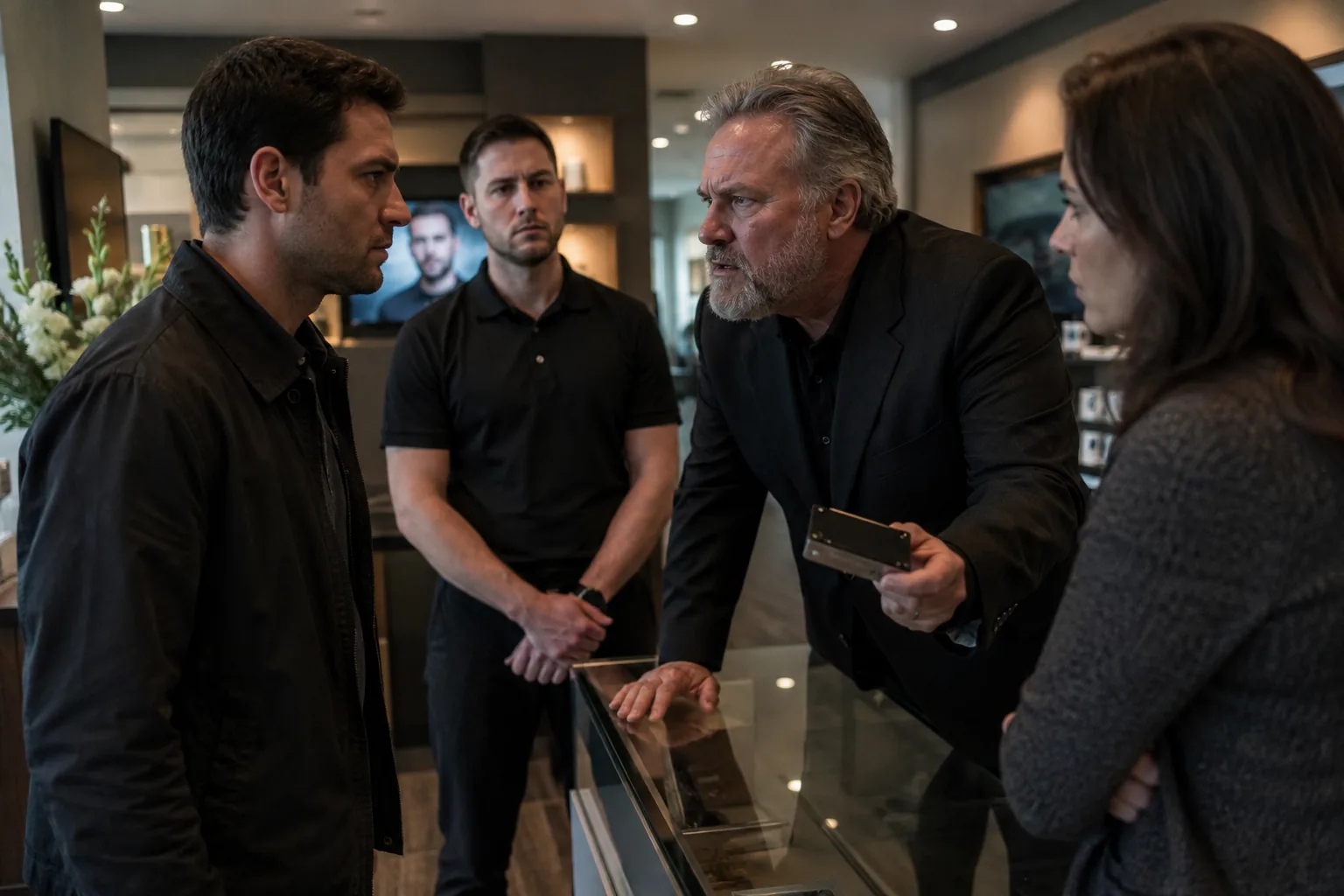
She did not answer with a speech. She turned the monitor slightly so I could see the red timer bar at the top of the screen. The request was not held by a person anymore. It was held by the process window itself, waiting for an operator action or a timeout that would freeze the pickup and lock the asset to the showroom account until review. The room did not need a bigger threat than that. The drive was already boxed on the counter in front of him, and now the account around it was starting to tighten.
Nina said, “Then do the handoff.”
Dale did not look at her. He typed his ID again when the clerk asked for it a second time. He clicked through the warning. He opened the restriction note field and began entering the required text, one line at a time, with the same careful pace he had used when he was blocking us. Only now the words were not his claim. They were the system’s terms.
The clerk read each entry as it appeared. “Family playback only.” Pause. “No raw drive release.” Pause. “Supervised memorial transfer pending completion.” She did not add anything to the line. She did not argue with it. She just confirmed it on the screen and moved to the next step.
When the final confirmation window opened, the printer started again. A small slip came out with the restricted handoff record, and the clerk tore it free and laid it flat beside the drive sleeve. She stamped the page once, then slid a matching wristband-sized access key from a drawer and set it in a small clear envelope. It was not the drive. It was not the full voice. It was the only thing the system would let go now.
Dale reached for the drive, but the clerk stopped him with two fingers on the sleeve. She pointed to the printed note he had just signed. The raw asset stayed with the showroom under the new restriction until the family playback key could be verified at home. The release had happened, but not on his terms, and not in the shape he had tried to force on the room.
He finally lifted the drive case and handed it across the counter to the clerk for the secure bin. She took it without a word. The lid closed with a dull click that sounded smaller than the afternoon had felt.
I signed for the restricted playback key and read the note at the bottom of the page. It listed the new condition plainly: the family could take home the playback access, but the original drive would remain locked to memorial custody until the supervised transfer cleared. That was the cost of the bluff collapsing in public. Control came back, but it came back narrowed, documented, and impossible to argue out of the system later.
Dale did not offer another explanation. He did not need to. The screen had already replaced his voice with the actual rule, and the rule had turned into a restriction we could carry home.
Nina took the envelope from the clerk and slipped it into her bag without looking away from the counter. The clerk reset the terminal. The printer stopped. The showroom display kept playing the tribute loop, but the room had changed around it. We were not leaving with the drive. We were leaving with permission to hear it under a tighter lock, and the paper in my hand said exactly that.
That was the relief: not victory, not apology, just the end of his control over what the process was allowed to be.