Story code: ST-000036
Part 1: She Handed Me the Flowers Like I Worked for Her
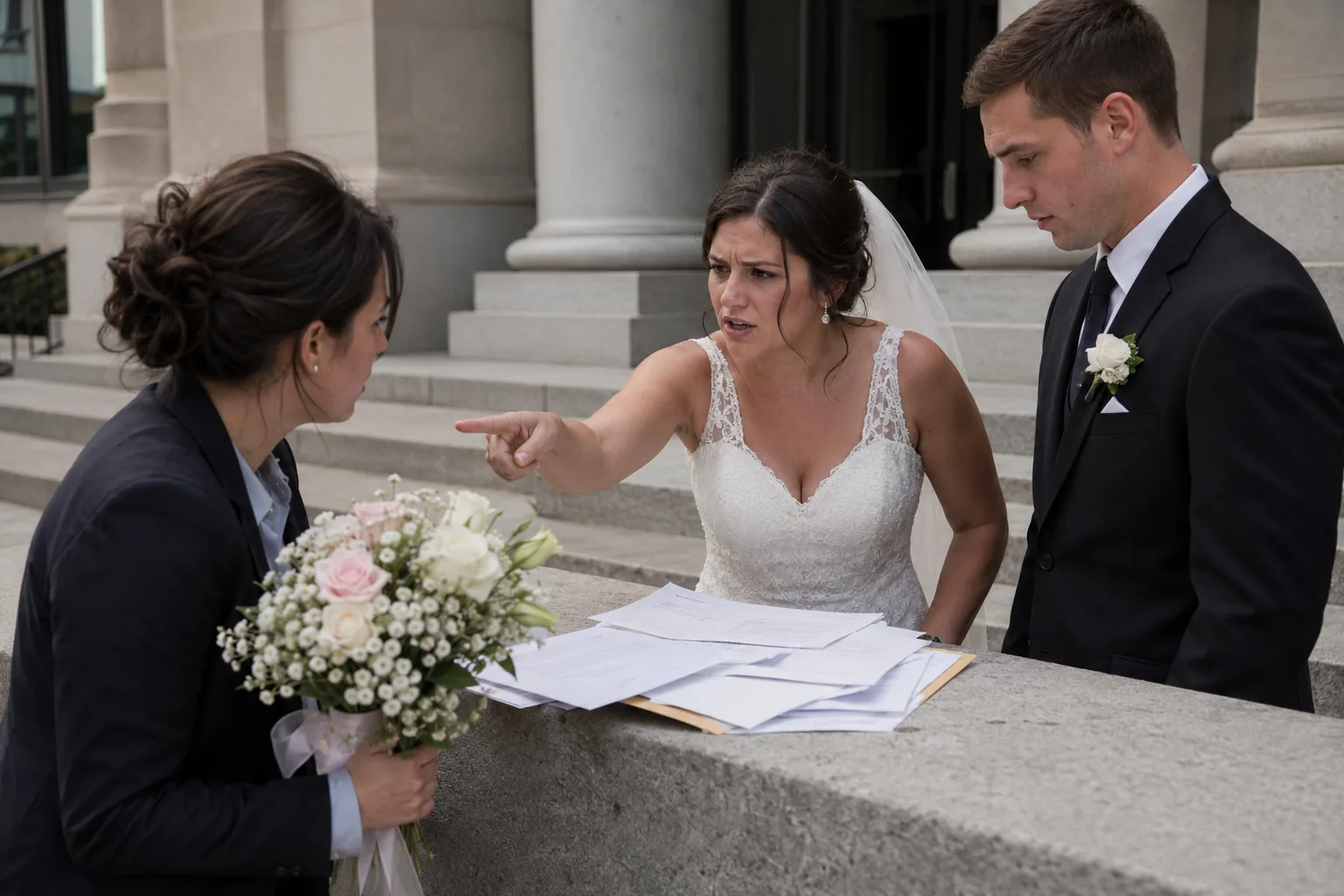
Pam Mercer shoved a bridal bouquet into my hands on the courthouse steps, scattered the marriage license packet across the stone ledge, and then pointed at me like I had caused it. “You need to fix this,” she said, loud enough for the security line to turn and look, while her daughter stood three feet away in a cream dress and watched her own mother dump the delay onto the nearest worker.
I work visitor services at the county courthouse, which mostly means directions, forms, and keeping the front approach from turning into a traffic knot. That morning I was near the security-adjacent lane, answering a question about probate, when Leah Mercer, Daniel Cho, and their witness, Tasha Reed, came up the steps carrying exactly what eloping couples usually carry: a small bouquet, a phone with a confirmation screen open, two IDs ready to be produced, and a marriage license packet tucked under Leah’s arm.
They had that clipped, quiet way people move when they have already decided not to make a production out of a major life event. Daniel stayed close to Leah’s shoulder. Tasha had a backup ribbon looped around her fingers and kept checking the phone notes. Leah held the packet carefully by the edges.
Then Pam came up from the curb fast, phone in one hand, oversized handbag open, loose papers jutting out. She did not slow down when Leah said, “Mom, stop.”
She reached directly for the packet.
Leah turned her body, but Pam had already caught the top page and yanked it halfway free. The license packet bent, one sheet slid sideways, and her handbag slipped off her forearm. A handful of unrelated papers spilled across the stone ledge and one of the lower steps.
Pam made a helpless sound and pushed the bouquet at Tasha first. Tasha had her phone in one hand and missed it. The bouquet tipped. I caught it before it hit the concrete.
That was how I ended up standing on courthouse steps holding somebody else’s flowers while Pam fluttered both hands over the paperwork she had just knocked apart.
“Oh my God,” she said. “This is why people need help here. Which one of these is the real form?”
Leah said, very flat, “The one I was holding before you grabbed it.”
Pam ignored that and looked at me. “Can you put it back in order? We’re already late because nobody explains anything.”
I kept the bouquet in one hand and said, “I can tell you where to go next, but I don’t take original documents unless intake asks me to.”
“So you’re just going to stand there?” Pam said.
Daniel took one step down and crouched for a paper that had slid near the railing. “These aren’t ours,” he said, holding up a folded pharmacy receipt and something from a dry cleaner.
“Well, now I’m upset, Daniel, obviously I dropped things,” Pam shot back. “Leah, this is what happens when you spring courthouse nonsense on people and expect your mother to navigate it alone.”
Tasha put her phone in her bag and started gathering the actual packet pages from the ledge. “We had it organized,” she said. “You pulled it apart.”
Pam turned on her immediately. “Don’t start. You were supposed to witness, not just stand there with your little notes app while the family handles the important part.”
That was the first public dump. She created the mess, then assigned ownership of it to whoever was closest.
I shifted the bouquet back toward Tasha. “Ma’am, if the couple has their IDs and appointment details, they can move to the clerk checkpoint when called.”
Pam cut across me. “Appointment details? Nobody told me there was a separate checkpoint. Leah, did you even print the right packet? Nina, is it Nina? You people change this process every six months.”
My badge was clipped to my folder. She had read it without missing a beat.
“The process is posted on the sign behind you,” I said.
Pam turned, glanced straight at the sign, and then looked back at me with a tight little frown. “Those signs are impossible. What does intake mean in this context?”
Before I answered, she plucked one page from Tasha’s hand, held it upside down for half a second, flipped it, and said, “No, this one goes under the affidavit page, not over it, or they’ll send you back.” She said it fast, like a correction she had made before.
Leah’s head came up at that. Daniel stopped reaching for the rest of the papers. Tasha froze with one corner of the packet still between her fingers.
Pam seemed to hear herself a moment late. She changed her voice on the next sentence and widened her eyes at me. “I mean, I don’t know, that’s just what I assumed. This whole thing is so confusing.”
Mr. Holloway opened the inner door and called for the Mercer-Cho appointment.
Pam immediately shoved two loose pages at me, as if I worked for her family alone. “Here,” she said. “Hold these and tell us which line they need. If this gets rejected, it’s on the people who were supposed to help.”
I did not take the papers. Tasha took the bouquet from me instead. Leah took the packet back page by page, pressing the stack flat against the stone ledge with the side of her hand. Daniel handed over the IDs only when Leah asked.
Pam kept talking over all of them. She said she did not understand the order, the timing, the checkpoint, the witness step, any of it. But every time a page shifted, her eyes went straight to the exact field she claimed not to know.
And when Mr. Holloway asked from the doorway, “Who assembled this packet?” Pam answered before anyone else could.
“They did it wrong,” she said. “But I can show you where it got mixed up.”
That was the moment I stopped hearing confusion and started hearing rehearsal, and I still had no clean way to prove it.
Pam Mercer shoved a bridal bouquet into my hands on the courthouse steps, scattered the marriage license packet across the stone ledge, and then pointed at me like I had caused it. “You need to fix this,” she said, loud enough for the security line to turn and look, while her daughter stood three feet away in a cream dress and watched her own mother dump the delay onto the nearest worker.
I work visitor services at the county courthouse, which mostly means directions, forms, and keeping the front approach from turning into a traffic knot. That morning I was near the security-adjacent lane, answering a question about probate, when Leah Mercer, Daniel Cho, and their witness, Tasha Reed, came up the steps carrying exactly what eloping couples usually carry: a small bouquet, a phone with a confirmation screen open, two IDs ready to be produced, and a marriage license packet tucked under Leah’s arm.
They had that clipped, quiet way people move when they have already decided not to make a production out of a major life event. Daniel stayed close to Leah’s shoulder. Tasha had a backup ribbon looped around her fingers and kept checking the phone notes. Leah held the packet carefully by the edges.
Then Pam came up from the curb fast, phone in one hand, oversized handbag open, loose papers jutting out. She did not slow down when Leah said, “Mom, stop.”
She reached directly for the packet.
Leah turned her body, but Pam had already caught the top page and yanked it halfway free. The license packet bent, one sheet slid sideways, and her handbag slipped off her forearm. A handful of unrelated papers spilled across the stone ledge and one of the lower steps.
Pam made a helpless sound and pushed the bouquet at Tasha first. Tasha had her phone in one hand and missed it. The bouquet tipped. I caught it before it hit the concrete.
That was how I ended up standing on courthouse steps holding somebody else’s flowers while Pam fluttered both hands over the paperwork she had just knocked apart.
“Oh my God,” she said. “This is why people need help here. Which one of these is the real form?”
Leah said, very flat, “The one I was holding before you grabbed it.”
Pam ignored that and looked at me. “Can you put it back in order? We’re already late because nobody explains anything.”
I kept the bouquet in one hand and said, “I can tell you where to go next, but I don’t take original documents unless intake asks me to.”
“So you’re just going to stand there?” Pam said.
Daniel took one step down and crouched for a paper that had slid near the railing. “These aren’t ours,” he said, holding up a folded pharmacy receipt and something from a dry cleaner.
“Well, now I’m upset, Daniel, obviously I dropped things,” Pam shot back. “Leah, this is what happens when you spring courthouse nonsense on people and expect your mother to navigate it alone.”
Tasha put her phone in her bag and started gathering the actual packet pages from the ledge. “We had it organized,” she said. “You pulled it apart.”
Pam turned on her immediately. “Don’t start. You were supposed to witness, not just stand there with your little notes app while the family handles the important part.”
That was the first public dump. She created the mess, then assigned ownership of it to whoever was closest.
I shifted the bouquet back toward Tasha. “Ma’am, if the couple has their IDs and appointment details, they can move to the clerk checkpoint when called.”
Pam cut across me. “Appointment details? Nobody told me there was a separate checkpoint. Leah, did you even print the right packet? Nina, is it Nina? You people change this process every six months.”
My badge was clipped to my folder. She had read it without missing a beat.
“The process is posted on the sign behind you,” I said.
Pam turned, glanced straight at the sign, and then looked back at me with a tight little frown. “Those signs are impossible. What does intake mean in this context?”
Before I answered, she plucked one page from Tasha’s hand, held it upside down for half a second, flipped it, and said, “No, this one goes under the affidavit page, not over it, or they’ll send you back.” She said it fast, like a correction she had made before.
Leah’s head came up at that. Daniel stopped reaching for the rest of the papers. Tasha froze with one corner of the packet still between her fingers.
Pam seemed to hear herself a moment late. She changed her voice on the next sentence and widened her eyes at me. “I mean, I don’t know, that’s just what I assumed. This whole thing is so confusing.”
Mr. Holloway opened the inner door and called for the Mercer-Cho appointment.
Pam immediately shoved two loose pages at me, as if I worked for her family alone. “Here,” she said. “Hold these and tell us which line they need. If this gets rejected, it’s on the people who were supposed to help.”
I did not take the papers. Tasha took the bouquet from me instead. Leah took the packet back page by page, pressing the stack flat against the stone ledge with the side of her hand. Daniel handed over the IDs only when Leah asked.
Pam kept talking over all of them. She said she did not understand the order, the timing, the checkpoint, the witness step, any of it. But every time a page shifted, her eyes went straight to the exact field she claimed not to know.
And when Mr. Holloway asked from the doorway, “Who assembled this packet?” Pam answered before anyone else could.
“They did it wrong,” she said. “But I can show you where it got mixed up.”
That was the moment I stopped hearing confusion and started hearing rehearsal, and I still had no clean way to prove it.