Story code: ST-000176
Part 1: The Ramp She Kept Ruining
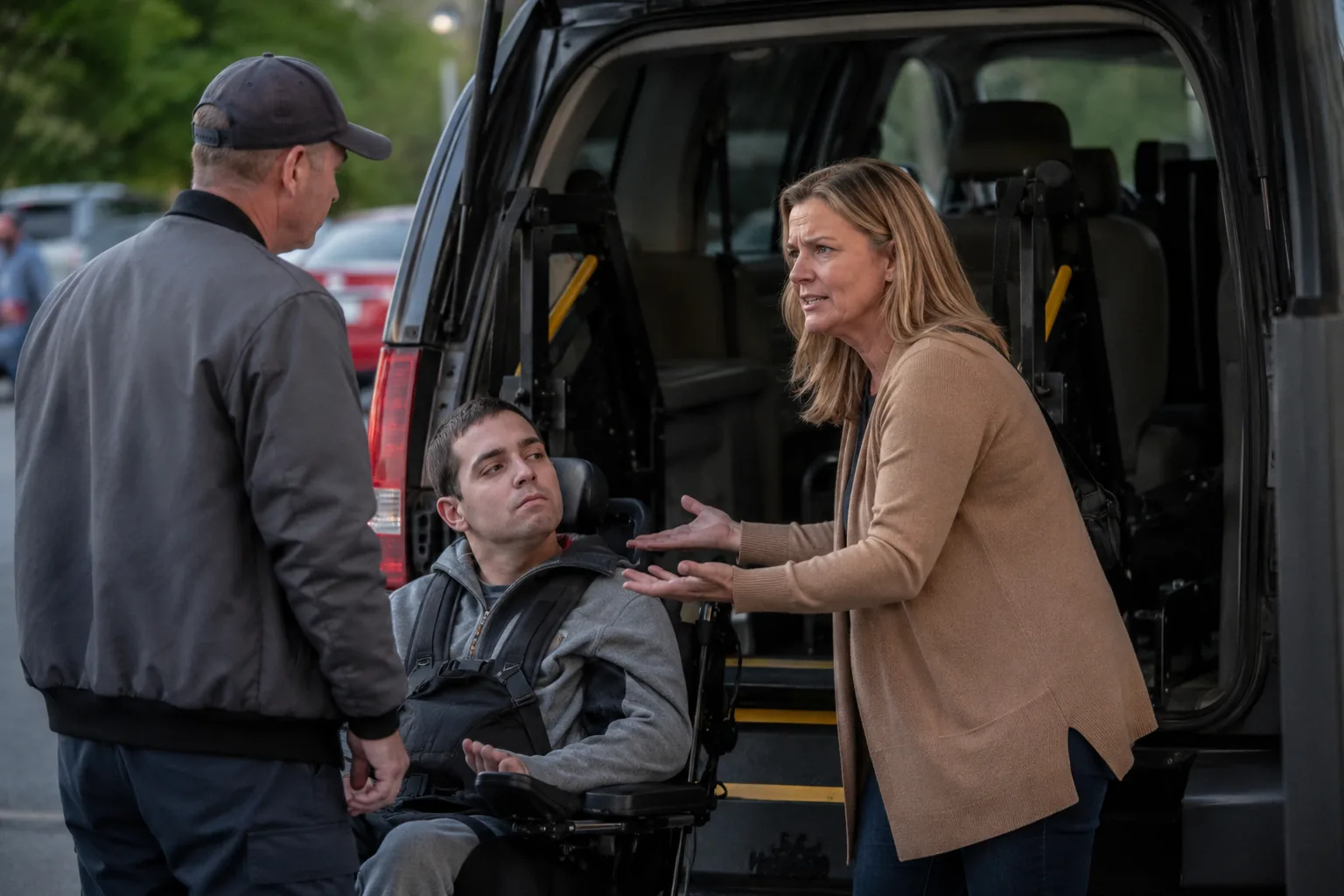
Dana Whitmore made her brother look like the problem before I had even finished securing the van. We were parked at the curb with the side door open, the wheelchair ramp halfway out, and every time she touched the control she managed to stop it in the one position that left Leon stranded and me waiting on his apology instead of hers. By her third “I swear I don’t know why it keeps doing that,” I had already seen enough to know the damage was landing on the wrong person.
I work routine mobility transfers all day. Most stops are dull on purpose. You line up the chair, clear the footrests, lower the ramp, guide the passenger, lock the brakes when needed, secure straps, move on. The van was one of the older family models with the narrow center aisle, the rubber floor worn smooth by years of wheels, and the ramp control mounted just inside the side door where anyone standing there could work it with one hand.
Leon was already in position at the threshold when I stepped back to give Dana room. He sat in his chair with his overnight bag looped over one handle and both feet lined up carefully on the rests. He had the kind of stillness some riders use when they are trying not to get jostled more than necessary.
Dana gave me a quick smile like we were both stuck in something silly together. “I’m sorry,” she said. “I’m still getting used to this van. He usually talks me through it.”
Leon looked at the switch, not at her. “You don’t need me to talk you through lowering it. Just hold it down.”
She pressed the toggle. The motor started, the ramp slid two feet, then she let go too early. It stopped with a hard little jerk, not down far enough to reach the curb and not high enough to retract.
“See?” she said, too bright. “It always catches.”
“No,” Leon said. “You took your thumb off it.”
She laughed once through her nose. “Okay, then you do it from back there.”
He was the one stuck at the edge of the opening, chair angled toward daylight and nowhere to go. He couldn’t reach the switch from where he sat. I could, but procedure is simple on family transfers: if the caregiver is capable and the equipment is theirs, I let them operate unless safety requires me to take over.
I kept my voice even. “Go ahead and run it all the way down, please.”
Dana sighed like she had been handed the heaviest part of the day. She pressed the switch again. This time she let the ramp lower almost flat, then bumped it back up at the last second so the lip hung above the curb.
The small movement was enough. Leon’s front casters tapped the edge and stopped.
Dana threw both hands up. “Leon, wait. You always rush me.”
He didn’t raise his voice. “I wasn’t moving.”
That was true. His hands were still on his lap.
I leaned down to check the angle. “We need the lip flush with the curb.”
“That’s what I was trying to do,” Dana said quickly. “He’s twisting in the chair and it makes me nervous. If he would just sit still-”
Leon turned his head and looked at me for the first time. “I am sitting still.”
He said it the way someone corrects a number on a receipt.
Dana made another attempt. Wrong again. This time she overcorrected and sent the ramp back in so far that I had to put a hand against the side frame to stop Leon’s chair from rolling with the van’s slight tilt.
“Whoa,” I said.
“Sorry, sorry.” She gave that same fast smile. “I get flustered when people watch me.”
Leon closed his eyes for one beat, opened them, and said, “Mara, could you set my brakes?”
I did. He could have reached them, but the angle was bad now, his chair crooked because every failed attempt forced another tiny adjustment. The burden kept shifting toward him in ways that looked small until you counted them. He had to keep correcting his position. He had to keep explaining the machine in his own van. He had to keep absorbing her mistakes while she narrated herself as the one under pressure.
Dana touched the control with exaggerated care. She missed the switch entirely on the first pass, then found it and lowered the ramp in short, messy bursts.
That was when I started paying closer attention to her hands, not her words. She fumbled the obvious parts. But she never once looked down to search for the toggle anymore. Her thumb went straight to it every time.
Leon noticed me watching. He said, very flat, “Top edge first, Dana. Same as always.”
She snapped back, “If you know so much, why am I the one doing everything?”
The sentence sat there in the van after the motor cut off.
I got the ramp down myself because at that point safety had outranked politeness. Leon rolled forward without another word. Dana stepped aside, muttering apologies at me instead of to him. Once he was inside and I started on the tie-downs, she reached past me to clip his overnight bag to the wall hook in one fast motion.
Fast enough that it didn’t match the woman who couldn’t manage a single steady hold on the ramp switch.
I looked at her hand, then at the hook she had found without checking. Leon was already looking at the same thing.
If Dana was truly that lost with the van, I couldn’t explain why her mistakes kept landing only on the parts that left her brother doing the waiting, the correcting, and the blame-taking.
Dana Whitmore made her brother look like the problem before I had even finished securing the van. We were parked at the curb with the side door open, the wheelchair ramp halfway out, and every time she touched the control she managed to stop it in the one position that left Leon stranded and me waiting on his apology instead of hers. By her third “I swear I don’t know why it keeps doing that,” I had already seen enough to know the damage was landing on the wrong person.
I work routine mobility transfers all day. Most stops are dull on purpose. You line up the chair, clear the footrests, lower the ramp, guide the passenger, lock the brakes when needed, secure straps, move on. The van was one of the older family models with the narrow center aisle, the rubber floor worn smooth by years of wheels, and the ramp control mounted just inside the side door where anyone standing there could work it with one hand.
Leon was already in position at the threshold when I stepped back to give Dana room. He sat in his chair with his overnight bag looped over one handle and both feet lined up carefully on the rests. He had the kind of stillness some riders use when they are trying not to get jostled more than necessary.
Dana gave me a quick smile like we were both stuck in something silly together. “I’m sorry,” she said. “I’m still getting used to this van. He usually talks me through it.”
Leon looked at the switch, not at her. “You don’t need me to talk you through lowering it. Just hold it down.”
She pressed the toggle. The motor started, the ramp slid two feet, then she let go too early. It stopped with a hard little jerk, not down far enough to reach the curb and not high enough to retract.
“See?” she said, too bright. “It always catches.”
“No,” Leon said. “You took your thumb off it.”
She laughed once through her nose. “Okay, then you do it from back there.”
He was the one stuck at the edge of the opening, chair angled toward daylight and nowhere to go. He couldn’t reach the switch from where he sat. I could, but procedure is simple on family transfers: if the caregiver is capable and the equipment is theirs, I let them operate unless safety requires me to take over.
I kept my voice even. “Go ahead and run it all the way down, please.”
Dana sighed like she had been handed the heaviest part of the day. She pressed the switch again. This time she let the ramp lower almost flat, then bumped it back up at the last second so the lip hung above the curb.
The small movement was enough. Leon’s front casters tapped the edge and stopped.
Dana threw both hands up. “Leon, wait. You always rush me.”
He didn’t raise his voice. “I wasn’t moving.”
That was true. His hands were still on his lap.
I leaned down to check the angle. “We need the lip flush with the curb.”
“That’s what I was trying to do,” Dana said quickly. “He’s twisting in the chair and it makes me nervous. If he would just sit still-”
Leon turned his head and looked at me for the first time. “I am sitting still.”
He said it the way someone corrects a number on a receipt.
Dana made another attempt. Wrong again. This time she overcorrected and sent the ramp back in so far that I had to put a hand against the side frame to stop Leon’s chair from rolling with the van’s slight tilt.
“Whoa,” I said.
“Sorry, sorry.” She gave that same fast smile. “I get flustered when people watch me.”
Leon closed his eyes for one beat, opened them, and said, “Mara, could you set my brakes?”
I did. He could have reached them, but the angle was bad now, his chair crooked because every failed attempt forced another tiny adjustment. The burden kept shifting toward him in ways that looked small until you counted them. He had to keep correcting his position. He had to keep explaining the machine in his own van. He had to keep absorbing her mistakes while she narrated herself as the one under pressure.
Dana touched the control with exaggerated care. She missed the switch entirely on the first pass, then found it and lowered the ramp in short, messy bursts.
That was when I started paying closer attention to her hands, not her words. She fumbled the obvious parts. But she never once looked down to search for the toggle anymore. Her thumb went straight to it every time.
Leon noticed me watching. He said, very flat, “Top edge first, Dana. Same as always.”
She snapped back, “If you know so much, why am I the one doing everything?”
The sentence sat there in the van after the motor cut off.
I got the ramp down myself because at that point safety had outranked politeness. Leon rolled forward without another word. Dana stepped aside, muttering apologies at me instead of to him. Once he was inside and I started on the tie-downs, she reached past me to clip his overnight bag to the wall hook in one fast motion.
Fast enough that it didn’t match the woman who couldn’t manage a single steady hold on the ramp switch.
I looked at her hand, then at the hook she had found without checking. Leon was already looking at the same thing.
If Dana was truly that lost with the van, I couldn’t explain why her mistakes kept landing only on the parts that left her brother doing the waiting, the correcting, and the blame-taking.