Story code: ST-001216
Part 1: The Burden of Incompetence
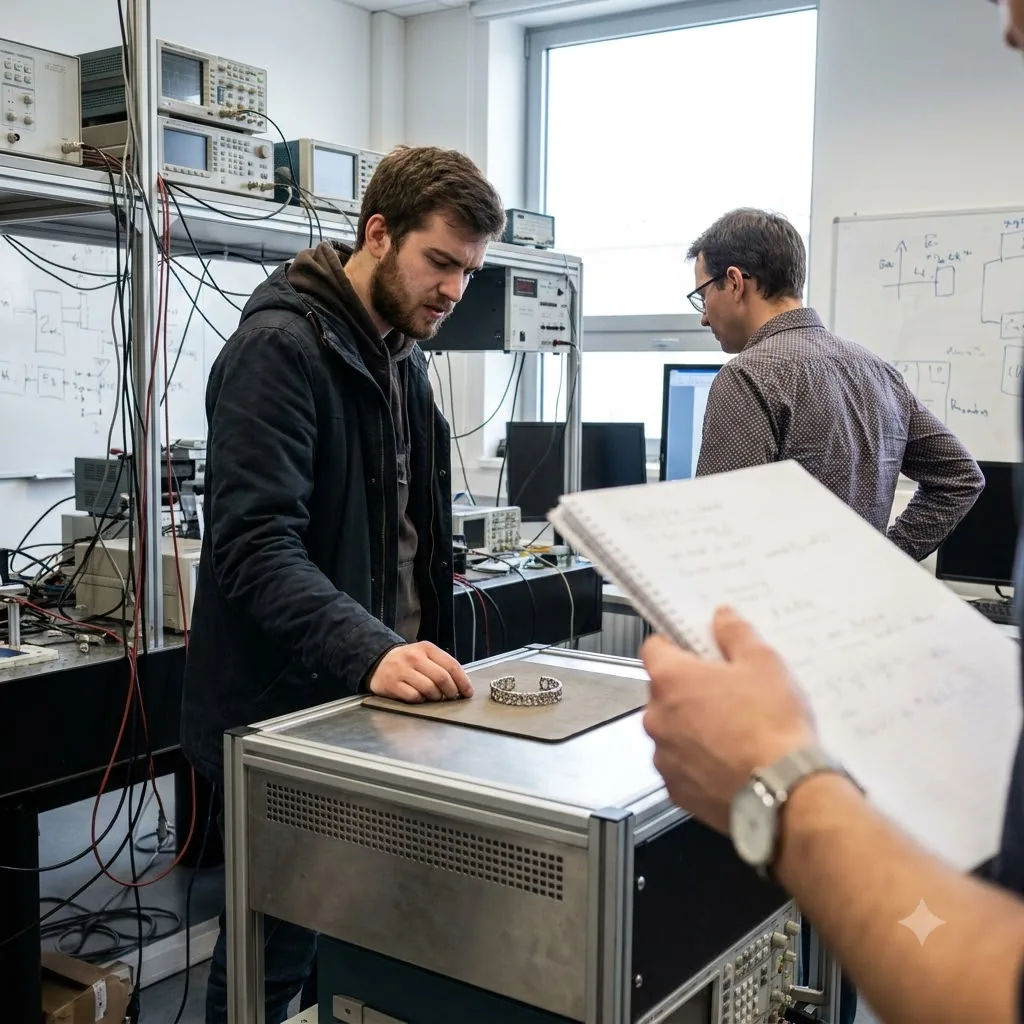
In the Sector 4 Quantum Lab, Elijah deliberately fumbled the calibration of our new quantum entanglement sensor bracelet, sighing heavily as he dropped the delicate device onto the metal console to ensure his brother, Caleb, would have to step in and fix the mess. By dumping the technical setup of this high-stakes university project onto his sibling, Elijah successfully avoided the work while leaving Caleb to take the blame for the mounting delays. As a senior technician monitoring the auxiliary console, I logged the timestamp of this third ruined calibration attempt of the morning.
The sensor bracelet’s brushed aluminum casing caught the harsh fluorescent light of the lab. Its heavy copper contacts were designed to press firmly against the operator’s skin to measure real-time quantum entanglement telemetry through precise, physical touch-based calibration. It was a delicate instrument, easily thrown off by a fraction of a millimeter. Elijah’s hand movements, however, were wide and erratic as he spun the dials, pushing the alignment signals far into the noise threshold.
Elijah threw his hands in the air, stepping back from the console. ‘I do not know how you expect me to align the resonance loops,’ he said, his voice echoing off the concrete walls of the bay. ‘The haptic feedback on this bracelet is completely non-linear. Every time I try to lock the baseline, the quantum drift spikes. The engineering on this interface is just plain counter-intuitive.’
Caleb did not answer. He kept his eyes lowered, adjusting the cuffs of his faded lab coat before stepping up to the terminal console. He picked up the sensor bracelet, his hands steady and quiet. Without a word, he slid the strap onto the calibration cylinder, tapped the micro-dials on the console, and waited for the green indicator lights to stabilize on the main telemetry screen. He completed the sequence in less than two minutes, his movements showing the patient efficiency of someone who had corrected this exact error dozens of times.
‘There,’ Caleb said quietly, stepping back to let his brother return to the seat. ‘It is locked at point-four-two.’
‘See? You have the touch for it,’ Elijah said, offering a wide, helpless grin to the rest of the researchers in the room. He leaned back against the counter, crossing his arms over his chest. ‘My hands simply are not built for these microscopic adjustments. I am a big-picture researcher. We cannot all be mechanics.’
At that moment, Dr. Aris, the department head, walked into the bay, holding a digital tablet. He looked at the wall clock, then at the calibration screen, his brow furrowed. ‘Thirty minutes late starting the secondary beam line,’ Dr. Aris said, his tone flat. ‘Who was signed into the console?’
Elijah stepped back, pointing a thumb toward Caleb. ‘Caleb was finishing the alignment, Dr. Aris. I was trying to get the baseline, but we had to reset the sequence. It took longer than expected to get the drift under control.’
Dr. Aris turned his gaze to Caleb. ‘Caleb, this is the third delayed run this week. Your name is on the queue. If you cannot keep the telemetry stable and run these calibrations on schedule, we will have to adjust your funding and reassign the project lead.’
Caleb looked down at the floor, his jaw tightening. He did not point out that Elijah had spent the last thirty minutes spinning the dial in the wrong direction. ‘I understand, Dr. Aris,’ he said, his voice level.
‘We need absolute consistency,’ Dr. Aris continued, tapping his tablet to lock the schedule. ‘Because of these repeated delays, the department is instituting a blind calibration trial tomorrow morning. The monitors will be locked out. No visual feedback, no real-time telemetry curves. You will have to align the sensor bracelet purely by physical memory and touch. If the system logs do not show a perfect match on the backend server, we are pausing the entire project.’
Elijah’s smile flickered. His hands slipped into his pockets, and for a brief second, his posture went entirely rigid. He looked at the blank calibration screen, then at his brother, before turning and walking out of the lab without another word.
In the Sector 4 Quantum Lab, Elijah deliberately fumbled the calibration of our new quantum entanglement sensor bracelet, sighing heavily as he dropped the delicate device onto the metal console to ensure his brother, Caleb, would have to step in and fix the mess. By dumping the technical setup of this high-stakes university project onto his sibling, Elijah successfully avoided the work while leaving Caleb to take the blame for the mounting delays. As a senior technician monitoring the auxiliary console, I logged the timestamp of this third ruined calibration attempt of the morning.
The sensor bracelet’s brushed aluminum casing caught the harsh fluorescent light of the lab. Its heavy copper contacts were designed to press firmly against the operator’s skin to measure real-time quantum entanglement telemetry through precise, physical touch-based calibration. It was a delicate instrument, easily thrown off by a fraction of a millimeter. Elijah’s hand movements, however, were wide and erratic as he spun the dials, pushing the alignment signals far into the noise threshold.
Elijah threw his hands in the air, stepping back from the console. ‘I do not know how you expect me to align the resonance loops,’ he said, his voice echoing off the concrete walls of the bay. ‘The haptic feedback on this bracelet is completely non-linear. Every time I try to lock the baseline, the quantum drift spikes. The engineering on this interface is just plain counter-intuitive.’
Caleb did not answer. He kept his eyes lowered, adjusting the cuffs of his faded lab coat before stepping up to the terminal console. He picked up the sensor bracelet, his hands steady and quiet. Without a word, he slid the strap onto the calibration cylinder, tapped the micro-dials on the console, and waited for the green indicator lights to stabilize on the main telemetry screen. He completed the sequence in less than two minutes, his movements showing the patient efficiency of someone who had corrected this exact error dozens of times.
‘There,’ Caleb said quietly, stepping back to let his brother return to the seat. ‘It is locked at point-four-two.’
‘See? You have the touch for it,’ Elijah said, offering a wide, helpless grin to the rest of the researchers in the room. He leaned back against the counter, crossing his arms over his chest. ‘My hands simply are not built for these microscopic adjustments. I am a big-picture researcher. We cannot all be mechanics.’
At that moment, Dr. Aris, the department head, walked into the bay, holding a digital tablet. He looked at the wall clock, then at the calibration screen, his brow furrowed. ‘Thirty minutes late starting the secondary beam line,’ Dr. Aris said, his tone flat. ‘Who was signed into the console?’
Elijah stepped back, pointing a thumb toward Caleb. ‘Caleb was finishing the alignment, Dr. Aris. I was trying to get the baseline, but we had to reset the sequence. It took longer than expected to get the drift under control.’
Dr. Aris turned his gaze to Caleb. ‘Caleb, this is the third delayed run this week. Your name is on the queue. If you cannot keep the telemetry stable and run these calibrations on schedule, we will have to adjust your funding and reassign the project lead.’
Caleb looked down at the floor, his jaw tightening. He did not point out that Elijah had spent the last thirty minutes spinning the dial in the wrong direction. ‘I understand, Dr. Aris,’ he said, his voice level.
‘We need absolute consistency,’ Dr. Aris continued, tapping his tablet to lock the schedule. ‘Because of these repeated delays, the department is instituting a blind calibration trial tomorrow morning. The monitors will be locked out. No visual feedback, no real-time telemetry curves. You will have to align the sensor bracelet purely by physical memory and touch. If the system logs do not show a perfect match on the backend server, we are pausing the entire project.’
Elijah’s smile flickered. His hands slipped into his pockets, and for a brief second, his posture went entirely rigid. He looked at the blank calibration screen, then at his brother, before turning and walking out of the lab without another word.