Story code: ST-000936
Part 2: She Only Got Lost When Someone Else Could Catch Her
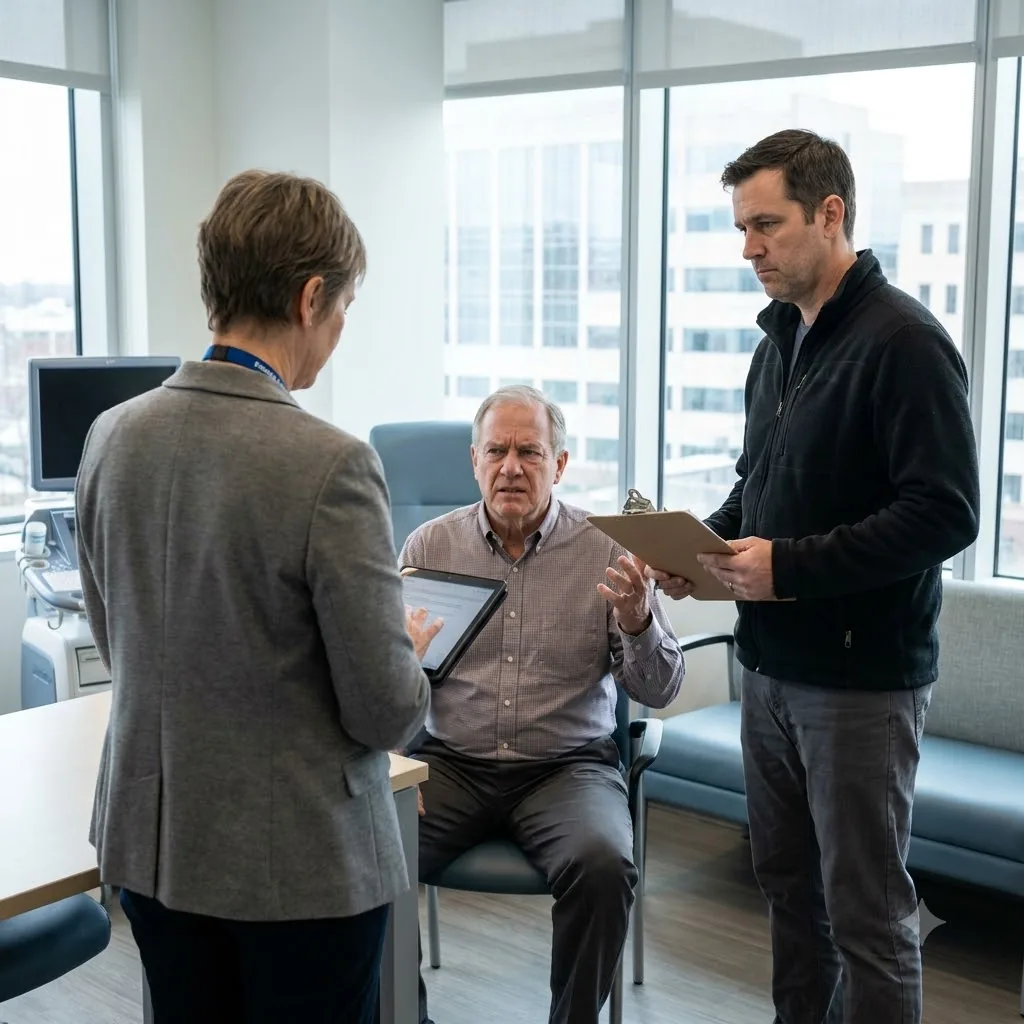
After that first room, I started seeing the same move everywhere. Kendra would ruin the easiest part of implant consent in full view of a patient, let the delay spread, and wait for the nearest person to step in before the room tipped too far behind. The tablet kept telling the truth. Her mouth kept telling a different story. By the end of the week, I could predict the handoff by the sound of her voice. It was always some soft public uncertainty. “This screen is different.” Or, “Can you remind me where the acknowledgment page lives?” Or, “He’s asking a lot of questions, can you walk him through it?” She never said she was refusing. She never said she would not do it. She just dragged the process until someone else finished the part that counted. And because this was a neuro clinic, people covered the gap instead of stopping to argue. We had patient-facing rooms turning over all day. Intake had to line up with readiness checks, procedure timing, teaching scripts, medication review. When one tablet path stalled, the pressure moved outward. Somebody grabbed the stylus. Somebody re-explained the prompts. Somebody took the patient’s irritated look and wore it for the next five minutes. Usually that somebody was me. The tablet stayed the center of it. Same rubber case. Same privacy filter. Same bright buttons with plain-language prompts. Same flow every memory tech used. Kendra kept performing like each room was her first day. In Room Two that afternoon, she asked a woman to read the disclosure page, then blocked the bottom of the screen with her own wrist and said, “Don’t tap yet, I need to find your next section.” The next section was one visible button at the bottom. The patient waited with her finger hovering over the glass while Kendra hit the top bar, opened the wrong panel, and sighed. “Mara, can you? She doesn’t seem to like my explanation style.” The patient looked at me and said, “I just need someone to tell me if I’m allowed to press continue.” So I stepped in. Again. The strangest part was how selective Kendra’s mistakes were. She missed large prompts when a patient was looking. She lost her place when a room was busy. She needed help when the task would become part of someone else’s workload. But in the cracks between those moments, her hands moved like they belonged to the device. I saw it near the consent station printer when she thought I was still in the hallway. She had one shoulder turned away from the room and the tablet held low by her waist. Her thumb opened the technician menu, closed a pop-up, and checked the readiness timestamp faster than I could have done it. Then Eli’s replacement patient asked, “Is this where I answer the implant questions?” Kendra looked up, brought the tablet chest-high, and her whole pace changed. “Sorry,” she said, tapping the wrong icon with exaggerated care. “This thing’s been fighting me all day.” I stayed in the doorway long enough to watch her hit the wrong icon twice more. That night I did not have some dramatic revelation. I just had a cleaner pattern. She only got lost when someone else could catch her. The next morning, Dr. Park crossed paths with me outside Intake Three while I was wiping down the counter between patients. She did not lower her voice like she was sharing gossip. She kept her eyes on the room board and asked, “How many starts has Kendra transferred to you this week?” “Four that I stayed in the room for,” I said. “More if you count quick fixes.” Dr. Park nodded once. “When she transfers, where in the sequence?” That question told me what she cared about. “Before patient acknowledgment finishes, sometimes after,” I said. “But always before technician verification locks.” Dr. Park looked through the glass panel into the room where Kendra was setting up another tablet. “And when she corrects herself?” I held the disinfectant wipe still in my hand. “Fast. When she forgets to be confused.” Dr. Park gave no reaction I could read. She just said, “Stay available this afternoon,” and moved on to the next room. The pattern kept going. Kendra started one consent path with a man who had already taken off his jacket and settled into the chair. She spoke in that careful unsure tone, missed the same prompt I had seen her miss three times already, and waved me over before the patient had even finished his first question. “Mara explains this better,” she said. I took one step into the room and stopped. Dr. Park was right behind me with a rolling cart and a neutral face. She did not address me first. She looked at the tablet in Kendra’s hands. “Since you initiated this intake,” she said, “complete the live verification path before handoff.” Kendra’s fingers tightened around the case. “I was just asking Mara to help with patient comfort.” “She can stand by,” Dr. Park said. “Proceed from your current screen. No restart.” That was new. Not a meeting. Not a lecture. Just a small sentence dropped into normal workflow. The patient looked from Dr. Park to Kendra to me and took his hand back from the stylus. The room got quiet except for the air vent and the faint click of Dr. Park setting the cart brake. Kendra stared at the screen a second too long, then tried her old move anyway. She turned the tablet halfway toward me and said, “It’s asking for the internal branch again. I never know which path it wants from here.” Dr. Park stepped closer, not to Kendra, but to the screen. “Use the path you used yesterday when you corrected Room Three in one motion,” she said. Kendra went still. I did too, because that meant Dr. Park had seen enough to name the exact kind of movement I had only caught in flashes. Then Dr.