Story code: ST-001195
Part 1: The Fracture
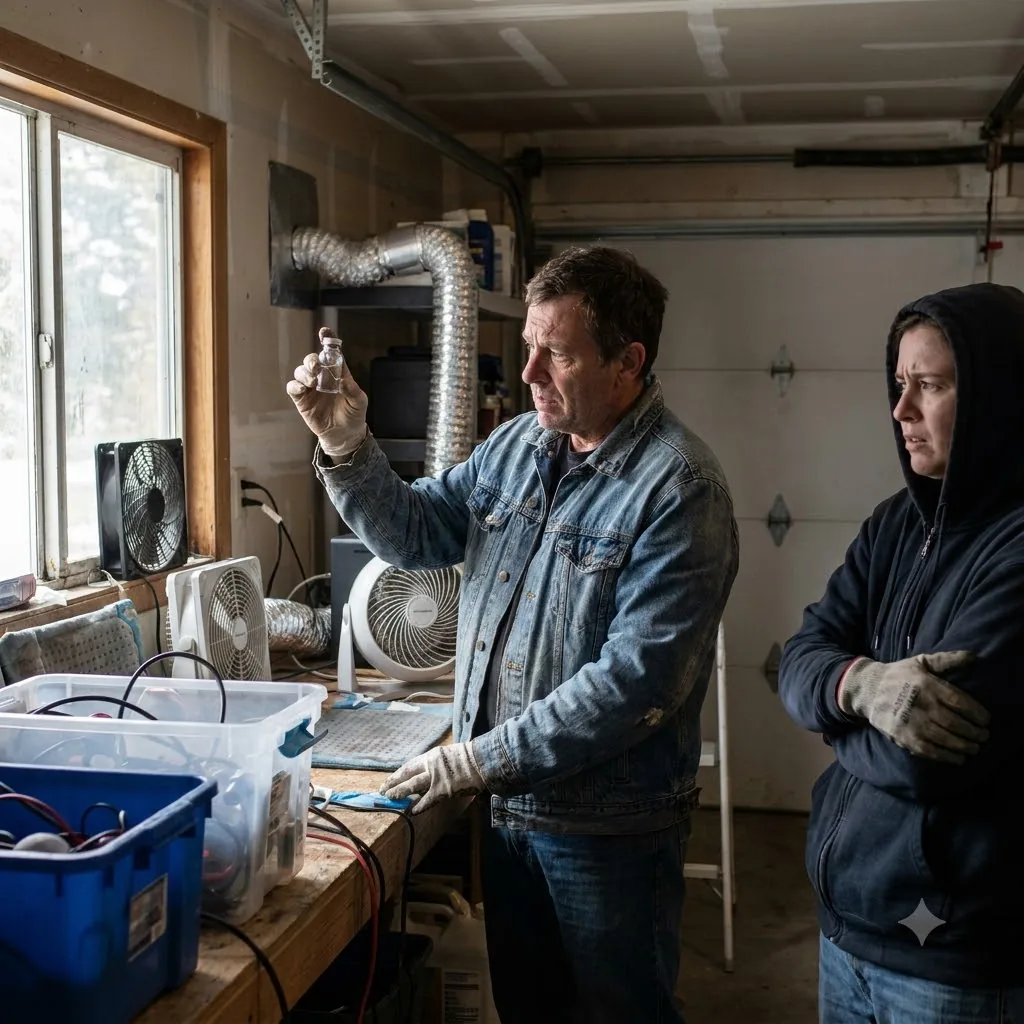
My cousin Leo slammed the side door of our suburban garage lab, his hand trembling as he held up a sealed test vial with a hairline fracture along the cap. “We have a micro-leak in the recombinant batch,” he whispered, pointing at the tiny bead of moisture forming on the glass and demanding I bypass the twelve-hour stabilization cycle to run an immediate diagnostic. The sudden threat of an unlicensed biological spill in our makeshift space left me with no time to think, blocking any choice but to comply with his panic.
The ventilation fans hummed overhead, vibrating the wooden rafters of the converted garage. Rows of makeshift incubation tanks lined the back wall, their digital displays casting a green glow over the concrete floor. The air smelled of damp concrete and the faint, metallic tang of the cleaning solvents we used to wash down the stainless-steel benches. Before we began this project, we had agreed that safety protocols were the one line we would never cross, yet the urgency in his voice suggested we were out of time.
“Slide it into the chamber,” Leo said, his voice rising over the drone of the fans. He stepped closer, his boots clicking on the floor as his chest rose and fell rapidly. “Now, Sam. Before the pressure inside the glass drops any further and we lose the whole batch.”
I took the vial from his gloved hand. The glass felt cold, the moisture near the cap thick but stationary. I carried it to the center workbench, where the heavy metal casing of the bio-analyzer sat among tangled diagnostic cables and half-filled racks of pipette tips. I opened the chamber door, placed the vial inside the custom-molded slot, and pushed the steel handle down until the latch clicked. The physical lock engaged, sealing the vial inside the pressurized test chamber.
“It’s secure,” I said, keeping my voice level as I watched the status indicator on the analyzer turn from amber to solid blue. “Now we follow the county rules. An active micro-leak of modified vectors requires immediate reporting. I’m calling the containment desk.”
Leo’s gaze flicked from the analyzer screen to my face. “We don’t need the containment desk. Just start the sequence.”
“The protocol is clear,” I said, stepping toward the wall where the yellow emergency phone hung next to the safety shower. “Unlicensed labs have to report potential breaches within ten minutes. If we don’t, they revoke our registration, and we both face civil liabilities.”
I lifted the receiver and began to dial the three-digit emergency code.
Before the second digit could register, Leo stepped into my path. He reached out and pressed his palm flat against the switch hook, cutting the dial tone to a sharp silence.
“Put the phone down,” he said.
My cousin Leo slammed the side door of our suburban garage lab, his hand trembling as he held up a sealed test vial with a hairline fracture along the cap. “We have a micro-leak in the recombinant batch,” he whispered, pointing at the tiny bead of moisture forming on the glass and demanding I bypass the twelve-hour stabilization cycle to run an immediate diagnostic. The sudden threat of an unlicensed biological spill in our makeshift space left me with no time to think, blocking any choice but to comply with his panic.
The ventilation fans hummed overhead, vibrating the wooden rafters of the converted garage. Rows of makeshift incubation tanks lined the back wall, their digital displays casting a green glow over the concrete floor. The air smelled of damp concrete and the faint, metallic tang of the cleaning solvents we used to wash down the stainless-steel benches. Before we began this project, we had agreed that safety protocols were the one line we would never cross, yet the urgency in his voice suggested we were out of time.
“Slide it into the chamber,” Leo said, his voice rising over the drone of the fans. He stepped closer, his boots clicking on the floor as his chest rose and fell rapidly. “Now, Sam. Before the pressure inside the glass drops any further and we lose the whole batch.”
I took the vial from his gloved hand. The glass felt cold, the moisture near the cap thick but stationary. I carried it to the center workbench, where the heavy metal casing of the bio-analyzer sat among tangled diagnostic cables and half-filled racks of pipette tips. I opened the chamber door, placed the vial inside the custom-molded slot, and pushed the steel handle down until the latch clicked. The physical lock engaged, sealing the vial inside the pressurized test chamber.
“It’s secure,” I said, keeping my voice level as I watched the status indicator on the analyzer turn from amber to solid blue. “Now we follow the county rules. An active micro-leak of modified vectors requires immediate reporting. I’m calling the containment desk.”
Leo’s gaze flicked from the analyzer screen to my face. “We don’t need the containment desk. Just start the sequence.”
“The protocol is clear,” I said, stepping toward the wall where the yellow emergency phone hung next to the safety shower. “Unlicensed labs have to report potential breaches within ten minutes. If we don’t, they revoke our registration, and we both face civil liabilities.”
I lifted the receiver and began to dial the three-digit emergency code.
Before the second digit could register, Leo stepped into my path. He reached out and pressed his palm flat against the switch hook, cutting the dial tone to a sharp silence.
“Put the phone down,” he said.