Story code: ST-001180
Part 4: The Boundary Line
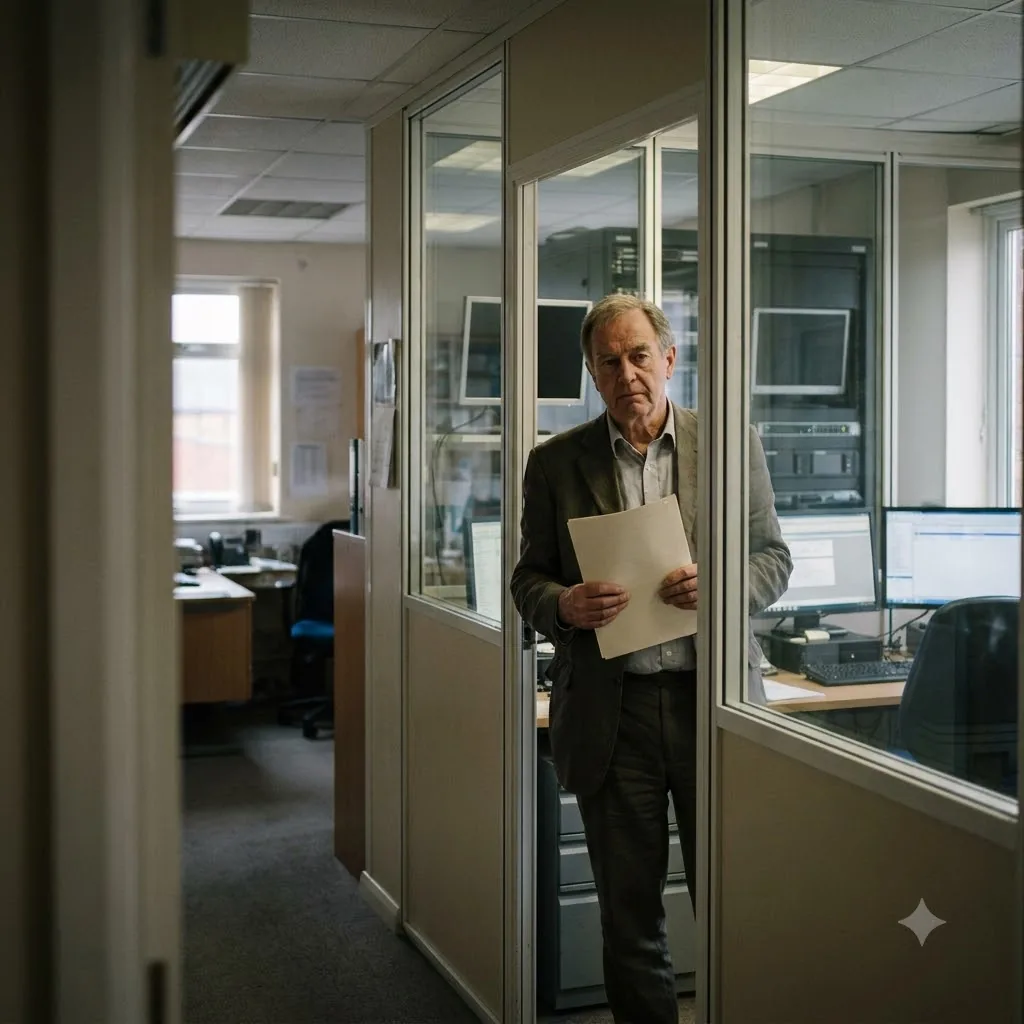
Richard stepped into the room, shaking the water from his umbrella. He closed the heavy door behind him, sealing us inside the quiet of the lab. He glanced at the terminal, then at the printed copy of Lab Report 109-A still sitting on my desk.
“You’re still here, Elena,” he said, his voice flat and controlled. “I assume you’ve run the diagnostics. We need that signature uploaded before the clinical board opens their review at eight tomorrow morning.”
I stood up, resting my fingers on the edge of the keyboard. “I looked at the system metadata, Richard. And then I looked at the Vance Therapeutics archive.”
“The metadata is standard protocol,” he said, taking a step closer. His posture was rigid, his expression tightening into a look of familiar disappointment. “We don’t need a lecture on compliance. We need a signature. I paid for your mother’s life. If you want her next shipment of maintenance enzymes to clear customs next week, you will sign that report.”
“My mother’s treatment didn’t cost you a dime of your personal money,” I said, keeping my voice level and cold. “I have the ledgers. You funded it through Grant V-902, using Vance Therapeutics’ capital. And you did it because your startup was three weeks away from a patent lapse that would have bankrupt you.”
Richard’s eyes narrowed. His shoulders tensed, but he didn’t speak.
“You used her as an unauthorized human subject to save your vector patent,” I continued, pointing to the screen. “Her successful test run secured your twelve-million-dollar investment round. You didn’t save our family, Richard. My mother saved your company. And now you’re asking me to sign off on an unauthorized splice that is masking cellular toxicity in your new trial patients because you’re terrified the same vector instability will ruin this round of funding.”
For a long moment, the only sound was the rhythmic hum of the lab’s refrigeration units. Richard stared at the monitor, his gaze fixing on the patent dates and the transaction IDs I had pulled from his secure archive. He opened his mouth to speak, but the defensive recitation of his past generosity died in his throat. He looked at the blue hardware token still slotted into my terminal, his knuckles turning white as he gripped his umbrella.
“This clinic is my facility,” he said, his voice dropping to a harsh whisper. “I can have you locked out of this building by morning.”
“If my credentials are deactivated, the validation engine automatically flags Lab Report 109-A for an external audit by the state medical board,” I said. “And the secure file containing your patent timeline and my mother’s early trial records will be attached to it.”
I reached down and clicked the mouse, executing the security protocol I had prepared.
“I am not signing the report,” I said. “And you are going to sign a permanent, irrevocable funding agreement for my mother’s maintenance doses, managed through an independent medical trust. If you attempt to alter her care, or if you enter this lab without an escort, the audit file automatically uploads to the clinical board.”
I pulled his blue hardware key from the terminal and dropped it onto the desk.
“Your administrative access to the Vance Genetics Clinic database has been revoked,” I said. “You will communicate with this lab only through the board’s compliance liaison.”
Richard stared at the key on the desk. He didn’t make a threat. He didn’t raise his voice. He simply picked up the token, turned, and walked out, the heavy door clicking shut behind him.
I sank back into my chair. The terminal screen flickered, showing the locked status of the database and the new access protocols in place. A slow, hard-edged relief washed over me. The debt was gone, replaced by a wall he could never cross again.