Story code: ST-000594
Part 1: He Wanted Thanks to Mean Permission
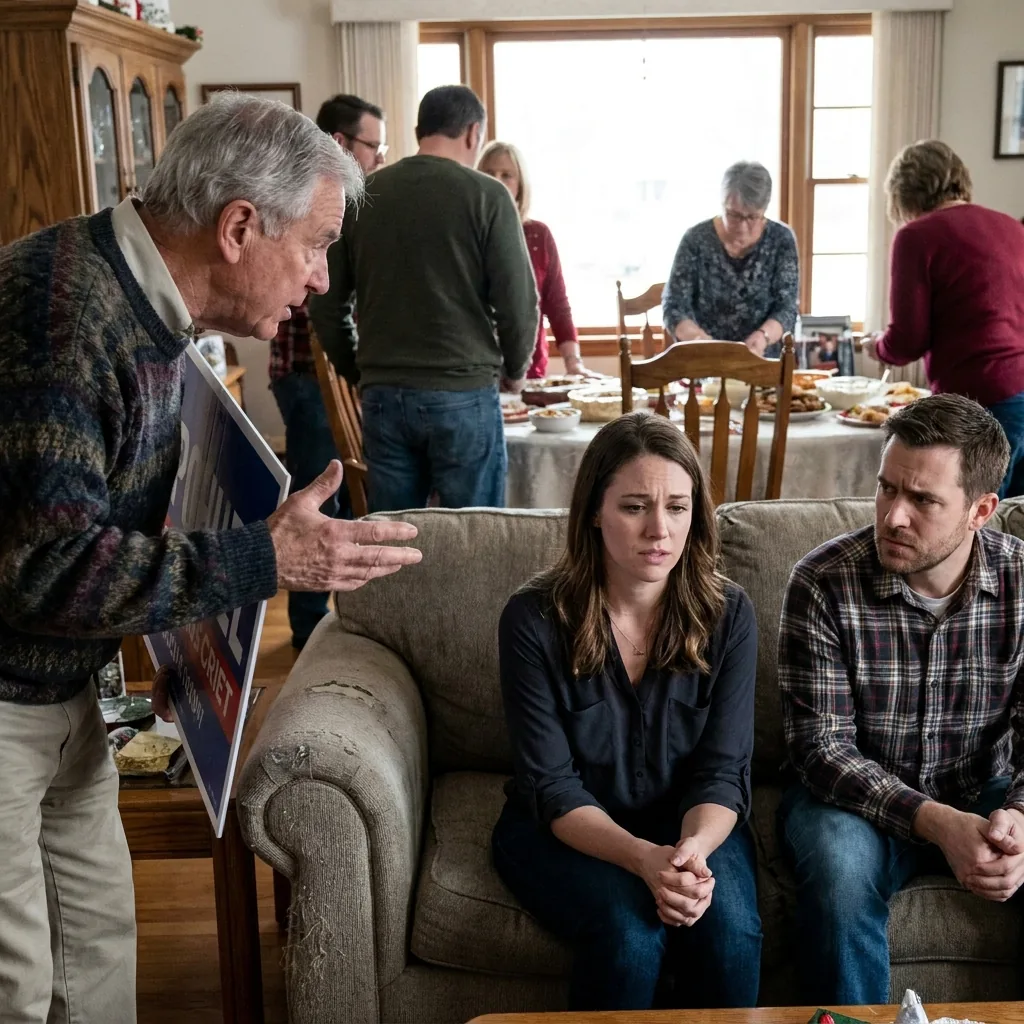
My uncle used a yard sign like it was a receipt for owning the room. Before anyone had even passed the mashed potatoes, Uncle Rick tapped the front window with his fork, pointed out at the sign staked by the walk, and announced that what he had “taken” for this family and this neighborhood was the reason the rest of us ought to think twice before crossing him. When I made the mistake of thanking him just to keep Thanksgiving moving, he turned that thank-you into a fresh order aimed right at me. We were in the Carter dining room with serving dishes going hand to hand and kids being shushed at the far end of the table. The front yard was visible through the window by the sideboard, and his sign was planted where every arrival had to pass it. He had already brought it up twice before dinner was fully on the table. “You all have no idea what that sign cost me,” he said, loud enough to catch the people still coming in from the kitchen. “Neighbors talk. People remember. I stood up when nobody else would.” Linda gave him the same line she always gave. “Well, you have taken a lot of heat, Rick.” That was enough to get him settled in, shoulders back, chin lifted. He looked around the table like he was collecting a debt. I kept carving turkey because I was trying to keep us on schedule. Dana was in the kitchen bringing in gravy, and I still had rolls warming in the oven. I said, “We know you care a lot about it.” It should have ended there. Normal people hear something polite and let the meal continue. Rick set his fork down. “If you know that, Megan, then maybe stop making me fight for basic respect.” I looked up. “What are you talking about?” He laughed once through his nose, not because anything was funny. “The family Christmas exchange. The neighborhood barbecue in June. The way things get organized now. I shouldn’t have to find out secondhand what’s going on when I’m the one who’s been willing to stand there and take the hits.” It took me a second to realize he was linking his yard sign to our family planning, like one had earned him control over the other. Dana and I had been managing the group chat for holidays and birthdays because otherwise dates got duplicated, people got left out by accident, and somebody always showed up with the same casserole twice. It was boring work. It was not a prize. Linda tried smoothing it over. “He just wants to be included.” “He is included,” I said, still keeping my voice even. “Everyone here is included.” Rick shook his head. “Included isn’t the same as respected. I put myself out there. I don’t hide. And somehow I’m still treated like I’m the last to know, the last to be asked, the last to be considered. That sign out there has brought every crank in the neighborhood to my driveway, and I never hear a word of appreciation unless I drag it out of people.” There it was. He had taken a yard sign and built a whole platform out of it. Every year the story got larger. Not clearer, just larger. Dana came in and set the gravy down beside me. She glanced at me, then at Rick, then started filling water glasses like she had not walked into the middle of anything. That was one of the ways we got through these meals. We kept our hands busy. I said, “I literally just thanked you.” “And I’m telling you that words are cheap,” Rick said. “If people mean it, it should show up in how they handle things.” That landed exactly the way he wanted it to. Not as a complaint. As instruction. He started naming examples that had almost nothing to do with politics and nothing at all to do with his yard. Who got asked first to host Easter. Why Dana and I set the time for Thanksgiving dinner. Why the cousin group text had been muted for “certain opinions,” which was not true and which he couldn’t prove because nobody had muted him. He kept circling back to the same point: he had paid a price publicly, and the family owed him a different level of say. Linda murmured, “Maybe let him help more.” I wanted to ask what exactly he thought he was helping with, since most of his help came in the form of speeches. Instead I passed the stuffing. That should have signaled enough. It never did. Rick leaned in my direction and lowered his voice just enough to make it feel more personal while still being heard by half the table. “You and Dana control too much. Invitations, dates, plans. Maybe if you appreciated what some of us carry, you wouldn’t make everything so tight.” There was the twist. Gratitude was not something to receive. Gratitude was something he converted into permission. I said, “If there’s something specific you want, say it plainly.” He didn’t answer plainly. He liked the fog better than the request. He talked about loyalty. He talked about standing alone. He talked about how easy it was for people who never had to take a public hit to act neutral in private spaces. Every sentence was built to make disagreement sound like betrayal. From the kitchen doorway, Dana said, “Dinner’s getting cold.” Rick ignored that too. He pointed again toward the front yard. “That sign has made this house a target every season it’s out there.” I looked at the window, then back at him. If the sign was really such a burden, there was one obvious fix sitting less than thirty feet away in our own yard line of sight. What caught me was not that he complained. It was how fast his complaint expanded the second anyone gave him an inch. By the time pie.
My uncle used a yard sign like it was a receipt for owning the room. Before anyone had even passed the mashed potatoes, Uncle Rick tapped the front window with his fork, pointed out at the sign staked by the walk, and announced that what he had “taken” for this family and this neighborhood was the reason the rest of us ought to think twice before crossing him. When I made the mistake of thanking him just to keep Thanksgiving moving, he turned that thank-you into a fresh order aimed right at me. We were in the Carter dining room with serving dishes going hand to hand and kids being shushed at the far end of the table. The front yard was visible through the window by the sideboard, and his sign was planted where every arrival had to pass it. He had already brought it up twice before dinner was fully on the table. “You all have no idea what that sign cost me,” he said, loud enough to catch the people still coming in from the kitchen. “Neighbors talk. People remember. I stood up when nobody else would.” Linda gave him the same line she always gave. “Well, you have taken a lot of heat, Rick.” That was enough to get him settled in, shoulders back, chin lifted. He looked around the table like he was collecting a debt. I kept carving turkey because I was trying to keep us on schedule. Dana was in the kitchen bringing in gravy, and I still had rolls warming in the oven. I said, “We know you care a lot about it.” It should have ended there. Normal people hear something polite and let the meal continue. Rick set his fork down. “If you know that, Megan, then maybe stop making me fight for basic respect.” I looked up. “What are you talking about?” He laughed once through his nose, not because anything was funny. “The family Christmas exchange. The neighborhood barbecue in June. The way things get organized now. I shouldn’t have to find out secondhand what’s going on when I’m the one who’s been willing to stand there and take the hits.” It took me a second to realize he was linking his yard sign to our family planning, like one had earned him control over the other. Dana and I had been managing the group chat for holidays and birthdays because otherwise dates got duplicated, people got left out by accident, and somebody always showed up with the same casserole twice. It was boring work. It was not a prize. Linda tried smoothing it over. “He just wants to be included.” “He is included,” I said, still keeping my voice even. “Everyone here is included.” Rick shook his head. “Included isn’t the same as respected. I put myself out there. I don’t hide. And somehow I’m still treated like I’m the last to know, the last to be asked, the last to be considered. That sign out there has brought every crank in the neighborhood to my driveway, and I never hear a word of appreciation unless I drag it out of people.” There it was. He had taken a yard sign and built a whole platform out of it. Every year the story got larger. Not clearer, just larger. Dana came in and set the gravy down beside me. She glanced at me, then at Rick, then started filling water glasses like she had not walked into the middle of anything. That was one of the ways we got through these meals. We kept our hands busy. I said, “I literally just thanked you.” “And I’m telling you that words are cheap,” Rick said. “If people mean it, it should show up in how they handle things.” That landed exactly the way he wanted it to. Not as a complaint. As instruction. He started naming examples that had almost nothing to do with politics and nothing at all to do with his yard. Who got asked first to host Easter. Why Dana and I set the time for Thanksgiving dinner. Why the cousin group text had been muted for “certain opinions,” which was not true and which he couldn’t prove because nobody had muted him. He kept circling back to the same point: he had paid a price publicly, and the family owed him a different level of say. Linda murmured, “Maybe let him help more.” I wanted to ask what exactly he thought he was helping with, since most of his help came in the form of speeches. Instead I passed the stuffing. That should have signaled enough. It never did. Rick leaned in my direction and lowered his voice just enough to make it feel more personal while still being heard by half the table. “You and Dana control too much. Invitations, dates, plans. Maybe if you appreciated what some of us carry, you wouldn’t make everything so tight.” There was the twist. Gratitude was not something to receive. Gratitude was something he converted into permission. I said, “If there’s something specific you want, say it plainly.” He didn’t answer plainly. He liked the fog better than the request. He talked about loyalty. He talked about standing alone. He talked about how easy it was for people who never had to take a public hit to act neutral in private spaces. Every sentence was built to make disagreement sound like betrayal. From the kitchen doorway, Dana said, “Dinner’s getting cold.” Rick ignored that too. He pointed again toward the front yard. “That sign has made this house a target every season it’s out there.” I looked at the window, then back at him. If the sign was really such a burden, there was one obvious fix sitting less than thirty feet away in our own yard line of sight. What caught me was not that he complained. It was how fast his complaint expanded the second anyone gave him an inch. By the time pie.