Story code: ST-000198
Part 1: He Said the Certificate Proved Him
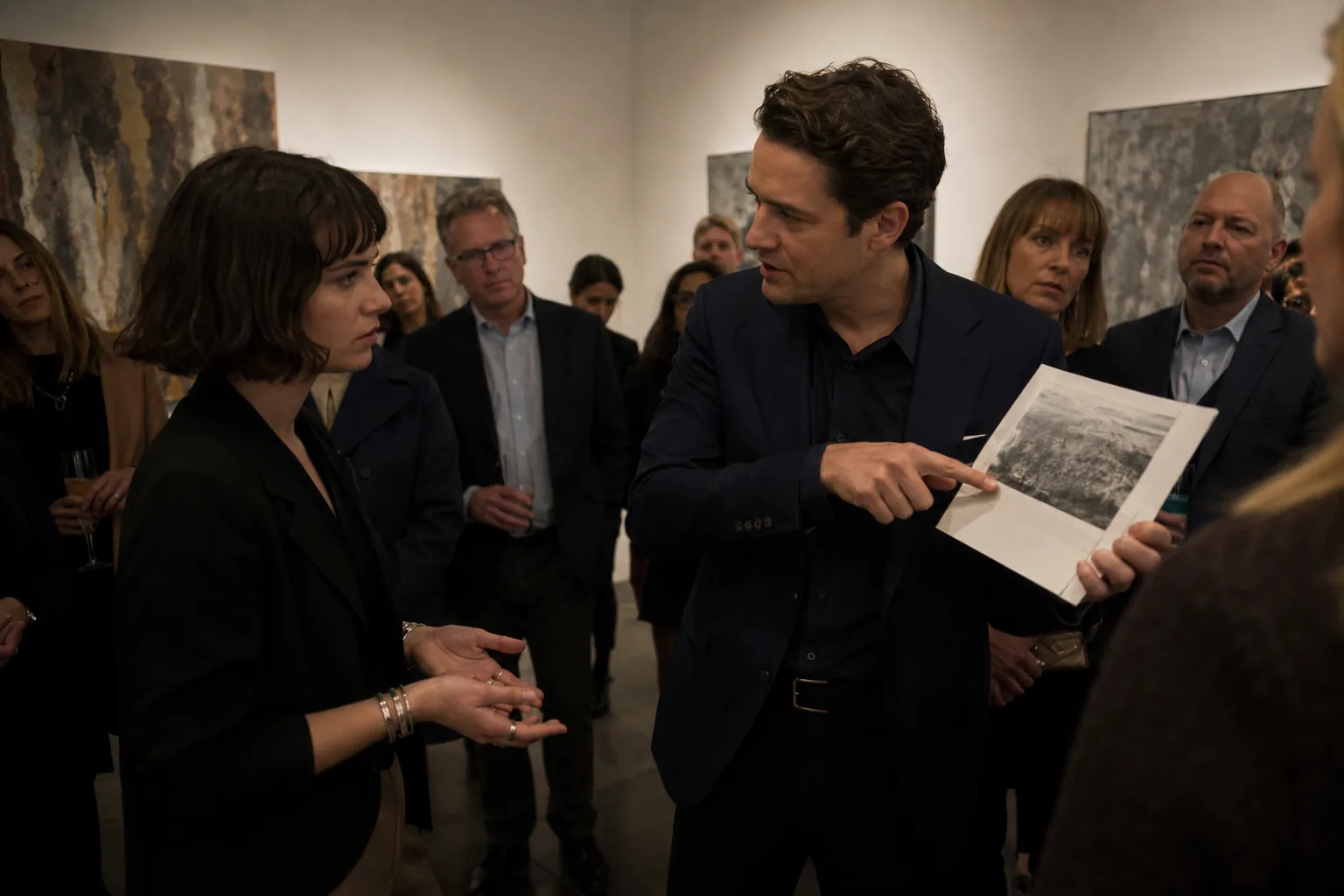
Drew Vale took the print certificate out of Nina’s hands in the middle of our gallery preview, tapped the lower margin with one finger, and told a semicircle of buyers she was “confusing prompt provenance with render custody” like she was too ignorant to understand her own work. We were ten feet from the drinks table, servers sliding sparkling water past framed AI prints, and he used that polished museum voice people trust on sight. Nina opened her mouth twice and he kept cutting across her, louder each time, with the certificate lifted like a court order.
I was working the floor, checking title cards and keeping people from leaning too close to the pieces. From where I stood, I could see every hand in that little knot of people. Nina’s hand stayed half raised after he took the certificate. Drew held it by one edge, careful not to bend it, and angled it outward so the people near him could read the embossed seal at the top.
“This is standard,” he said. “The custody layer is clear if you know how to read a generative print cert.”
One of the buyers, a man who had been asking me five minutes earlier whether the editions were open or capped, nodded like that settled it.
Nina said, very evenly, “There is no custody layer on that certificate. Give it back.”
Drew did not give it back. He smiled without looking at her and kept addressing the room.
“This is what happens when someone sees process language online and thinks it’s authorship,” he said. “The render chain, the prompt hierarchy, the custody notation. They’re related, but not interchangeable.”
The words came out fast and smooth. He pointed to a blank area near the lower corner as if invisible text lived there. A few people leaned in. That was the ugly part. He wasn’t only arguing with Nina. He was borrowing everybody else’s uncertainty and stacking it behind him.
I stepped closer because voices had sharpened, which is usually the moment staff has to make the room feel normal again.
“Can I hold the certificate for a second?” I asked.
He shifted just enough to keep it out of my reach. “I’m explaining it.”
Nina’s jaw tightened. She kept her hands at her sides this time.
“You’re inventing terms,” she said.
Drew gave a little breath through his nose, not loud, but timed so the nearby guests heard it.
“No,” he said, “I’m using professional language.”
That line changed the shape of the circle. It made Nina sound small if she answered and guilty if she stayed quiet. Two guests who had been studying the largest print turned their bodies toward us. Across the room, Elise looked up from the checklist she kept at the front pedestal.
I know Elise’s work habits. She doesn’t hurry because somebody performs certainty. She set the checklist down, capped her pen, and walked over without changing her pace.
Drew saw her coming and straightened. He handed his empty champagne flute to a passing server without breaking sentence.
“Elise can confirm,” he said. “This cert is explicit. The render custody notation ties the output to the originating prompt architecture.”
There it was again, another polished phrase. He said it so cleanly that one woman near the drinks table actually repeated the last two words under her breath, like she was trying to memorize them.
Elise stopped beside me. “Let me see the certificate,” she said.
This time Drew passed it over, but only after finishing his sentence. Nina watched the transfer and looked at the paper, not at him.
Elise held the sheet flat under the track lights. It was the same heavy stock we had been handling all night: deckled edge, embossed gallery seal, edition number, title, output dimensions, print medium, issue date, and the verification block near the bottom. No extra labels had appeared because Drew said they existed. The page looked ordinary, and that made his performance bolder somehow.
“Where is the notation you’re referring to?” Elise asked.
He moved immediately, tapping near the verification block.
“Embedded in the custody language,” he said. “It isn’t for lay readers.”
Nina let out one short laugh, not amused, more like she couldn’t hold the sound in. Drew turned on her fast.
“If you don’t understand the archival structure, that’s fine,” he said. “But don’t confuse that with authorship.”
A few people went still at that. It was one thing to argue over ownership. It was another to shame her in front of a room full of collectors like she had wandered into a conversation above her head.
Elise did not react to his tone. She read the certificate line by line. Her finger paused at the verification block. Then she looked up at him.
“Say the term again,” she said.
“Render custody notation,” Drew answered at once. “It’s nested under prompt architecture.” He said it with the confidence of somebody naming a fire code.
Elise lowered the certificate a fraction. “I’ve never heard that used on one of our certs.”
Drew answered before the silence could settle. “It’s not gallery-facing language. It’s production side.”
He said it so quickly that two guests nodded before Elise even looked back down at the page. Nina stayed still, but her fingers had curled against her palm hard enough to whiten at the knuckles.
Elise turned the certificate over, checked the back, then faced the front again. “Mara,” she said to me, still looking at the page, “bring me the print packet for this edition.”
I knew which drawer held it. I also knew Drew had just explained a fake term like it was common practice in front of a room ready to believe him. And if the packet matched what I had already seen on every other certificate that night, then the one thing he kept pointing to wasn’t there at all.
Drew Vale took the print certificate out of Nina’s hands in the middle of our gallery preview, tapped the lower margin with one finger, and told a semicircle of buyers she was “confusing prompt provenance with render custody” like she was too ignorant to understand her own work. We were ten feet from the drinks table, servers sliding sparkling water past framed AI prints, and he used that polished museum voice people trust on sight. Nina opened her mouth twice and he kept cutting across her, louder each time, with the certificate lifted like a court order.
I was working the floor, checking title cards and keeping people from leaning too close to the pieces. From where I stood, I could see every hand in that little knot of people. Nina’s hand stayed half raised after he took the certificate. Drew held it by one edge, careful not to bend it, and angled it outward so the people near him could read the embossed seal at the top.
“This is standard,” he said. “The custody layer is clear if you know how to read a generative print cert.”
One of the buyers, a man who had been asking me five minutes earlier whether the editions were open or capped, nodded like that settled it.
Nina said, very evenly, “There is no custody layer on that certificate. Give it back.”
Drew did not give it back. He smiled without looking at her and kept addressing the room.
“This is what happens when someone sees process language online and thinks it’s authorship,” he said. “The render chain, the prompt hierarchy, the custody notation. They’re related, but not interchangeable.”
The words came out fast and smooth. He pointed to a blank area near the lower corner as if invisible text lived there. A few people leaned in. That was the ugly part. He wasn’t only arguing with Nina. He was borrowing everybody else’s uncertainty and stacking it behind him.
I stepped closer because voices had sharpened, which is usually the moment staff has to make the room feel normal again.
“Can I hold the certificate for a second?” I asked.
He shifted just enough to keep it out of my reach. “I’m explaining it.”
Nina’s jaw tightened. She kept her hands at her sides this time.
“You’re inventing terms,” she said.
Drew gave a little breath through his nose, not loud, but timed so the nearby guests heard it.
“No,” he said, “I’m using professional language.”
That line changed the shape of the circle. It made Nina sound small if she answered and guilty if she stayed quiet. Two guests who had been studying the largest print turned their bodies toward us. Across the room, Elise looked up from the checklist she kept at the front pedestal.
I know Elise’s work habits. She doesn’t hurry because somebody performs certainty. She set the checklist down, capped her pen, and walked over without changing her pace.
Drew saw her coming and straightened. He handed his empty champagne flute to a passing server without breaking sentence.
“Elise can confirm,” he said. “This cert is explicit. The render custody notation ties the output to the originating prompt architecture.”
There it was again, another polished phrase. He said it so cleanly that one woman near the drinks table actually repeated the last two words under her breath, like she was trying to memorize them.
Elise stopped beside me. “Let me see the certificate,” she said.
This time Drew passed it over, but only after finishing his sentence. Nina watched the transfer and looked at the paper, not at him.
Elise held the sheet flat under the track lights. It was the same heavy stock we had been handling all night: deckled edge, embossed gallery seal, edition number, title, output dimensions, print medium, issue date, and the verification block near the bottom. No extra labels had appeared because Drew said they existed. The page looked ordinary, and that made his performance bolder somehow.
“Where is the notation you’re referring to?” Elise asked.
He moved immediately, tapping near the verification block.
“Embedded in the custody language,” he said. “It isn’t for lay readers.”
Nina let out one short laugh, not amused, more like she couldn’t hold the sound in. Drew turned on her fast.
“If you don’t understand the archival structure, that’s fine,” he said. “But don’t confuse that with authorship.”
A few people went still at that. It was one thing to argue over ownership. It was another to shame her in front of a room full of collectors like she had wandered into a conversation above her head.
Elise did not react to his tone. She read the certificate line by line. Her finger paused at the verification block. Then she looked up at him.
“Say the term again,” she said.
“Render custody notation,” Drew answered at once. “It’s nested under prompt architecture.” He said it with the confidence of somebody naming a fire code.
Elise lowered the certificate a fraction. “I’ve never heard that used on one of our certs.”
Drew answered before the silence could settle. “It’s not gallery-facing language. It’s production side.”
He said it so quickly that two guests nodded before Elise even looked back down at the page. Nina stayed still, but her fingers had curled against her palm hard enough to whiten at the knuckles.
Elise turned the certificate over, checked the back, then faced the front again. “Mara,” she said to me, still looking at the page, “bring me the print packet for this edition.”
I knew which drawer held it. I also knew Drew had just explained a fake term like it was common practice in front of a room ready to believe him. And if the packet matched what I had already seen on every other certificate that night, then the one thing he kept pointing to wasn’t there at all.