Story code: ST-001137
Part 2: The Paper Trail
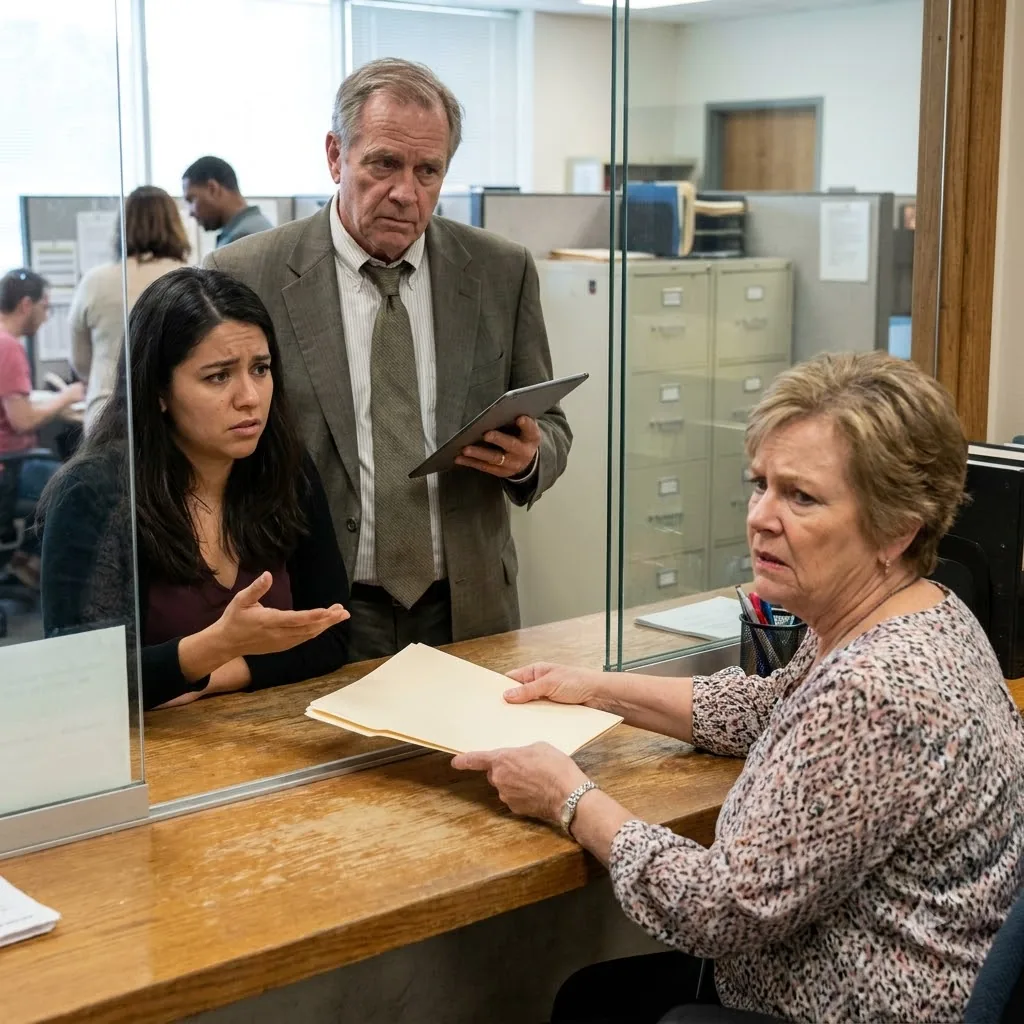
Marcus Vance began his reconstruction of the aid office’s transaction logs immediately after the counter incident. In the quiet of the Compliance Archive Room, he pulled the security footage from the past week alongside the terminal input logs registered to Brenda Collins’s employee ID. The digital trail revealed a series of striking gaps that contradicted the official narrative of standard administrative procedures.
Under the compliance rules of the college, every rejected recommendation packet was supposed to be logged with a corresponding three-digit rejection code. When Marcus filtered Brenda’s activity by “Application Terminated,” he found five separate entries from the previous six days that lacked any associated code. One of these belonged to Elena Alvarez. The other four entries showed that Brenda had returned packets to three different students without entering their details into the system or recording a valid regulatory reason.
Marcus retrieved the physical holding bin where temporary rejections were kept for forty-eight hours before being returned to the main mailroom. He found three of the rejected packets still sitting in the metal basket. Upon physical inspection, all three files were complete. Each contained the required department signatures, financial affidavits, and academic transcripts. The only common denominator among them was the absence of a physical watermark on the recommendation letters-a feature that Marcus knew was never integrated into the college’s standard stationery.
To verify the consistency of this practice, Marcus pulled the files of five students whose scholarship packages had been successfully processed by Brenda during the same period. He laid the documents side-by-side on the archive table under the fluorescent lights. None of the approved documents contained a physical watermark. The signatures were identical in format to the ones Brenda had rejected. The proof lane was clear: the watermark rule was not a standard security measure. It was being selectively applied only to specific files, while others bypassed the requirement entirely.
Marcus scheduled a formal review session for the following morning. He printed the comparative transaction sheet, highlighting the blank code fields and the discrepancy between the processed and rejected files. He also retrieved the official Master Policy Index from the department’s secure vault, a heavy blue binder that listed every valid regulatory code since the department’s founding. As Brenda walked into the compliance room the next day, Marcus placed the printouts and the index on the table. He did not accuse her; he simply asked her to produce the official policy document that authorized the physical watermark check.
Marcus watched her expression as she looked at the Master Policy Index. Her eyes darted from the binder to the printed spreadsheets, then back to the binder. She did not reach out to open the index. The room remained silent except for the hum of the overhead ventilation system. The physical evidence lay directly between them, showing that the exact same watermark rule had been used to reject three other applicants in the past week, none of whom had their rejections entered into the official system log. Marcus tapped the empty code column on the sheet and asked how these files could be processed without a valid regulatory code.