Story code: ST-000286
Part 1: The Keycard She Said Could Not Exist
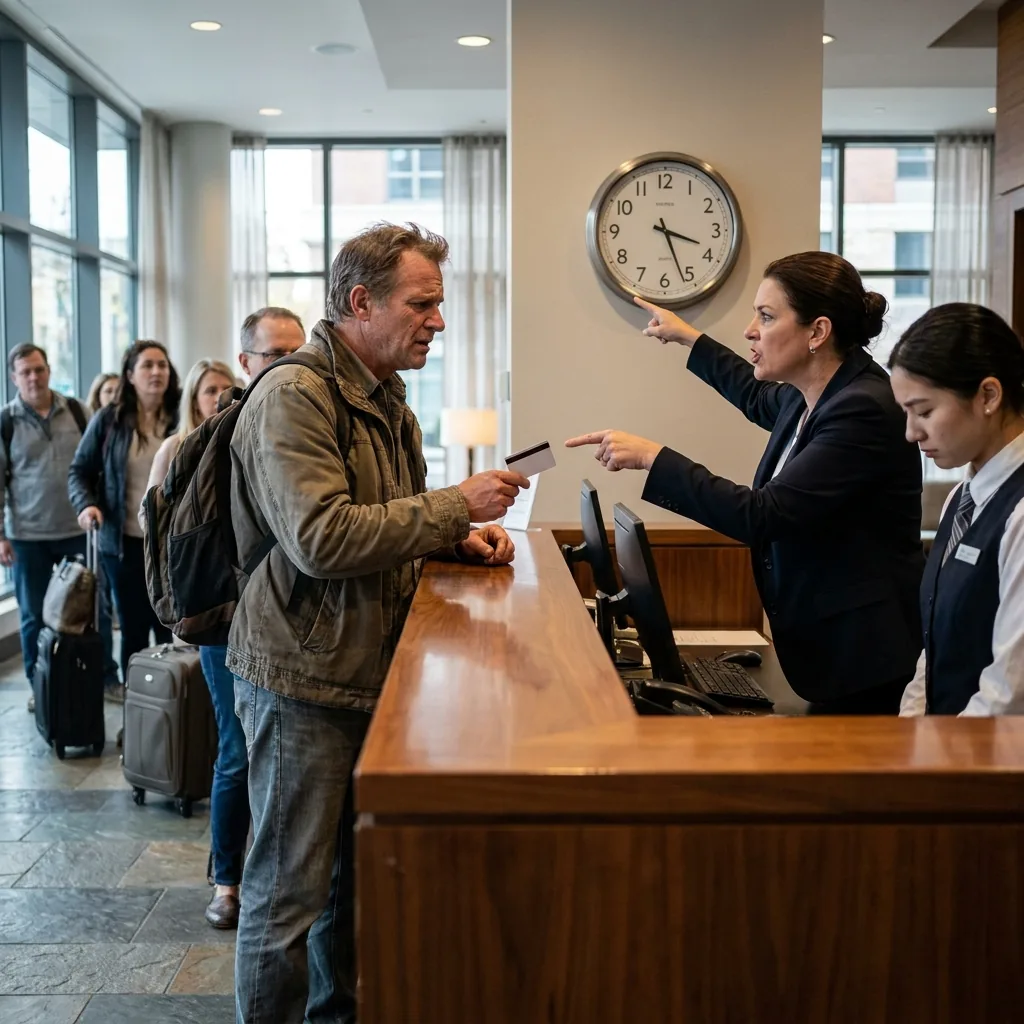
The front desk manager looked at the reservation keycard in Dylan Mercer’s hand, looked up at the clock above the lobby desk, and told him in a voice loud enough for the check-in line to hear, “That keycard cannot exist before you were checked in, so whatever story you’re telling me is not the sequence that happened.” People were rolling suitcases across the hotel lobby tile, a kid was leaning on a luggage cart by the seating area, and Dylan was already being blocked from his room by a manager using the desk process like a courtroom rule. The part that made heads turn was simple: he was not asking for anything dramatic, just why the card he already had was opening one elevator bank but not the room it was supposed to match.
Mara was near the coffee station beside the lobby seating area, waiting on her own room text, close enough to hear the whole thing without moving. Dylan stood at the front desk counter with the white key sleeve open in one hand and the card pinched in the other. Nina Mercer stood off to his right with a carry-on handle gripped in both hands. On the other side of the counter, Luis Ortega had one hand near the keyboard and the other resting beside a printed slip he had just set down. The manager, Tara Whitfield, had come from the office doorway behind him and taken the center position at the screen.
Dylan’s voice stayed level. “I’m not telling you a story. I’m asking why the card you all issued is coded wrong. It gets me upstairs. It doesn’t open the room on the reservation.”
Tara tapped the counter with one fingernail and kept her eyes on the screen. “Sir, that’s not how our sequence works. A card is made after the reservation is confirmed, after the room is assigned, and after identity is verified at this desk. If your room wasn’t active, then you did not already have a valid card in the way you’re describing.”
She said the last part while lifting her chin slightly toward the line behind him, the way staff do when they want the room to understand who is causing the delay.
Dylan set the keycard flat on the counter. “Then tell me why your hotel logo is on that card, why my name is on the sleeve, and why your clerk downstairs handed it to me less than ten minutes ago.”
Luis glanced sideways at Tara and then back to the monitor. He did not answer. The printer gave a short mechanical whine and spit out another narrow strip of paper. Tara placed two fingers over it before Dylan could lean far enough to read it.
“Luis,” she said without turning, “was this guest fully checked in at this station?”
Luis cleared his throat. “I started the reservation pull. Then the line backed up. Then there was the payment screen, and you came over.”
Tara cut in immediately. “Exactly. Started is not completed.”
Dylan nodded once, almost like he was making sure he had heard her correctly. “Okay. Then answer the basic part. If check-in was not completed, how did I get a hotel keycard from this desk at all?”
The family behind Mara went quiet. The father stopped scrolling his phone. Even the woman at the far end who had been arguing about parking lowered her voice.
Tara did not answer that question directly. She picked up the keycard, held it at the edge between two fingers, and looked at the sleeve. “This card proves nothing by itself. Cards get recoded. Sleeves get reused. Guests mix up cards from prior stays all the time.”
Nina spoke for the first time. “We checked in here twenty minutes ago. Not last month. Right here.”
Tara turned just enough to include Nina without giving her full attention. “Ma’am, if your husband had completed check-in, the room would be active in the system. It is not active, which means the sequence you are describing does not fit the record in front of me.”
Dylan did not correct the husband part. He slid the card back toward himself and asked, “What time does your system say I was checked in?”
That was the first question that changed Tara’s pace. Her hand stayed on the counter a beat too long. Then she said, “It says you were not checked in. That is the issue.”
“No,” Dylan said. “What time does it show the attempt, the room assignment, or the key creation? Whichever one you want to use.”
Luis looked down at the screen again. His mouth opened, then closed.
Tara’s voice sharpened. “Sir, guests do not direct our internal workflow. The fact remains that your claim is impossible under our sequence.”
Dylan raised the key sleeve instead of the card this time. The room number was handwritten in blue ink across the front. “Then whose handwriting is this?”
Luis looked at it and shifted his weight back from the counter. Tara answered first. “That notation does not establish a valid check-in.”
Dylan’s next question was almost casual. “Fine. Then what time is printed on the card log for a key that supposedly should not exist yet?”
For the first time, Tara stopped speaking long enough for the lobby sounds to come back into the space between them: suitcase wheels, the ice machine hum from the hall, the printer ticking warm paper forward. Luis stared at the reservation screen, then at the clock above the desk, then back at the screen.
When Tara finally spoke, she said, “That is not the issue here.”
And that was the moment the whole line could tell it was exactly the issue.
The front desk manager looked at the reservation keycard in Dylan Mercer’s hand, looked up at the clock above the lobby desk, and told him in a voice loud enough for the check-in line to hear, “That keycard cannot exist before you were checked in, so whatever story you’re telling me is not the sequence that happened.” People were rolling suitcases across the hotel lobby tile, a kid was leaning on a luggage cart by the seating area, and Dylan was already being blocked from his room by a manager using the desk process like a courtroom rule. The part that made heads turn was simple: he was not asking for anything dramatic, just why the card he already had was opening one elevator bank but not the room it was supposed to match.
Mara was near the coffee station beside the lobby seating area, waiting on her own room text, close enough to hear the whole thing without moving. Dylan stood at the front desk counter with the white key sleeve open in one hand and the card pinched in the other. Nina Mercer stood off to his right with a carry-on handle gripped in both hands. On the other side of the counter, Luis Ortega had one hand near the keyboard and the other resting beside a printed slip he had just set down. The manager, Tara Whitfield, had come from the office doorway behind him and taken the center position at the screen.
Dylan’s voice stayed level. “I’m not telling you a story. I’m asking why the card you all issued is coded wrong. It gets me upstairs. It doesn’t open the room on the reservation.”
Tara tapped the counter with one fingernail and kept her eyes on the screen. “Sir, that’s not how our sequence works. A card is made after the reservation is confirmed, after the room is assigned, and after identity is verified at this desk. If your room wasn’t active, then you did not already have a valid card in the way you’re describing.”
She said the last part while lifting her chin slightly toward the line behind him, the way staff do when they want the room to understand who is causing the delay.
Dylan set the keycard flat on the counter. “Then tell me why your hotel logo is on that card, why my name is on the sleeve, and why your clerk downstairs handed it to me less than ten minutes ago.”
Luis glanced sideways at Tara and then back to the monitor. He did not answer. The printer gave a short mechanical whine and spit out another narrow strip of paper. Tara placed two fingers over it before Dylan could lean far enough to read it.
“Luis,” she said without turning, “was this guest fully checked in at this station?”
Luis cleared his throat. “I started the reservation pull. Then the line backed up. Then there was the payment screen, and you came over.”
Tara cut in immediately. “Exactly. Started is not completed.”
Dylan nodded once, almost like he was making sure he had heard her correctly. “Okay. Then answer the basic part. If check-in was not completed, how did I get a hotel keycard from this desk at all?”
The family behind Mara went quiet. The father stopped scrolling his phone. Even the woman at the far end who had been arguing about parking lowered her voice.
Tara did not answer that question directly. She picked up the keycard, held it at the edge between two fingers, and looked at the sleeve. “This card proves nothing by itself. Cards get recoded. Sleeves get reused. Guests mix up cards from prior stays all the time.”
Nina spoke for the first time. “We checked in here twenty minutes ago. Not last month. Right here.”
Tara turned just enough to include Nina without giving her full attention. “Ma’am, if your husband had completed check-in, the room would be active in the system. It is not active, which means the sequence you are describing does not fit the record in front of me.”
Dylan did not correct the husband part. He slid the card back toward himself and asked, “What time does your system say I was checked in?”
That was the first question that changed Tara’s pace. Her hand stayed on the counter a beat too long. Then she said, “It says you were not checked in. That is the issue.”
“No,” Dylan said. “What time does it show the attempt, the room assignment, or the key creation? Whichever one you want to use.”
Luis looked down at the screen again. His mouth opened, then closed.
Tara’s voice sharpened. “Sir, guests do not direct our internal workflow. The fact remains that your claim is impossible under our sequence.”
Dylan raised the key sleeve instead of the card this time. The room number was handwritten in blue ink across the front. “Then whose handwriting is this?”
Luis looked at it and shifted his weight back from the counter. Tara answered first. “That notation does not establish a valid check-in.”
Dylan’s next question was almost casual. “Fine. Then what time is printed on the card log for a key that supposedly should not exist yet?”
For the first time, Tara stopped speaking long enough for the lobby sounds to come back into the space between them: suitcase wheels, the ice machine hum from the hall, the printer ticking warm paper forward. Luis stared at the reservation screen, then at the clock above the desk, then back at the screen.
When Tara finally spoke, she said, “That is not the issue here.”
And that was the moment the whole line could tell it was exactly the issue.