Story code: ST-000123
Part 3: The Draft That Showed the Script
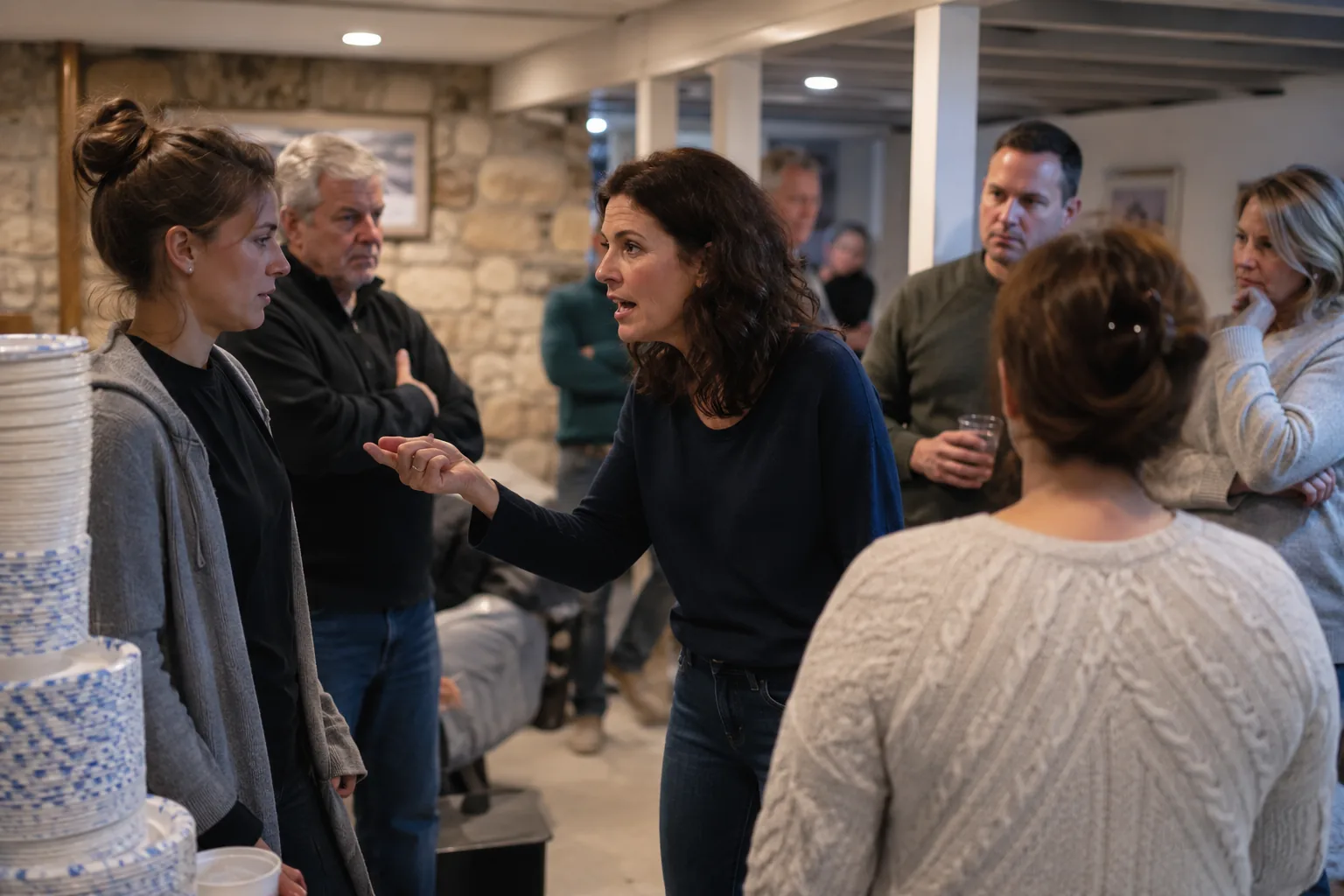
Maya kept the draft reply open on the laptop while the room waited on her next move. The basement rec room still looked ordinary enough from the doorway: paper plates, crushed napkins, the family laptop, the shared ancestry thread. But the draft changed the shape of the evening. It put Dana’s name beside the words before anyone had to guess who shaped them.
Maya dragged the cursor over the crossed-out word and let the screen fill the space between them. The draft showed the line in two versions. One word had been replaced before it was ever sent. The message read like a correction to a correction, which meant the spoken line had not been casual at all. It had been prepared, then adjusted, then repeated until it could stand up in front of the room.
Eli leaned in enough to read the screen without touching it. “That’s the same wrong word,” he said. He pointed once at the crossed-out word, then at the word that replaced it. “That one was changed in the draft. The one Dana keeps saying out loud is the version after somebody cleaned it up.” He did not need to say who copied it. Dana was the only person in the room who had already used the line twice.
Tess looked from the screen to Dana and back again. When she spoke, the borrowed words were thinner. “It was just supposed to keep people calm,” she said. The sentence stopped short of the explanation the room now wanted. She had used Dana’s phrasing to pin fault on Maya, but the draft showed the phrasing had a source and a revision. The blame did not land the same way once the wording could be checked.
Maya scrolled up to the top of the message chain. The ancestry email was still there, still visible, still the object that anchored everything. The subject line, the timestamp, the sender information, and the reply trail all sat in a clean stack. Nothing in the email supported the public version Dana had repeated. The email had asked for verification of a DNA match. It had not asked anyone to spin the result into a mix-up, and it had not told anyone to keep Maya from reading the thread.
Dana reached toward the mouse and then stopped. Her hand hovered near the laptop, then withdrew. That pause mattered more than any speech because it left the draft open long enough for everyone to see the source line under her name. The wording source was no longer a rumor in the room. It was visible in the thread.
Maya clicked the reply box and typed one sentence without looking away from Dana. “Read the exact instruction you gave me.” She turned the screen so the others could see the request, then tapped the trackpad once to send it into the thread. That moved the pressure out of the room and into the shared record where everybody could check it.
Dana opened her mouth, then closed it. She looked at the laptop, then at the phone on the table, then at the thread. The first useful answer did not come from her. It came from the screen.
A new reply appeared under the draft, this one from a family account that had not spoken yet. The message was short and plain: “Do not forward the ancestry email to Maya until I say.” It sat below Dana’s name and above the earlier replies, and it made the whole setup legible in one line. The instruction source was no longer hidden in the tone. It was written down.
Eli read it first, then looked at Dana. He did not raise his voice. “That’s the instruction,” he said. “Not the explanation. The instruction.” That distinction stripped the room down to the visible sequence: an email came in, a draft was built around it, one word was revised, and the revised line was used to steer the room away from the record.
Tess stepped back from the couch arm. The borrowed phrasing lost its grip once the screen showed the wording source. She did not try to repeat it again. Her silence marked the break more clearly than any defense would have.
Maya stayed still long enough to let the thread load one more line. Below the instruction was another message, sent minutes after the email arrived, saying that Dana had already handled the response and that nobody else needed the link. The wording did not mention Maya by name, but the effect was visible in the thread: access had been controlled before the room ever gathered.
That was the pressure point. The hidden part of the script was not only the line itself. It was the control of the email trail. Maya had the thread open, the draft on screen, and the wrong word pinned to a change somebody had made on purpose. The proof lane was now strong enough to show that the public story had been built around a private instruction.
Dana finally spoke, but she did not fix anything. She said, “You didn’t need the full thread.” The sentence was defensive, and it confirmed the need for the thread more than it denied it. Eli looked at the screen, then at the family account name above the instruction, then at Maya.
Maya clicked once more and expanded the sender details. The account belonged to the person who had been controlling the explanation all evening. The next step was obvious from the screen alone: if the record was going to stay visible, the person behind it would have to answer in the same place. The thread had become the room’s evidence, and the wrong word had already done its work.