Story code: ST-000501
Part 2: The Cost of Alignment
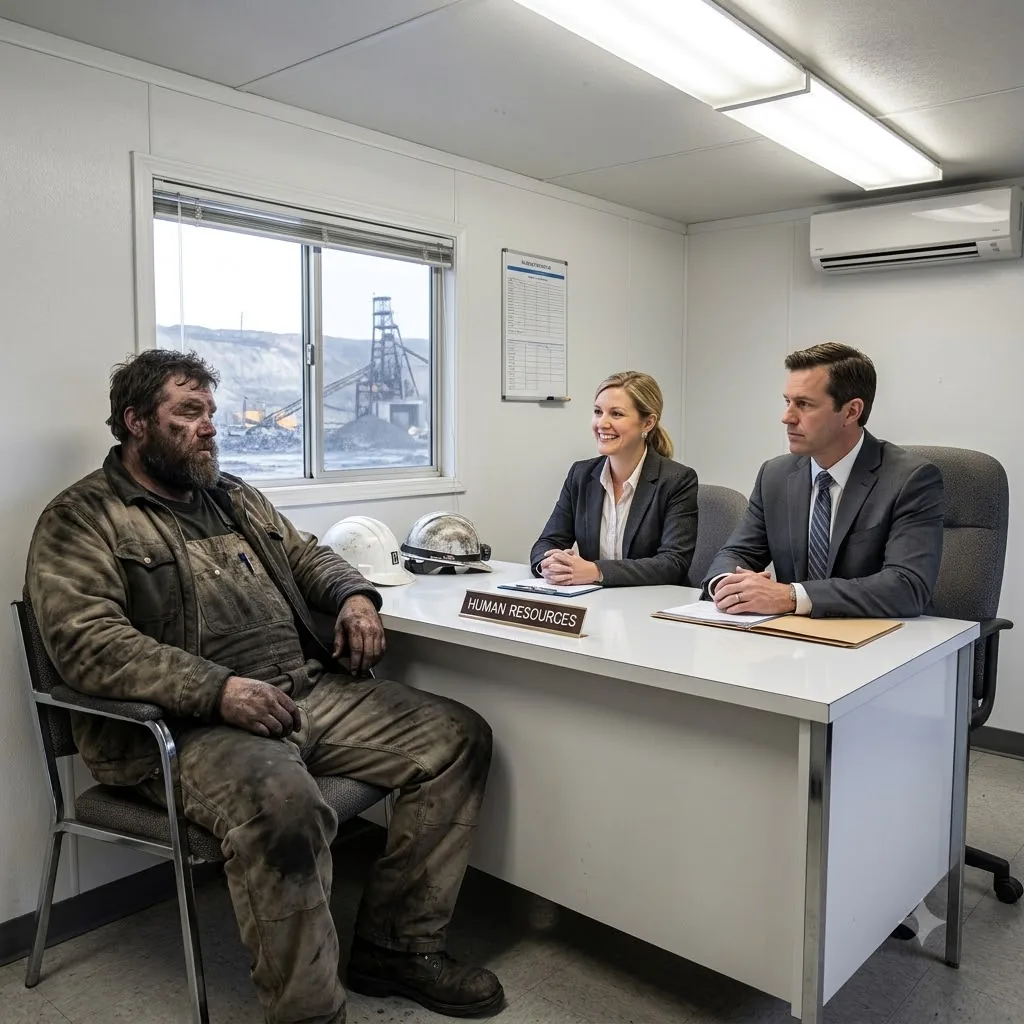
Coley held his breath, the heavy silver pen vibrating slightly in his dirt-caked fingers. The nib hovered a mere half-inch from the cream-colored paper. His eyes strained in the harsh fluorescent light of the trailer, trying to focus on the cluster of capitalized words buried in the dense, blocky paragraph just above the signature line. The letters blurred together for a second before snapping into focus: VOLUNTARY RELINQUISHMENT, BINDING ARBITRATION, and SUPERSEDING ALL PREVIOUS REPRESENTATIONS.
Coley did not have a law degree, but he had spent fifteen years working under a hard-fought union contract. He knew the shape of danger when he saw it. The word relinquishment tasted like ash in the back of his throat.
He pulled his hand back, resting the pen on the pristine desk. The metal clicked loudly against the wood, a sharp sound that briefly shattered the suffocating, lavender-scented quiet.
“What does this mean?” Coley asked. His voice sounded like grinding stones, rough and hoarse from breathing coal dust all shift. He pointed a thick, blackened finger at the tiny print. “What exactly am I relinquishing?”
Ms. Vance’s frozen smile did not waver, but she let out a soft, highly practiced sigh that sounded like a mother dealing with a difficult child. She leaned forward, the purple mist from the essential oil diffuser curling around her shoulder.
“Coley, we understand that new terminology can feel overwhelming,” Ms. Vance said, her voice dripping with artificial empathy. “That clause is simply a standard wellness release. It means you are voluntarily relinquishing negative workplace attachments. It is part of our new holistic healing framework. We cannot support your emotional labor if you continue to hold onto the toxic hostility that you demonstrated yesterday out by the ventilation shaft.”
Coley stared at her. The sheer absurdity of her words made his chest tighten. “Toxic hostility? The main intake fans are rattling off their mounts. If they fail while we’re two miles underground, we choke on black damp. That’s not negative energy. That’s a death sentence.”
“And that exact anxiety is why we brought you in for this wellness alignment,” the out-of-state lawyer interrupted smoothly. His voice was calm, measured, and entirely devoid of human warmth. He did not look at the document. He kept his flat, dark eyes locked directly on Coley’s face. “The company is trying to offer you premium mindfulness resources. But we cannot activate those resources until you acknowledge the alignment.”
“Then let me take a copy home,” Coley said, pushing his chair back an inch. “I want to read it over tonight. I’ll bring it back tomorrow.”
“Unfortunately, that isn’t possible,” the lawyer replied without missing a beat. “These alignment documents contain proprietary corporate wellness frameworks. They cannot leave the human resources environment under any circumstances.”
Coley wiped the back of his hand across his forehead, leaving a dark, greasy streak of soot just below his hairline. The claustrophobia of the tiny white trailer was suddenly worse than the deepest shaft in the mine. “Then call Big Dan,” Coley demanded, referring to his union steward. “If I’m signing something that supersedes anything, I want my rep in the room.”
For the first time, a faint, bloodless smile touched the lawyer’s lips. He adjusted his tailored French cuffs and rested his hands on the desk. “Mr. Coley, you are entirely within your rights to request union representation for a disciplinary hearing or a formal dispute. However, this is a routine benefit enrollment. It is a gift from management.”
The lawyer paused, letting the silence stretch out, allowing the low hum of the air conditioner to fill the gap. “If you demand a union representative, I will be forced to reclassify this friendly wellness meeting as a formal labor dispute. Company policy dictates that anyone initiating a labor dispute regarding safety or wellness must be placed on immediate, unpaid administrative leave pending a comprehensive psychological evaluation.”
Unpaid leave. The words struck Coley with the blunt force of a swinging steel beam. Unpaid leave meant an automatic failure to meet his monthly shift quota. If he dropped below his quota, he would lose his tier-one health coverage by the end of the week.
“You can’t do that,” Coley growled, his hands balling into tight fists on his lap.
“We aren’t doing anything, Coley,” Ms. Vance said softly. “You are the one choosing resistance over healing.” She reached into a separate folder and produced a glossy pamphlet, sliding it across the desk. The cover showed a smiling little girl running through a sunlit park. “We know how important the tier-one coverage is for your family. We know asthma treatments are incredibly expensive right now. We just want to ensure your little girl keeps getting the care she needs.”
The blood drained from Coley’s face. The mention of his daughter felt like a knife slipping between his ribs. They had dug through his medical claims. They knew exactly where he was vulnerable. They had built this entire trap around his daughter’s lungs.
“The primary extraction team boards the transport in exactly six minutes,” the lawyer said, tapping the glass face of his expensive gold watch. “If you do not sign the alignment acknowledgment, I must log a refusal of wellness benefits. You will be barred from boarding the transport, and your unpaid leave will begin immediately.”
Coley looked down at the cream-colored paper. The heavy legal text blurred as a wave of nausea washed over him. He reached out to pull the document closer, hoping to read the rest of the hidden paragraph, but the lawyer casually moved his hand, resting his manicured fingers directly over the lower half of the page. He pinned the paper to the desk, completely obscuring the fine print.
“Six minutes, Coley,” the lawyer whispered.
Coley looked at the silver pen resting on the desk. It looked like a weapon. He was utterly alone in the suffocating, lavender-scented room, trapped between the invisible dangers of a corporate legal document and the very real terror of his daughter waking up gasping for air with no medicine in the house.
“Just press hard,” Ms. Vance said, her voice taking on a sharper, commanding edge beneath the sweet facade. “For the carbon copy.”
Coley’s battered hand reached out. His fingers trembled as they closed around the cold metal barrel of the pen, lifting it once again toward the hidden trap waiting on the dotted line.