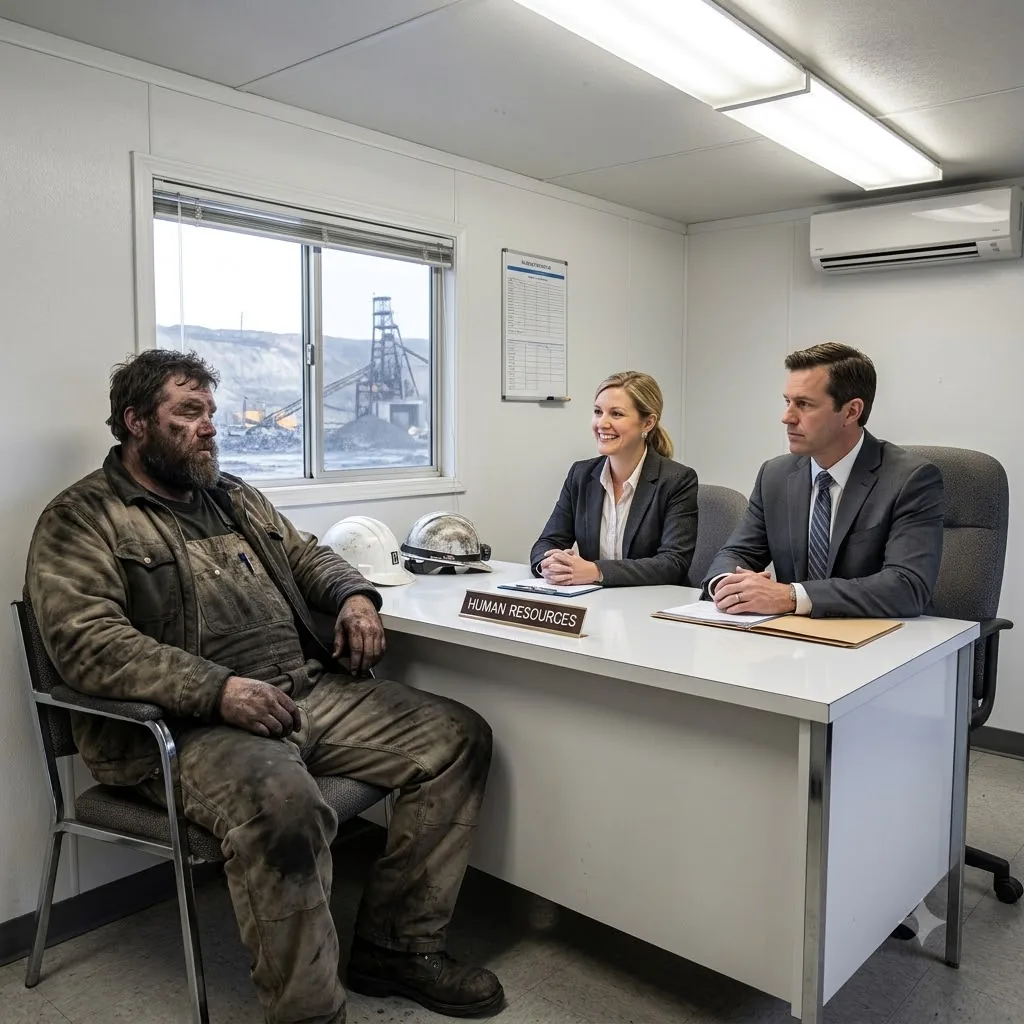
Story code: ST-000501
Part 3: The Environmental Confession
The heavy silver pen felt cold and foreign in Coley’s grip, slick with the sweat dampening his calloused palms. He stared at the blue ink tip hovering over the thick, cream-colored paper. Beneath his massive, battered hand, the out-of-state lawyer’s impeccably manicured fingers remained planted over the bottom half of the document. It was a deliberate, physical barrier hiding the final paragraph just above the signature line.
“Five minutes until the transport departs,” the lawyer murmured, his voice a flat, hollow drone that blended with the low hum of the air conditioner.
Coley’s chest tightened, drawing in a shallow breath of the cloying, synthetic lavender mist. The threat hung over him like a physical weight: sign the paper, or lose the primary shifts. Lose the shifts, and lose the tier-one health coverage keeping his daughter breathing.
“Press firmly,” Ms. Vance whispered, her frozen smile stretching a fraction wider. “For the carbon copy. It’s just an acknowledgment of our healing framework.”
Coley lowered the pen, bringing the metallic tip a millimeter from the dotted line. But instead of signing, he brought his left hand up from his lap. His knuckles were bruised, and his palm was thickly coated in a tacky, abrasive layer of hydraulic grease and coal dust from inspecting the failing fan belts earlier that morning. He reached across the desk to supposedly steady the heavy paper, planting his filthy thumb deliberately just a fraction of an inch from the lawyer’s pristine, tailored French cuff.
The reaction was instant and instinctual. The lawyer’s flat, unblinking composure broke. His eyes darted to the black sludge nearing his expensive charcoal wool, and he recoiled, violently yanking his hand back to protect his suit.
The bottom of the page was suddenly exposed.
Coley’s eyes dropped instantly to the tiny, blocky print. The words were dense, the margins non-existent, designed to make the reader’s eyes glaze over. But his gaze latched onto the capitalized phrases buried in the legal jargon. He held his breath and read.
*…Signatory formally stipulates that the local extraction team’s hostile culture and aggressive disregard for corporate operational mandates…*
Coley frowned, his eyes scanning faster. The lavender scent vanished from his awareness, replaced by the pounding rhythm of his own pulse in his ears.
*…constitute the sole and proximate cause of the documented environmental negligence and subsequent ecological damages occurring at the primary ventilation site…*
He traced the tiny letters with the silver tip of the pen, reading the final, damning sentence.
*…thereby fully indemnifying corporate ownership and executive management from all liability, damages, and penalties associated with pending State Environmental litigation…*
The dense words slammed together, forming a horrifying, crystal-clear picture in Coley’s mind.
He didn’t just understand the document; he understood the whole charade. The broken main intake fans out in the staging yard weren’t just an internal safety hazard for the miners. The heavy scrubbers on those fans had been dead for six months. They had been venting raw, unfiltered coal dust, heavy metals, and toxic exhaust straight out over the ridge and into the valley’s watershed. The state regulators had finally caught on.
“Pending state environmental litigation,” Coley read aloud. His voice was no longer a rough, defeated whisper. It was a low, resonant rumble that vibrated against the stark white walls of the trailer.
The glossy smile on Ms. Vance’s face shattered. Her pink lips parted, but for the first time since Coley walked into the trailer, no words came out.
The lawyer stiffened, quickly adjusting his sleeves, though his hands were now trembling slightly. “That is standard indemnification boilerplate, Mr. Coley. It simply protects the corporate structure so we can continue providing your generous wellness benefits.”
“Environmental negligence,” Coley repeated, ignoring the lawyer’s attempt to regain control. He looked up, locking eyes with the man in the expensive suit. “The scrubbers on the intake fans have been dead since November. We’ve been venting toxins straight into the local water table.”
“Mr. Coley, I strongly advise you to sign the alignment form and board your transport,” the lawyer warned, his tone sharp and urgent. The smooth, robotic confidence had completely evaporated.
“You’re being sued by the state,” Coley said. The realization washed over him, extinguishing his panic. The fear of losing his daughter’s health insurance dissolved, replaced by a cold, furious clarity. “They caught you venting the toxins. And this-” Coley tapped the heavy cream-colored paper with the barrel of the silver pen. “This isn’t a wellness program. This is a confession.”
Ms. Vance leaned forward, her voice high and tight, entirely stripped of its artificial empathy. “Coley, if you do not sign, your daughter’s asthma treatments will not be covered by the end of the-”
“You won’t do a damn thing to my daughter’s coverage,” Coley interrupted, leaning his heavy frame over the desk. He cast a dark shadow over the pristine white surface. “Because you need my signature. You need all of our signatures.”
He looked down at the trap laid out on the desk. “You’re taking my safety complaints-my shouting match by the vent shaft yesterday-and you’re legally defining it as a ‘hostile culture.’ You want to walk into a state courtroom and tell a judge that corporate management gave us perfect, working equipment, but we were too stubborn and hostile to use it correctly.”
Coley pointed a blackened finger right at the lawyer’s chest. “You want to tell the state that the ignorant, aggressive local miners bypassed the safety scrubbers and caused the environmental disaster. You’re scapegoating us to settle a multi-million dollar lawsuit.”
The lawyer opened his mouth, his jaw tight, but the words failed him. The threat of unpaid administrative leave still hung in the air, but it had been entirely defanged. If the company fired the miners for complaining about broken fans, it would only prove the state regulators’ case against corporate. They needed the workers to willingly take the blame under the guise of a ‘wellness alignment.’
“You flew down here to trick me into pleading guilty to your crimes,” Coley stated, the absolute truth ringing in the suffocating quiet.
He let the heavy silver pen slip from his dirty fingers. It clattered against the desk, rolling across the pristine cream-colored paper and leaving a tiny, jagged smear of blue ink directly across the word ‘indemnifying.’
The lawyer simply stared at the smudged paper, the blood completely drained from his face, trapped in the silence of his own exposed trap.