Story code: ST-000505
Part 1: The Hollow House
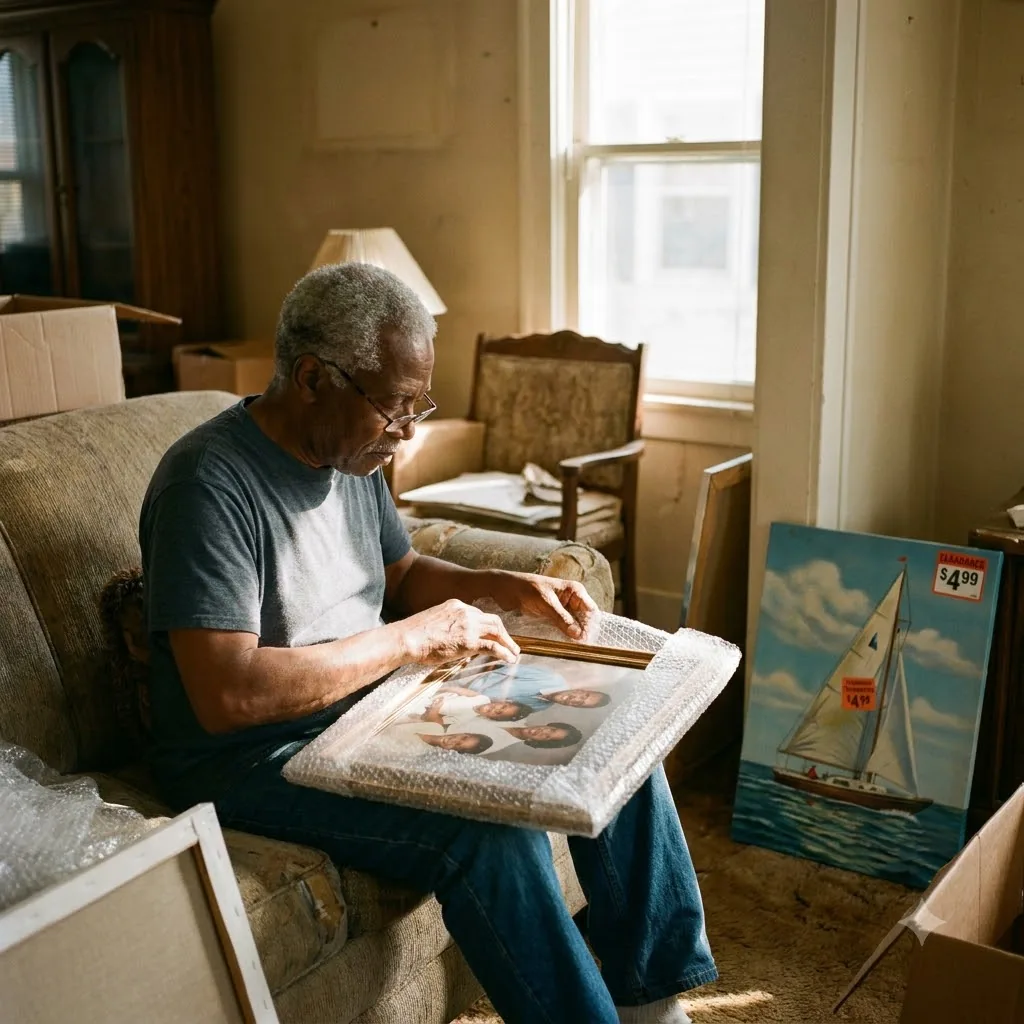
Elias pressed a square of bubble wrap over his son’s face, taping the edges down against the glass of the graduation portrait. He set the wrapped frame into a cardboard box, turning his attention to the empty nail on the living room wall. From a plastic shopping bag at his feet, he pulled a clearance-aisle canvas depicting a golden-haired family laughing on a sailboat and hung it where his son used to be.
The air in the house felt bruised, hanging thick and suffocating in the quiet aftermath of the morning’s visitor. The silence left behind was the kind that settled into the floorboards after a person with a clipboard walked out, got into their car, and drove away. The space felt thin, stripped of its dignity. Elias did not sit down to process the insult lingering in the room. He just kept moving.
He walked to the mantelpiece next. There stood the silver-framed wedding photo of him and Martha, taken forty-two years ago under the oak tree in their old backyard. His seventy-year-old hands trembled slightly as he folded the frame’s felt stand inward. He wrapped Martha’s smiling face in foam paper, sealing her away in the dark of the moving box. In her place, he stood up a cheap wooden frame holding the stock insert it came with, an overly polished photograph of a young, anonymous couple holding hands on a generic beach.
He moved down the hallway, a roll of packing tape swinging from his wrist. Every step felt like walking through water. He stopped at the collage of his daughter’s childhood milestones. First steps, missing front teeth, the awkward middle school dance. He took them down, one by one. The hallway wall looked patchy, the faded paint leaving ghostly rectangles where his bloodline had lived for decades. To cover the empty spaces, Elias used a stack of thrift-store finds he had purchased two days prior in anticipation of this exact necessity. A framed poster of the Eiffel Tower. A faded watercolor of a bowl of fruit. A family of four with perfect teeth wearing matching white sweaters in a meadow.
His chest tightened with a physical ache, a deep pressure pushing against his ribs. He was a ghost haunting his own sanctuary, methodically scrubbing away any proof that a man named Elias had ever loved, grieved, or existed within these walls. He paused only to wipe a thin sheen of sweat from his forehead, checking the grandfather clock in the corner. He had to finish before the chime. The deadline pressed against his spine.
The morning’s interaction still clung to the curtains and the carpets. A visitor had stood in the center of these rooms, looking past the warmth, looking past the decades of shelter, and reduced the entirety of Elias’s world to a cold, numerical disappointment. The dismissal had hung in the air long after the front door clicked shut. Elias was not going to let the next person see his real life. He refused to lay his family out on a platter to be judged, dismissed, or looked through by cold eyes ever again. If strangers were going to walk through his hallways and assess the worth of his sanctuary, they would assess a lie.
He tackled the refrigerator next. He pulled down the colorful magnets holding up his grandson’s crayon drawings and the faded postcard from a family trip to Yellowstone. He let the drawings slide into the kitchen trash can. He wiped down the stainless steel until not a single smudge of a small hand remained. He replaced the vibrant chaos with a single, blank notepad and a sleek silver pen.
The dining room was the hardest. A large canvas print of their last family reunion hung above the china cabinet. Three generations smiling back at him in vibrant color. Elias dragged over a wooden step stool. His knees cracked as he climbed up. He reached for the heavy frame, his grip slipping for a moment before he secured it against his chest. Carrying it down felt like carrying a body. He laid it flat on the dining table and wrapped it in three layers of industrial packing paper, ensuring not a single sliver of the image could be seen. He dragged the heavy bundle into the adjoining room, sliding it under a canvas drop cloth.
He went to the stack of fake memories leaning against the baseboard. He hoisted up an abstract painting composed of aggressive, meaningless red and gray squares. It was something he loathed, a mass-produced piece of nothingness. He hung it over the china cabinet. He stepped back. The dining room now belonged to a stranger. It looked cold, sterile, and entirely devoid of life.
He grabbed a damp cloth and began scrubbing the doorframes where pencil marks charted his children’s heights. He rubbed the wood vigorously, the friction burning his knuckles. The lead smeared, then faded, then vanished entirely into the soapy rag. He scrubbed until the white paint was bare and damp. He took the rag to the living room carpet, fluffing the fibers to erase the indentations left by his favorite reading chair, which he had dragged into the garage an hour ago. The house was unrecognizable. It smelled of lemon cleaner and old dust disturbed from its resting place.
He checked his watch. The second hand ticked past the twelve. He picked up the final item, a small, tarnished brass locket containing a tiny photo of his late wife that he always kept on the entryway table. He slipped it into his pocket, smoothing down the front of his shirt. He turned to survey the sterile, unfamiliar foyer just as the sharp, sudden chime of the doorbell echoed through the hollow house.
Elias pressed a square of bubble wrap over his son’s face, taping the edges down against the glass of the graduation portrait. He set the wrapped frame into a cardboard box, turning his attention to the empty nail on the living room wall. From a plastic shopping bag at his feet, he pulled a clearance-aisle canvas depicting a golden-haired family laughing on a sailboat and hung it where his son used to be.
The air in the house felt bruised, hanging thick and suffocating in the quiet aftermath of the morning’s visitor. The silence left behind was the kind that settled into the floorboards after a person with a clipboard walked out, got into their car, and drove away. The space felt thin, stripped of its dignity. Elias did not sit down to process the insult lingering in the room. He just kept moving.
He walked to the mantelpiece next. There stood the silver-framed wedding photo of him and Martha, taken forty-two years ago under the oak tree in their old backyard. His seventy-year-old hands trembled slightly as he folded the frame’s felt stand inward. He wrapped Martha’s smiling face in foam paper, sealing her away in the dark of the moving box. In her place, he stood up a cheap wooden frame holding the stock insert it came with, an overly polished photograph of a young, anonymous couple holding hands on a generic beach.
He moved down the hallway, a roll of packing tape swinging from his wrist. Every step felt like walking through water. He stopped at the collage of his daughter’s childhood milestones. First steps, missing front teeth, the awkward middle school dance. He took them down, one by one. The hallway wall looked patchy, the faded paint leaving ghostly rectangles where his bloodline had lived for decades. To cover the empty spaces, Elias used a stack of thrift-store finds he had purchased two days prior in anticipation of this exact necessity. A framed poster of the Eiffel Tower. A faded watercolor of a bowl of fruit. A family of four with perfect teeth wearing matching white sweaters in a meadow.
His chest tightened with a physical ache, a deep pressure pushing against his ribs. He was a ghost haunting his own sanctuary, methodically scrubbing away any proof that a man named Elias had ever loved, grieved, or existed within these walls. He paused only to wipe a thin sheen of sweat from his forehead, checking the grandfather clock in the corner. He had to finish before the chime. The deadline pressed against his spine.
The morning’s interaction still clung to the curtains and the carpets. A visitor had stood in the center of these rooms, looking past the warmth, looking past the decades of shelter, and reduced the entirety of Elias’s world to a cold, numerical disappointment. The dismissal had hung in the air long after the front door clicked shut. Elias was not going to let the next person see his real life. He refused to lay his family out on a platter to be judged, dismissed, or looked through by cold eyes ever again. If strangers were going to walk through his hallways and assess the worth of his sanctuary, they would assess a lie.
He tackled the refrigerator next. He pulled down the colorful magnets holding up his grandson’s crayon drawings and the faded postcard from a family trip to Yellowstone. He let the drawings slide into the kitchen trash can. He wiped down the stainless steel until not a single smudge of a small hand remained. He replaced the vibrant chaos with a single, blank notepad and a sleek silver pen.
The dining room was the hardest. A large canvas print of their last family reunion hung above the china cabinet. Three generations smiling back at him in vibrant color. Elias dragged over a wooden step stool. His knees cracked as he climbed up. He reached for the heavy frame, his grip slipping for a moment before he secured it against his chest. Carrying it down felt like carrying a body. He laid it flat on the dining table and wrapped it in three layers of industrial packing paper, ensuring not a single sliver of the image could be seen. He dragged the heavy bundle into the adjoining room, sliding it under a canvas drop cloth.
He went to the stack of fake memories leaning against the baseboard. He hoisted up an abstract painting composed of aggressive, meaningless red and gray squares. It was something he loathed, a mass-produced piece of nothingness. He hung it over the china cabinet. He stepped back. The dining room now belonged to a stranger. It looked cold, sterile, and entirely devoid of life.
He grabbed a damp cloth and began scrubbing the doorframes where pencil marks charted his children’s heights. He rubbed the wood vigorously, the friction burning his knuckles. The lead smeared, then faded, then vanished entirely into the soapy rag. He scrubbed until the white paint was bare and damp. He took the rag to the living room carpet, fluffing the fibers to erase the indentations left by his favorite reading chair, which he had dragged into the garage an hour ago. The house was unrecognizable. It smelled of lemon cleaner and old dust disturbed from its resting place.
He checked his watch. The second hand ticked past the twelve. He picked up the final item, a small, tarnished brass locket containing a tiny photo of his late wife that he always kept on the entryway table. He slipped it into his pocket, smoothing down the front of his shirt. He turned to survey the sterile, unfamiliar foyer just as the sharp, sudden chime of the doorbell echoed through the hollow house.