Story code: ST-000508
Part 1: Incident Protocol
Greg held his smartphone at chest height, centering the autofocus square directly on the pooling blood. The screen rendered the concrete floor in crisp, unsentimental high definition. Section four, paragraph B of the facility’s incident management protocol dictated that all medical emergencies must be recorded from a stationary position to establish a clear timeline and shield the corporation from liability. Greg kept his elbows tucked tightly against his ribs to stabilize the shot.
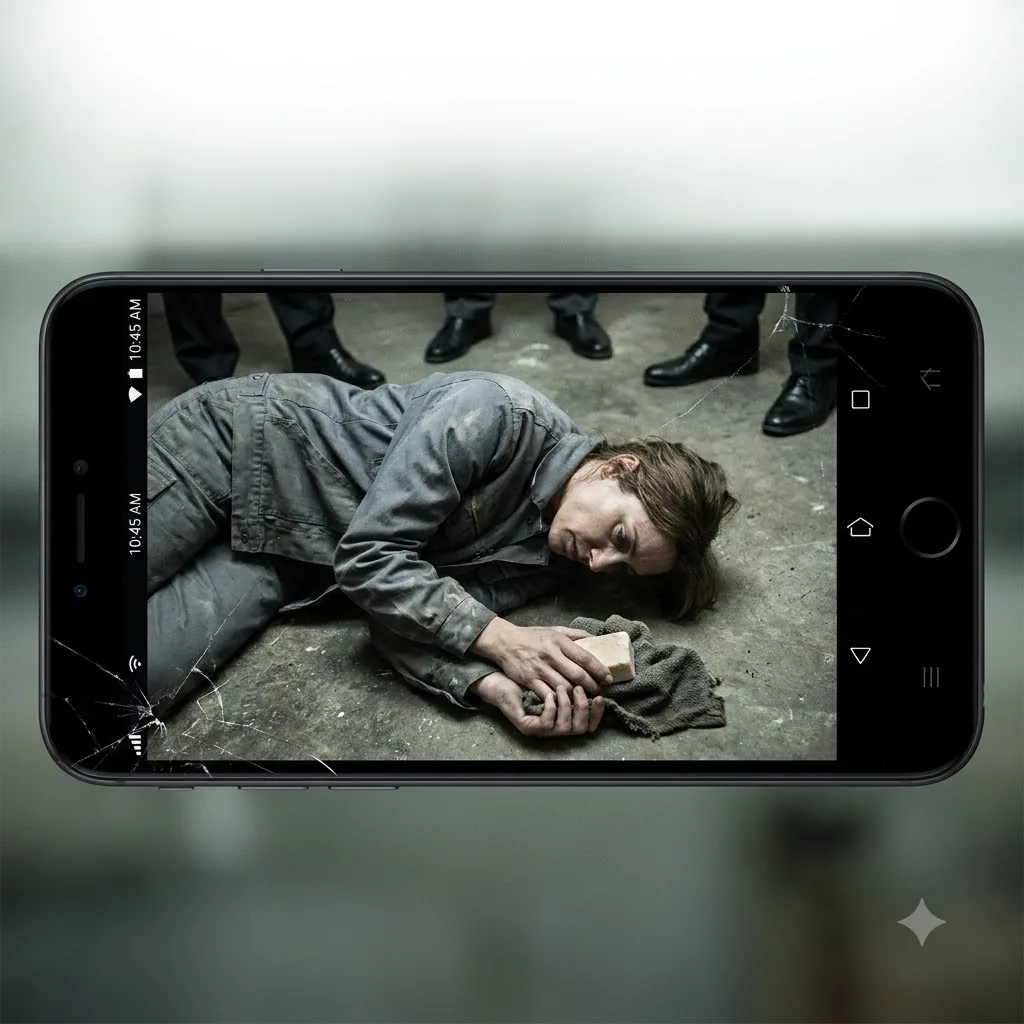
A woman was curled on her side in the center of the frame. She wore a drab, oversized uniform that was rapidly darkening around the abdomen, the fabric soaking up a steady hemorrhage that crept outward across the gray industrial floor. Greg panned the camera a few degrees to the left to capture the precise dimensions of the hazard. He needed to ensure the risk management file reflected that the slip-and-fall perimeter had been properly documented before the biohazard cleaning crew arrived. The manual was strict about preserving the integrity of an active scene.
Around him, a half-dozen other men stood in a loose, silent circle. They wore pressed slacks and neatly ironed button-down shirts, their own smartphones elevated and angled down at the collapsed woman. No one spoke a word. No one knelt to apply pressure to the wound. Protocol required a strictly observational stance until the designated shift supervisors cleared the floor. Interference transferred liability from the facility to the individual, a breach of contract Greg had no intention of committing. The gentle hum of the overhead ventilation fans provided a steady, white-noise soundtrack to the video file being saved to the company server.
Greg zoomed in slightly. The digital magnification brought the woman’s trembling hands into sharp relief. She was not clutching her bleeding side to staunch the flow. Instead, her fingers were moving in rapid, frantic scrapes against the rough concrete. She was trying to drag a small cluster of objects underneath her body, desperate to hide them from the circle of unblinking camera lenses.
Greg adjusted his grip, letting the lens focus on the items before she could completely conceal them. They were rough, uneven squares of thick, coarse cloth, hand-stitched at the edges with dark thread to form crude pads. Next to them lay a crushed, yellowish bar of cheap soap, its surface indented with panicked fingernail marks. She swept the soap under her hip with a desperate, shuddering heave.
None of these items belonged on the assembly floor. Contraband introduced a volatile new variable into the liability report. Greg tapped his screen to lock the exposure on the hidden cloth pads. He needed clear visual evidence that the subject had violated the sterile floor mandate, providing legal cover for the impending medical expenses. The company lawyers always looked for unapproved materials during a floor collapse to mitigate compensation payouts.
The woman coughed, sending a fine spray of red across the toe of a leather wingtip shoe belonging to the executive standing directly across from Greg. The man simply took a measured half-step backward, wiped his phone lens with his thumb, and continued recording. Greg documented the movement. Cross-referencing multiple angles would make the final incident report bulletproof during the quarterly audit.
She dragged the last remaining cloth pad beneath her ribs. Her breathing was ragged, visible as sharp, jerky movements on Greg’s high-definition display. She was entirely ignoring the massive blood loss to protect a piece of scavenged fabric and a ruined bar of soap. The behavior fell far outside the standard metrics for a workplace injury. Greg mentally noted the anomaly for his written summary, classifying it under unpredictable shock responses to further shield the floor supervisors from negligence claims.
He needed a much better angle on the concealed items. The primary objective of the recording was to capture the root cause of the incident. If the soap had caused a localized slip, or the cloth had been intended to jam a processing mechanism, the compliance department would need definitive, high-resolution proof. Greg shuffled forward, breaking from the perimeter and closing the distance to the very edge of the expanding red pool.
He tilted the phone downward, aiming for the narrow, shadowed gap between the cold concrete and the woman’s curled torso. The harsh fluorescent lighting of the facility bounced off the wet floor, creating an annoying glare on the screen. He took another step, planting his shoe just inches from the biohazard boundary. He watched the scene entirely through the digital viewfinder, framing her trembling shoulder and the frayed edge of the hidden cloth.
Her frantic, sweeping motions stopped.
The sudden stillness registered on the screen as a sharp contrast to her previous panic. Greg kept his finger steady on the record button, anticipating a total loss of consciousness. Standard procedure dictated that he capture the exact moment of fainting for the time-stamp log.
Instead of going limp, the woman shifted her entire body weight. Her head snapped upward, and a single, bloodshot eye locked onto the dual lenses of Greg’s phone. The digital display failed to capture the sheer, raw intensity of the stare glaring back at him.
Before Greg could process the deviation from the expected shock protocol and step back into the safety circle, a wet, crimson-smeared hand shot out from beneath her body and clamped violently around his ankle.
Greg held his smartphone at chest height, centering the autofocus square directly on the pooling blood. The screen rendered the concrete floor in crisp, unsentimental high definition. Section four, paragraph B of the facility’s incident management protocol dictated that all medical emergencies must be recorded from a stationary position to establish a clear timeline and shield the corporation from liability. Greg kept his elbows tucked tightly against his ribs to stabilize the shot.
A woman was curled on her side in the center of the frame. She wore a drab, oversized uniform that was rapidly darkening around the abdomen, the fabric soaking up a steady hemorrhage that crept outward across the gray industrial floor. Greg panned the camera a few degrees to the left to capture the precise dimensions of the hazard. He needed to ensure the risk management file reflected that the slip-and-fall perimeter had been properly documented before the biohazard cleaning crew arrived. The manual was strict about preserving the integrity of an active scene.
Around him, a half-dozen other men stood in a loose, silent circle. They wore pressed slacks and neatly ironed button-down shirts, their own smartphones elevated and angled down at the collapsed woman. No one spoke a word. No one knelt to apply pressure to the wound. Protocol required a strictly observational stance until the designated shift supervisors cleared the floor. Interference transferred liability from the facility to the individual, a breach of contract Greg had no intention of committing. The gentle hum of the overhead ventilation fans provided a steady, white-noise soundtrack to the video file being saved to the company server.
Greg zoomed in slightly. The digital magnification brought the woman’s trembling hands into sharp relief. She was not clutching her bleeding side to staunch the flow. Instead, her fingers were moving in rapid, frantic scrapes against the rough concrete. She was trying to drag a small cluster of objects underneath her body, desperate to hide them from the circle of unblinking camera lenses.
Greg adjusted his grip, letting the lens focus on the items before she could completely conceal them. They were rough, uneven squares of thick, coarse cloth, hand-stitched at the edges with dark thread to form crude pads. Next to them lay a crushed, yellowish bar of cheap soap, its surface indented with panicked fingernail marks. She swept the soap under her hip with a desperate, shuddering heave.
None of these items belonged on the assembly floor. Contraband introduced a volatile new variable into the liability report. Greg tapped his screen to lock the exposure on the hidden cloth pads. He needed clear visual evidence that the subject had violated the sterile floor mandate, providing legal cover for the impending medical expenses. The company lawyers always looked for unapproved materials during a floor collapse to mitigate compensation payouts.
The woman coughed, sending a fine spray of red across the toe of a leather wingtip shoe belonging to the executive standing directly across from Greg. The man simply took a measured half-step backward, wiped his phone lens with his thumb, and continued recording. Greg documented the movement. Cross-referencing multiple angles would make the final incident report bulletproof during the quarterly audit.
She dragged the last remaining cloth pad beneath her ribs. Her breathing was ragged, visible as sharp, jerky movements on Greg’s high-definition display. She was entirely ignoring the massive blood loss to protect a piece of scavenged fabric and a ruined bar of soap. The behavior fell far outside the standard metrics for a workplace injury. Greg mentally noted the anomaly for his written summary, classifying it under unpredictable shock responses to further shield the floor supervisors from negligence claims.
He needed a much better angle on the concealed items. The primary objective of the recording was to capture the root cause of the incident. If the soap had caused a localized slip, or the cloth had been intended to jam a processing mechanism, the compliance department would need definitive, high-resolution proof. Greg shuffled forward, breaking from the perimeter and closing the distance to the very edge of the expanding red pool.
He tilted the phone downward, aiming for the narrow, shadowed gap between the cold concrete and the woman’s curled torso. The harsh fluorescent lighting of the facility bounced off the wet floor, creating an annoying glare on the screen. He took another step, planting his shoe just inches from the biohazard boundary. He watched the scene entirely through the digital viewfinder, framing her trembling shoulder and the frayed edge of the hidden cloth.
Her frantic, sweeping motions stopped.
The sudden stillness registered on the screen as a sharp contrast to her previous panic. Greg kept his finger steady on the record button, anticipating a total loss of consciousness. Standard procedure dictated that he capture the exact moment of fainting for the time-stamp log.
Instead of going limp, the woman shifted her entire body weight. Her head snapped upward, and a single, bloodshot eye locked onto the dual lenses of Greg’s phone. The digital display failed to capture the sheer, raw intensity of the stare glaring back at him.
Before Greg could process the deviation from the expected shock protocol and step back into the safety circle, a wet, crimson-smeared hand shot out from beneath her body and clamped violently around his ankle.