Story code: ST-000516
Part 1: The Invisible Wall
Elias sat across the scarred metal desk, the warehouse manager job and its life-saving family health insurance practically signed and sealed, right up until the hiring manager hit refresh on the screening tablet. The heavy thrum of the ceiling fans suddenly felt deafening as the recruiter’s warm, welcoming smile collapsed into a tight, pale line. Elias recognized the atmospheric shift instantly. It was the exact same silence that had fallen over the logistics firm last Tuesday and the regional freight yard two weeks before that.
Tom, the hiring manager who just three minutes ago had been eagerly discussing forklift maintenance schedules and weekend barbecue recipes, pulled the tablet closer to his chest. His knuckles turned white against the black plastic casing. He refused to meet Elias in the eye.
Elias leaned forward. The chair groaned under his weight. He had played this perfectly. He possessed every required certification, fifteen years of flawless operational experience, and a completely spotless record. He had spent the last eight months and thousands of dollars working with legal specialists to aggressively scrub his digital footprint. Every old address, every minor dismissed traffic citation, every loose thread of data that could even remotely tie him to the old life had been legally expunged, sealed, or permanently unlinked. He needed this job. His daughter’s medical coverage depended entirely on him securing a corporate payroll position by the end of the month.
Tom cleared his throat, his eyes darting toward the door. He mumbled a generic corporate apology about an unforeseen flag in the final automated screening process. He started to stand up, attempting to signal the immediate end of the interview.
Elias did not stand. He stared at the back of the tablet. The invisible algorithmic wall had dropped down again, blocking him from a life he had earned. He needed to know what was on that screen. He had pulled his official background reports from the state and federal databases just yesterday, and they were blank, green, and completely clear. Whatever this company was using, it was not the law. It was a phantom shadow-profile.
Tom asked Elias to leave the premises immediately.
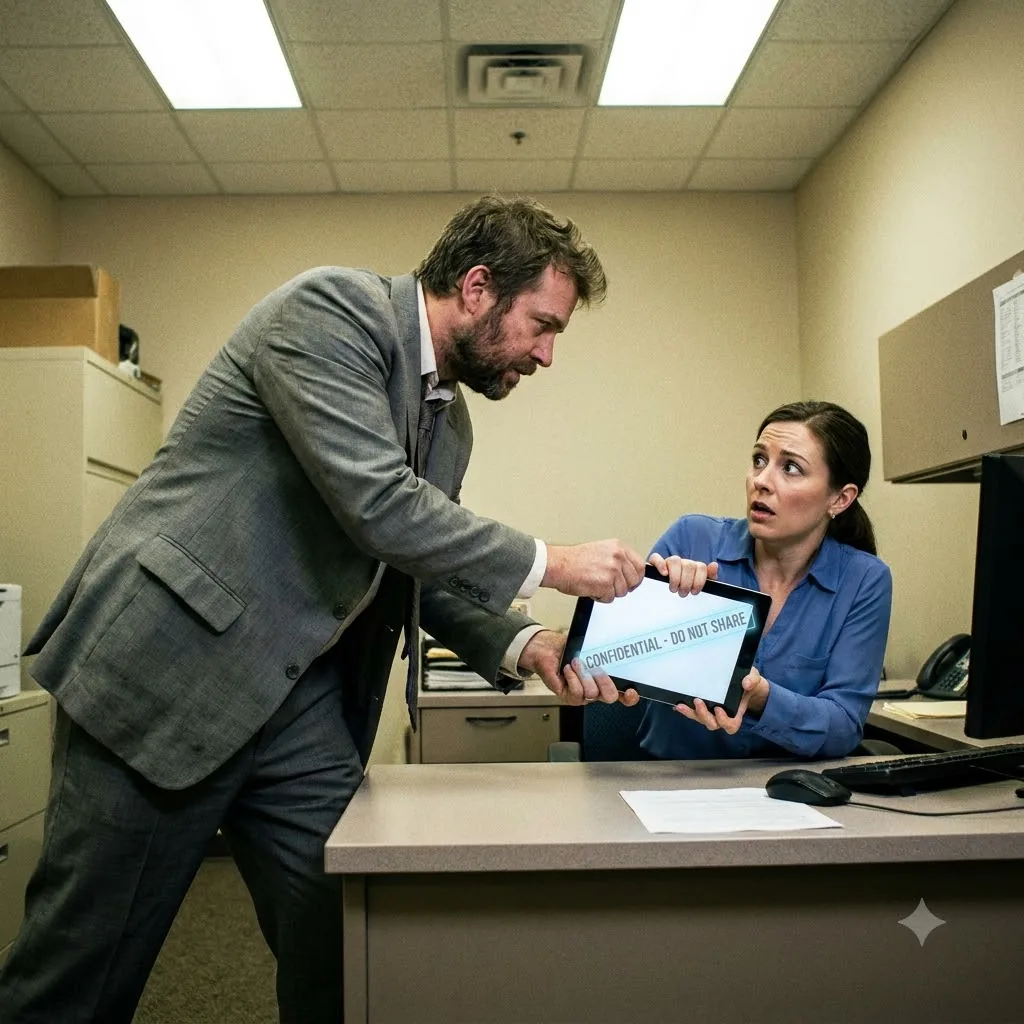
Elias moved with a sudden, precise speed. He reached across the desk, his hand clamping over the edge of the tablet. Tom gasped, yanking back, but Elias held firm. He did not touch the hiring manager. He only controlled the hardware. With a sharp twist of his wrist, Elias rotated the screen toward the overhead fluorescent lights to cut the privacy glare.
The interface was entirely red. A stark, brutal scarlet that filled the display. It was not a criminal history report. It was a proprietary dashboard labeled *Praxis Predictive Analytics*. Below his name and a heavily distorted approximation of his face, a bold alert flashed rhythmically. It designated him as a *Tier-One Predictive Liability*. The text below the warning cited a behavioral matrix score, declaring him an extreme risk for workplace disruption and unauthorized corporate sabotage. It was a conviction for crimes he had never committed, generated by lines of code operating completely outside the justice system.
In the bottom right corner of the dashboard, a watermark displayed the developer signature: *System Architecture by Julian Vance*.
Tom shouted for warehouse security. Elias released the tablet, committing the developer name and the software title to memory. He stood up, calmly adjusting his jacket, and walked out of the office before the manager could hit the panic button on the desk.
The midday sun hammered down on the asphalt parking lot. Elias climbed into his sedan, the heat inside suffocating, but he barely registered the temperature. He locked the doors and pulled his laptop from his backpack. His hands shook with a cold, focused anger as he booted up the machine. He had paid professionals to protect his family by legally erasing his past. Yet some faceless corporate analyst named Julian Vance had built a machine that simply decided he was a criminal anyway.
Elias tethered his laptop to his phone and opened a secure browser. He typed in the software name he had seen on the tablet. *Praxis Predictive Analytics*. The search results populated instantly. It was a boutique, highly aggressive risk-management firm operating out of a tech park thirty miles away. They sold proprietary behavioral forecasting to massive supply chain conglomerates. They boasted about seeing beyond public records. They bragged about finding the truth hidden in the negative space of a candidate’s life.
He searched the developer signature. Julian Vance was listed as the Lead Algorithm Architect. The corporate bio featured a pristine headshot of a man in his early thirties, smiling confidently against a backdrop of glass and steel. The page detailed his groundbreaking work in predictive human threat modeling.
Elias closed the laptop and placed it on the passenger seat. He turned the ignition key. The engine roared to life. He did not drive toward his home. He pulled out of the industrial park and merged onto the highway, setting his navigation system for the Praxis corporate campus. He needed to dismantle the algorithm ruining his life, and the only way to do that was to confront the architect who built it.
Forty minutes later, Elias parked across the street from a sleek, four-story building surrounded by manicured hedges and high-definition security cameras. He stepped out of his car, his eyes scanning the badge-access gates and the private parking garage beneath the structure. A man matching Julian Vance’s headshot emerged from the glass lobby doors, holding a coffee cup and laughing with a colleague as they walked toward a reserved parking space. Elias crossed the street, his heavy boots silent on the pavement, closing the distance just as Vance reached out to unlock the door of a silver luxury sedan.
Elias sat across the scarred metal desk, the warehouse manager job and its life-saving family health insurance practically signed and sealed, right up until the hiring manager hit refresh on the screening tablet. The heavy thrum of the ceiling fans suddenly felt deafening as the recruiter’s warm, welcoming smile collapsed into a tight, pale line. Elias recognized the atmospheric shift instantly. It was the exact same silence that had fallen over the logistics firm last Tuesday and the regional freight yard two weeks before that.
Tom, the hiring manager who just three minutes ago had been eagerly discussing forklift maintenance schedules and weekend barbecue recipes, pulled the tablet closer to his chest. His knuckles turned white against the black plastic casing. He refused to meet Elias in the eye.
Elias leaned forward. The chair groaned under his weight. He had played this perfectly. He possessed every required certification, fifteen years of flawless operational experience, and a completely spotless record. He had spent the last eight months and thousands of dollars working with legal specialists to aggressively scrub his digital footprint. Every old address, every minor dismissed traffic citation, every loose thread of data that could even remotely tie him to the old life had been legally expunged, sealed, or permanently unlinked. He needed this job. His daughter’s medical coverage depended entirely on him securing a corporate payroll position by the end of the month.
Tom cleared his throat, his eyes darting toward the door. He mumbled a generic corporate apology about an unforeseen flag in the final automated screening process. He started to stand up, attempting to signal the immediate end of the interview.
Elias did not stand. He stared at the back of the tablet. The invisible algorithmic wall had dropped down again, blocking him from a life he had earned. He needed to know what was on that screen. He had pulled his official background reports from the state and federal databases just yesterday, and they were blank, green, and completely clear. Whatever this company was using, it was not the law. It was a phantom shadow-profile.
Tom asked Elias to leave the premises immediately.
Elias moved with a sudden, precise speed. He reached across the desk, his hand clamping over the edge of the tablet. Tom gasped, yanking back, but Elias held firm. He did not touch the hiring manager. He only controlled the hardware. With a sharp twist of his wrist, Elias rotated the screen toward the overhead fluorescent lights to cut the privacy glare.
The interface was entirely red. A stark, brutal scarlet that filled the display. It was not a criminal history report. It was a proprietary dashboard labeled *Praxis Predictive Analytics*. Below his name and a heavily distorted approximation of his face, a bold alert flashed rhythmically. It designated him as a *Tier-One Predictive Liability*. The text below the warning cited a behavioral matrix score, declaring him an extreme risk for workplace disruption and unauthorized corporate sabotage. It was a conviction for crimes he had never committed, generated by lines of code operating completely outside the justice system.
In the bottom right corner of the dashboard, a watermark displayed the developer signature: *System Architecture by Julian Vance*.
Tom shouted for warehouse security. Elias released the tablet, committing the developer name and the software title to memory. He stood up, calmly adjusting his jacket, and walked out of the office before the manager could hit the panic button on the desk.
The midday sun hammered down on the asphalt parking lot. Elias climbed into his sedan, the heat inside suffocating, but he barely registered the temperature. He locked the doors and pulled his laptop from his backpack. His hands shook with a cold, focused anger as he booted up the machine. He had paid professionals to protect his family by legally erasing his past. Yet some faceless corporate analyst named Julian Vance had built a machine that simply decided he was a criminal anyway.
Elias tethered his laptop to his phone and opened a secure browser. He typed in the software name he had seen on the tablet. *Praxis Predictive Analytics*. The search results populated instantly. It was a boutique, highly aggressive risk-management firm operating out of a tech park thirty miles away. They sold proprietary behavioral forecasting to massive supply chain conglomerates. They boasted about seeing beyond public records. They bragged about finding the truth hidden in the negative space of a candidate’s life.
He searched the developer signature. Julian Vance was listed as the Lead Algorithm Architect. The corporate bio featured a pristine headshot of a man in his early thirties, smiling confidently against a backdrop of glass and steel. The page detailed his groundbreaking work in predictive human threat modeling.
Elias closed the laptop and placed it on the passenger seat. He turned the ignition key. The engine roared to life. He did not drive toward his home. He pulled out of the industrial park and merged onto the highway, setting his navigation system for the Praxis corporate campus. He needed to dismantle the algorithm ruining his life, and the only way to do that was to confront the architect who built it.
Forty minutes later, Elias parked across the street from a sleek, four-story building surrounded by manicured hedges and high-definition security cameras. He stepped out of his car, his eyes scanning the badge-access gates and the private parking garage beneath the structure. A man matching Julian Vance’s headshot emerged from the glass lobby doors, holding a coffee cup and laughing with a colleague as they walked toward a reserved parking space. Elias crossed the street, his heavy boots silent on the pavement, closing the distance just as Vance reached out to unlock the door of a silver luxury sedan.