Story code: ST-000531
Part 1: The Glass and the Gravel
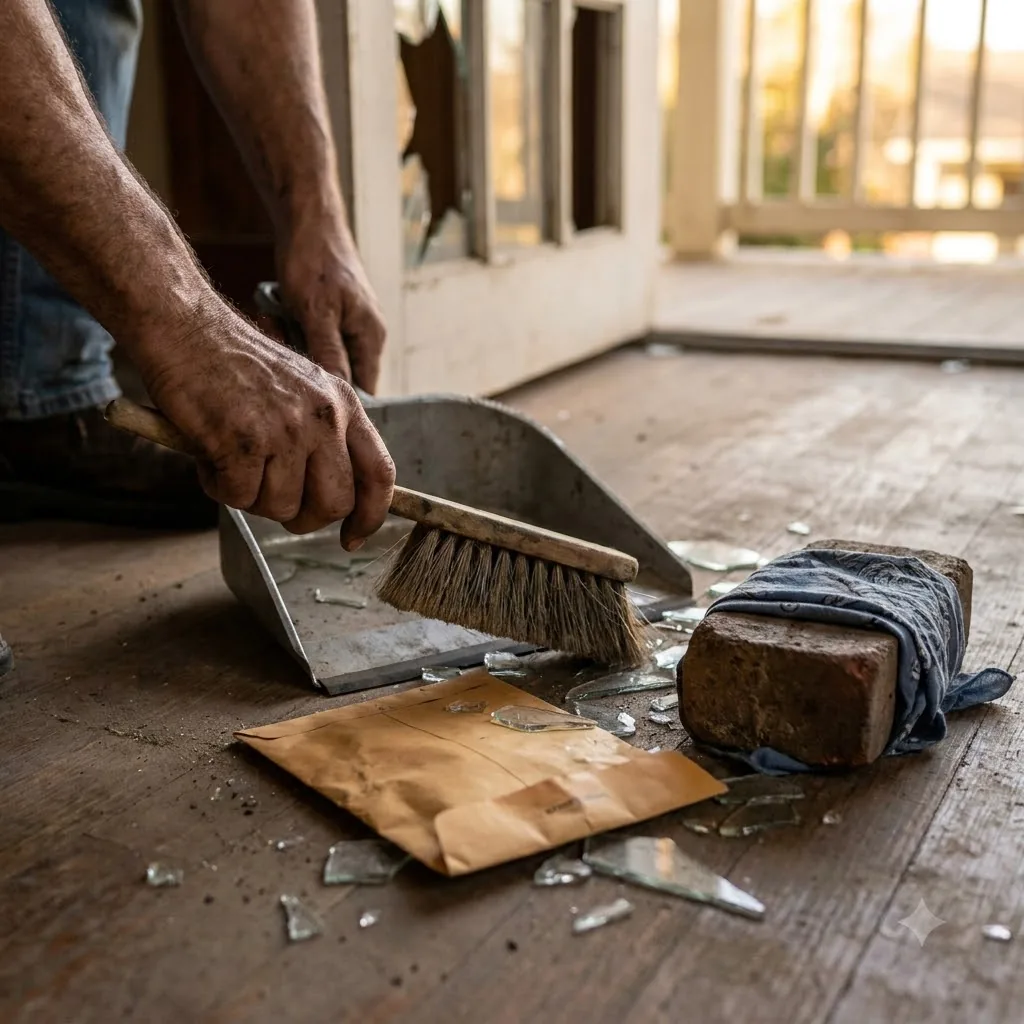
The rigid bristles of the push broom scraped against the hardwood floor, gathering jagged shards of the living room window into a glittering, dangerous pile. Leo kept his rhythm steady. He pushed the debris toward the baseboards, maintaining a mechanical motion to ground himself while the landline on his desk shrilled for the fifth time in ten minutes. The caller ID flashed the unmistakable Washington prefix of Councilman Vance’s elite legal team. Leo let it ring. He crouched down, ignoring the sharp crunch of glass under his boots, and began picking up the larger pieces by hand. His knuckles brushed against a heavy, dense mass resting in the center of the destruction.
It was a solid masonry brick. Its rough edges were carefully wrapped in a faded blue gang bandana.
Leo picked it up, feeling the gritty texture of the fabric against his skin. The cloth smelled faintly of motor oil, stale tobacco, and sweat. This was not the polished, bureaucratic intimidation Vance’s lawyers preferred. Those men operated with cease-and-desist letters and thinly veiled threats of defamation lawsuits. This brick was a street-level guarantee of violence, a clear message from the local Eastside set that Leo needed to drop the hit-and-run investigation immediately. The alliance between a corrupt city councilman and the neighborhood corner boys was a new development, one that proved Leo was digging in the exact right place. He tossed the brick onto his cluttered desk, letting it land hard against a stack of redacted police reports, and shoved the blue cloth into his back pocket.
A faint, hesitant scuffling sound drew his attention to the front porch. Leo stepped over the remaining glass and moved to the heavy oak door. He pulled it open, the hinges groaning in the muggy afternoon air.
A boy stood on the top step, shifting his weight from one scuffed sneaker to the other. He looked no older than fourteen, wearing an oversized gray hoodie that swallowed his thin frame despite the summer heat. His dark eyes darted past Leo, scanning the shattered window and the ruined living room before dropping to the porch floorboards.
Leo leaned against the doorframe, keeping his posture relaxed to avoid spooking the kid. He recognized him. His name was Mateo. He was one of the regulars who hung around the auto shop down the block from the intersection where the councilman’s SUV had plowed into a pedestrian just five days ago.
“You shouldn’t be here,” Leo said, keeping his voice perfectly level.
Mateo didn’t look up. “I saw what they did to your window.”
“Occupational hazard.” Leo stepped fully onto the porch, pulling the door closed behind him to block the view of his compromised office. “You know something about the intersection.”
It wasn’t framed as an inquiry. Leo stated it as a hard fact, applying just enough pressure to make the boy crack. Mateo’s shoulders tightened instantly. He shoved his hands much deeper into his hoodie pockets, his jaw working as he stared at the peeling paint on the porch railing.
“People are talking,” Mateo mumbled, his voice barely carrying over the distant hum of city traffic. “Saying you’re writing a big story. Saying you’re going to put Vance away for good.”
“I write what I can prove.” Leo took a slow step forward, closing the distance between them. “Right now, I have a dead man in the street and a police report with four missing pages. Vance claims he was at a charity dinner across town when it happened. The gang banging on my window says I should stop looking into his alibi.”
Mateo chewed on his bottom lip, glancing nervously at the street. The road was a quiet stretch of cracked pavement lined with overgrown oak trees, completely empty in the mid-afternoon slump.
“My older brother works at the garage,” Mateo said, his words spilling out in a rushed whisper. “He was working late that night. He told me to keep my mouth shut and stay out of it. He said Vance has people everywhere. But I know you pay for things that matter.”
Leo reached into his back pocket, pulling out his wallet. He extracted two crisp fifty-dollar bills and held them loosely between his index and middle fingers. He knew exactly what he was doing. He was pushing a vulnerable teenager into a highly dangerous corner, using a child to bypass a corrupt political machine and a violent street gang. The moral weight of it settled in his chest, a heavy and uncomfortable pressure. He pushed it aside. The story demanded a sacrifice, and Leo needed the evidence more than he needed a clean conscience.
“I pay for items that put Vance behind the wheel of that SUV,” Leo said, snapping the bills slightly to draw the boy’s attention.
Mateo stared at the money. He slowly pulled his right hand out of his pocket. His knuckles were bruised, covered in old grease stains. “He didn’t just hit the guy and run. He stopped. He got out of the car and looked at the body.”
“Show me the proof.”
Mateo reached back into his other pocket, his fingers closing around a thick, folded piece of dark plastic. It looked like a damaged dashcam SD card sleeve, or perhaps a fragment of a shattered casing from the intersection. He pulled it halfway out, the jagged edge catching a beam of sunlight breaking through the oak branches.
Before Mateo could extend his hand, the low, guttural rumble of a heavy engine echoed from the corner of the block. A matte-black sedan turned onto the street. Its tinted windows were rolled up tight, the modified suspension riding inches from the asphalt. It didn’t speed past the house. It crawled. The heavy tires crushed fallen leaves with a slow, deliberate crunch that drowned out the afternoon birds.
Mateo froze completely. His hand hovered halfway out of his pocket, the piece of plastic locked in his trembling grip. The sedan came to a dead stop directly in front of Leo’s house, the dark, impenetrable glass reflecting the shattered remains of the living room window.
The rigid bristles of the push broom scraped against the hardwood floor, gathering jagged shards of the living room window into a glittering, dangerous pile. Leo kept his rhythm steady. He pushed the debris toward the baseboards, maintaining a mechanical motion to ground himself while the landline on his desk shrilled for the fifth time in ten minutes. The caller ID flashed the unmistakable Washington prefix of Councilman Vance’s elite legal team. Leo let it ring. He crouched down, ignoring the sharp crunch of glass under his boots, and began picking up the larger pieces by hand. His knuckles brushed against a heavy, dense mass resting in the center of the destruction.
It was a solid masonry brick. Its rough edges were carefully wrapped in a faded blue gang bandana.
Leo picked it up, feeling the gritty texture of the fabric against his skin. The cloth smelled faintly of motor oil, stale tobacco, and sweat. This was not the polished, bureaucratic intimidation Vance’s lawyers preferred. Those men operated with cease-and-desist letters and thinly veiled threats of defamation lawsuits. This brick was a street-level guarantee of violence, a clear message from the local Eastside set that Leo needed to drop the hit-and-run investigation immediately. The alliance between a corrupt city councilman and the neighborhood corner boys was a new development, one that proved Leo was digging in the exact right place. He tossed the brick onto his cluttered desk, letting it land hard against a stack of redacted police reports, and shoved the blue cloth into his back pocket.
A faint, hesitant scuffling sound drew his attention to the front porch. Leo stepped over the remaining glass and moved to the heavy oak door. He pulled it open, the hinges groaning in the muggy afternoon air.
A boy stood on the top step, shifting his weight from one scuffed sneaker to the other. He looked no older than fourteen, wearing an oversized gray hoodie that swallowed his thin frame despite the summer heat. His dark eyes darted past Leo, scanning the shattered window and the ruined living room before dropping to the porch floorboards.
Leo leaned against the doorframe, keeping his posture relaxed to avoid spooking the kid. He recognized him. His name was Mateo. He was one of the regulars who hung around the auto shop down the block from the intersection where the councilman’s SUV had plowed into a pedestrian just five days ago.
“You shouldn’t be here,” Leo said, keeping his voice perfectly level.
Mateo didn’t look up. “I saw what they did to your window.”
“Occupational hazard.” Leo stepped fully onto the porch, pulling the door closed behind him to block the view of his compromised office. “You know something about the intersection.”
It wasn’t framed as an inquiry. Leo stated it as a hard fact, applying just enough pressure to make the boy crack. Mateo’s shoulders tightened instantly. He shoved his hands much deeper into his hoodie pockets, his jaw working as he stared at the peeling paint on the porch railing.
“People are talking,” Mateo mumbled, his voice barely carrying over the distant hum of city traffic. “Saying you’re writing a big story. Saying you’re going to put Vance away for good.”
“I write what I can prove.” Leo took a slow step forward, closing the distance between them. “Right now, I have a dead man in the street and a police report with four missing pages. Vance claims he was at a charity dinner across town when it happened. The gang banging on my window says I should stop looking into his alibi.”
Mateo chewed on his bottom lip, glancing nervously at the street. The road was a quiet stretch of cracked pavement lined with overgrown oak trees, completely empty in the mid-afternoon slump.
“My older brother works at the garage,” Mateo said, his words spilling out in a rushed whisper. “He was working late that night. He told me to keep my mouth shut and stay out of it. He said Vance has people everywhere. But I know you pay for things that matter.”
Leo reached into his back pocket, pulling out his wallet. He extracted two crisp fifty-dollar bills and held them loosely between his index and middle fingers. He knew exactly what he was doing. He was pushing a vulnerable teenager into a highly dangerous corner, using a child to bypass a corrupt political machine and a violent street gang. The moral weight of it settled in his chest, a heavy and uncomfortable pressure. He pushed it aside. The story demanded a sacrifice, and Leo needed the evidence more than he needed a clean conscience.
“I pay for items that put Vance behind the wheel of that SUV,” Leo said, snapping the bills slightly to draw the boy’s attention.
Mateo stared at the money. He slowly pulled his right hand out of his pocket. His knuckles were bruised, covered in old grease stains. “He didn’t just hit the guy and run. He stopped. He got out of the car and looked at the body.”
“Show me the proof.”
Mateo reached back into his other pocket, his fingers closing around a thick, folded piece of dark plastic. It looked like a damaged dashcam SD card sleeve, or perhaps a fragment of a shattered casing from the intersection. He pulled it halfway out, the jagged edge catching a beam of sunlight breaking through the oak branches.
Before Mateo could extend his hand, the low, guttural rumble of a heavy engine echoed from the corner of the block. A matte-black sedan turned onto the street. Its tinted windows were rolled up tight, the modified suspension riding inches from the asphalt. It didn’t speed past the house. It crawled. The heavy tires crushed fallen leaves with a slow, deliberate crunch that drowned out the afternoon birds.
Mateo froze completely. His hand hovered halfway out of his pocket, the piece of plastic locked in his trembling grip. The sedan came to a dead stop directly in front of Leo’s house, the dark, impenetrable glass reflecting the shattered remains of the living room window.