Story code: ST-000559
Part 1: The Thirty-Eight Percent
Two hundred students sat in dead silence under the hum of fluorescent lights, heads bowed over the AP Calculus exam. The only sound in the gymnasium was the frantic scratching of pencils echoing off the high cinderblock walls. Kevin stared down at page four of his test booklet. The third derivative of the function unspooled in his mind with effortless clarity. He saw the local minimum, the point of inflection, the exact area under the curve. The correct answer was C. He moved his hand over his Scantron sheet, positioned the graphite tip over the bubble for B, and meticulously darkened it.
Failing with precision required infinitely more focus than simply passing. A random scattering of darkened circles might yield a twenty percent. That was too obvious. A flat zero would trigger immediate alarms and meetings with the guidance counselor. But a thirty-eight percent was a very specific, carefully calibrated kind of failure. That was the score of a student who tried, who understood the foundational concepts, but who completely cracked under the pressure of the advanced applications. It was a believable collapse.
Kevin had done the math before the proctor even handed out the booklets. He needed exactly nineteen correct answers out of fifty. To make the failure look organic, he had to map out a trajectory of decline. He answered the first ten questions perfectly. For the next fifteen, he simulated common traps, intentionally dropping negative signs and failing to distribute variables. Now, in the back half of the exam, he was orchestrating a total systemic breakdown. He was engineering a tragedy on a bubble sheet.
He glanced at the digital clock mounted above the bleachers. Forty-two minutes remaining. Mr. Harrison, the head of the math department, paced softly down the center aisle. His rubber-soled shoes squeaked faintly against the varnished wood. Kevin shifted his arm, shielding his Scantron. If Harrison paused to look over his shoulder, the veteran teacher would instantly realize the answers made absolutely no sense. Kevin was the student who had corrected the textbook’s answer key twice in October. Now, he was deliberately selecting undefined for a straightforward integration problem.
Question twenty-two required him to calculate the volume of a solid of revolution. Kevin closed his eyes for a fraction of a second. He saw the shape form in the darkness behind his eyelids, a perfect three-dimensional bell curve rotating around an axis. Then the pristine geometric curve flattened out. It morphed into the sagging, sloped roof of his family’s seafood restaurant.
The dry, sterile air of the gymnasium vanished. Kevin was suddenly breathing in cold salt wind and the heavy, permanent smell of old frying oil. He was standing in the gravel parking lot behind the kitchen, watching the black luxury sedan idling by the dumpsters. The man from the coastal development firm had stepped out wearing a crisp, lightweight linen suit. The developer stood there tapping a pen against a clipboard, explaining the eminent domain buyout numbers.
Kevin saw his father. The memory burned hot in his chest. His father, wearing his grease-stained apron, had stepped forward and bowed. It was a deep, rigid, humiliating bend at the waist. His father had submitted completely to a man erasing their livelihood for pennies on the dollar. The developer barely looked up from his phone. His father had stayed bent, gesturing weakly toward Kevin by the door, telling the developer about his genius son. His father offered up Kevin’s pristine academic future as a desperate shield, relying on his son’s success to serve as the ultimate redemption. He was trading their dignity today for Kevin’s graduation tomorrow.
Kevin swallowed hard, forcing the smell of the ocean out of his sinuses. He opened his eyes and stared at the exam booklet. The overhead lights reflected harshly off the stark white paper. If he secured the five and locked in the early admission scholarships, the machinery of his father’s submission would be complete. The path would be permanently set. Kevin would become the gleaming trophy his father could point to while quietly letting the developers bulldoze the rest of their lives. He would be the distraction that made the surrender acceptable.
He shifted his grip on the pencil and moved to question forty-five. The calculations were dense, requiring layered applications of the chain rule. His brain processed the variables with a speed he could not turn off, instantly spitting out the correct value of negative four. He hovered his pencil over the bubble for A. A decade of relentless training, of drilling flashcards at the kitchen table until midnight while his father scrubbed down the fryers, screamed at him to fill in the right circle.
He forced his wrist an inch to the right. He placed the dulling graphite tip onto the bubble for D.
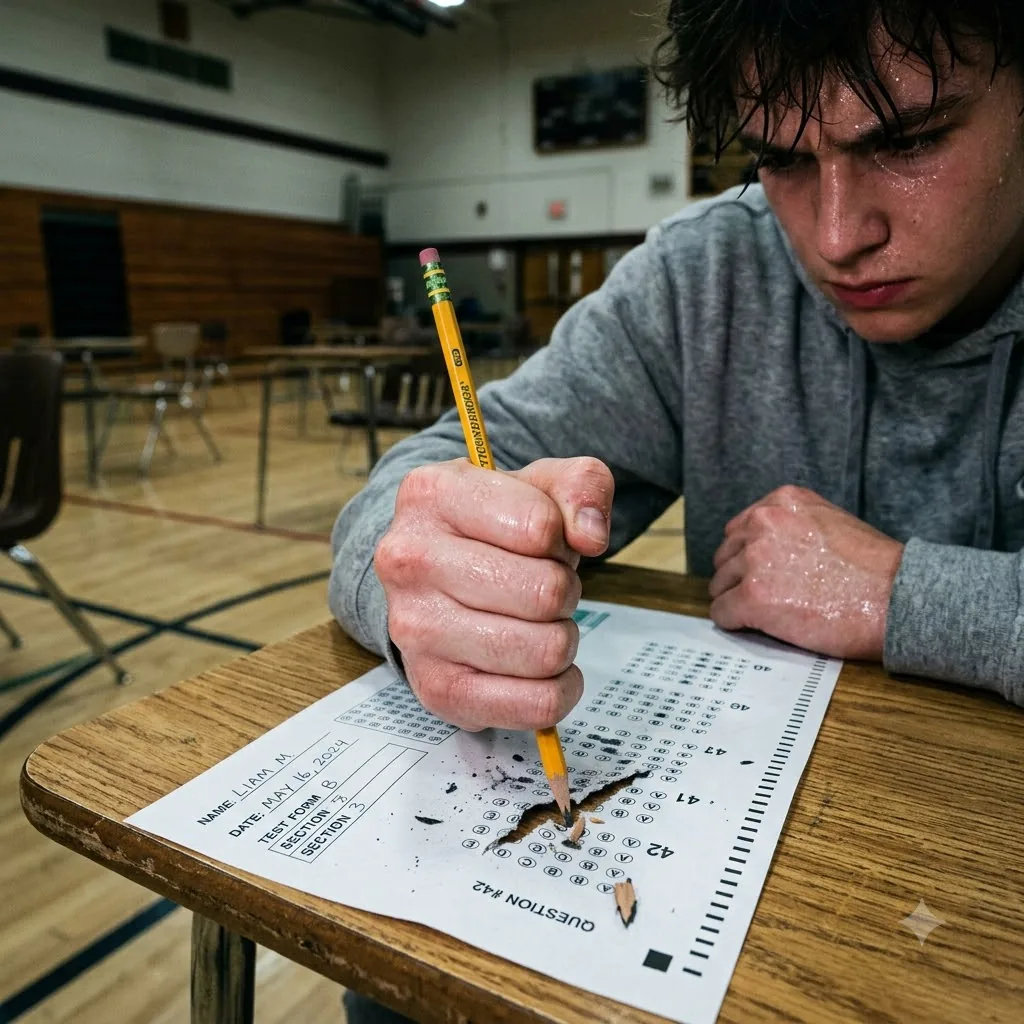
The image of his father’s bowed spine flared in his mind, overlaying the geometric shapes on the page. Kevin pressed down. He ground the graphite into the paper, darkening the wrong circle, tracing it over and over in a tight, furious loop. He pressed harder, the pressure transferring down his arm and through his white-knuckled fingers. He drove the point down until the wood groaned against the plastic desk. The lead snapped with a sharp crack, tearing a jagged hole straight through the center of the Scantron sheet.
Two hundred students sat in dead silence under the hum of fluorescent lights, heads bowed over the AP Calculus exam. The only sound in the gymnasium was the frantic scratching of pencils echoing off the high cinderblock walls. Kevin stared down at page four of his test booklet. The third derivative of the function unspooled in his mind with effortless clarity. He saw the local minimum, the point of inflection, the exact area under the curve. The correct answer was C. He moved his hand over his Scantron sheet, positioned the graphite tip over the bubble for B, and meticulously darkened it.
Failing with precision required infinitely more focus than simply passing. A random scattering of darkened circles might yield a twenty percent. That was too obvious. A flat zero would trigger immediate alarms and meetings with the guidance counselor. But a thirty-eight percent was a very specific, carefully calibrated kind of failure. That was the score of a student who tried, who understood the foundational concepts, but who completely cracked under the pressure of the advanced applications. It was a believable collapse.
Kevin had done the math before the proctor even handed out the booklets. He needed exactly nineteen correct answers out of fifty. To make the failure look organic, he had to map out a trajectory of decline. He answered the first ten questions perfectly. For the next fifteen, he simulated common traps, intentionally dropping negative signs and failing to distribute variables. Now, in the back half of the exam, he was orchestrating a total systemic breakdown. He was engineering a tragedy on a bubble sheet.
He glanced at the digital clock mounted above the bleachers. Forty-two minutes remaining. Mr. Harrison, the head of the math department, paced softly down the center aisle. His rubber-soled shoes squeaked faintly against the varnished wood. Kevin shifted his arm, shielding his Scantron. If Harrison paused to look over his shoulder, the veteran teacher would instantly realize the answers made absolutely no sense. Kevin was the student who had corrected the textbook’s answer key twice in October. Now, he was deliberately selecting undefined for a straightforward integration problem.
Question twenty-two required him to calculate the volume of a solid of revolution. Kevin closed his eyes for a fraction of a second. He saw the shape form in the darkness behind his eyelids, a perfect three-dimensional bell curve rotating around an axis. Then the pristine geometric curve flattened out. It morphed into the sagging, sloped roof of his family’s seafood restaurant.
The dry, sterile air of the gymnasium vanished. Kevin was suddenly breathing in cold salt wind and the heavy, permanent smell of old frying oil. He was standing in the gravel parking lot behind the kitchen, watching the black luxury sedan idling by the dumpsters. The man from the coastal development firm had stepped out wearing a crisp, lightweight linen suit. The developer stood there tapping a pen against a clipboard, explaining the eminent domain buyout numbers.
Kevin saw his father. The memory burned hot in his chest. His father, wearing his grease-stained apron, had stepped forward and bowed. It was a deep, rigid, humiliating bend at the waist. His father had submitted completely to a man erasing their livelihood for pennies on the dollar. The developer barely looked up from his phone. His father had stayed bent, gesturing weakly toward Kevin by the door, telling the developer about his genius son. His father offered up Kevin’s pristine academic future as a desperate shield, relying on his son’s success to serve as the ultimate redemption. He was trading their dignity today for Kevin’s graduation tomorrow.
Kevin swallowed hard, forcing the smell of the ocean out of his sinuses. He opened his eyes and stared at the exam booklet. The overhead lights reflected harshly off the stark white paper. If he secured the five and locked in the early admission scholarships, the machinery of his father’s submission would be complete. The path would be permanently set. Kevin would become the gleaming trophy his father could point to while quietly letting the developers bulldoze the rest of their lives. He would be the distraction that made the surrender acceptable.
He shifted his grip on the pencil and moved to question forty-five. The calculations were dense, requiring layered applications of the chain rule. His brain processed the variables with a speed he could not turn off, instantly spitting out the correct value of negative four. He hovered his pencil over the bubble for A. A decade of relentless training, of drilling flashcards at the kitchen table until midnight while his father scrubbed down the fryers, screamed at him to fill in the right circle.
He forced his wrist an inch to the right. He placed the dulling graphite tip onto the bubble for D.
The image of his father’s bowed spine flared in his mind, overlaying the geometric shapes on the page. Kevin pressed down. He ground the graphite into the paper, darkening the wrong circle, tracing it over and over in a tight, furious loop. He pressed harder, the pressure transferring down his arm and through his white-knuckled fingers. He drove the point down until the wood groaned against the plastic desk. The lead snapped with a sharp crack, tearing a jagged hole straight through the center of the Scantron sheet.