Story code: ST-000566
Part 1: The Phantom Appointment
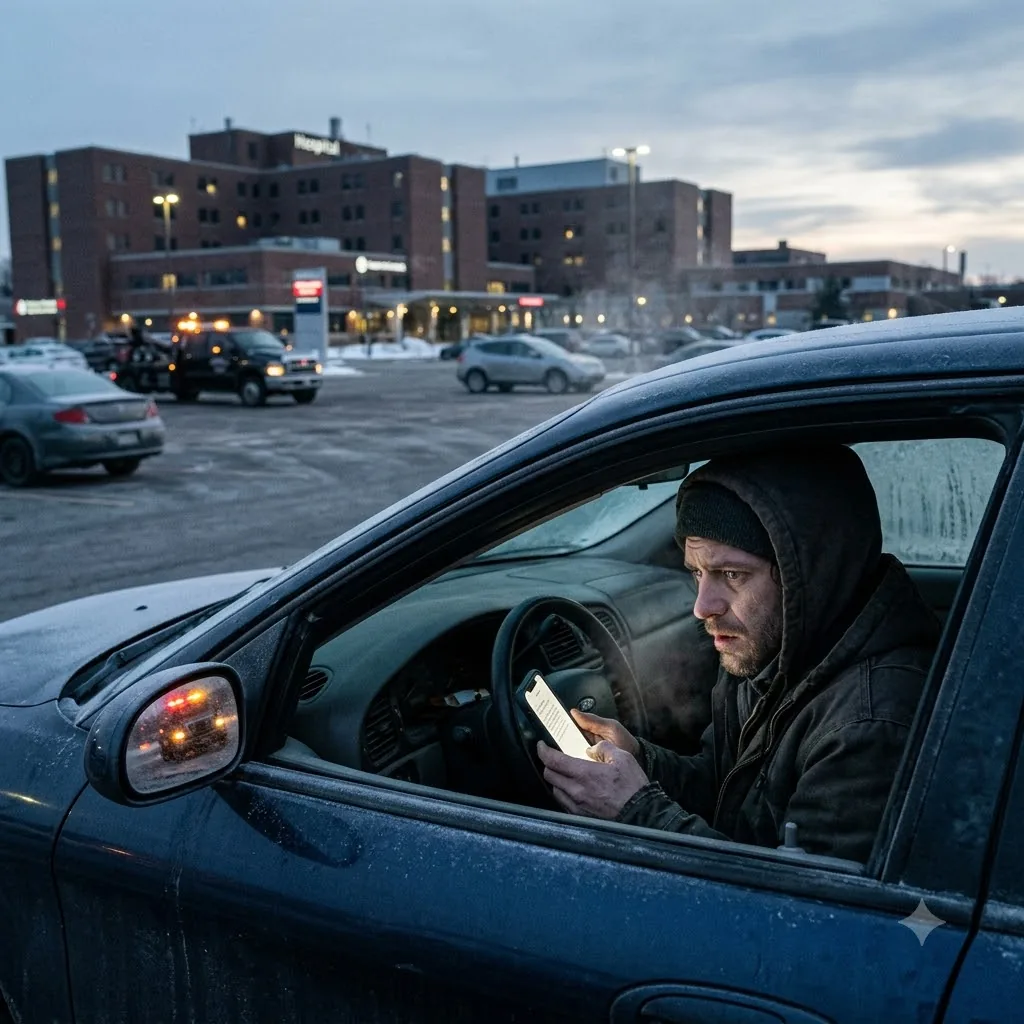
Marcus stared at the glowing screen of his cracked phone, the automated text glaring white against the pitch black of his freezing Ford Taurus. *Thank you for completing your telehealth PTSD session today, your file is now updated.* He let out a ragged breath that plumed in the frigid air of the hospital parking lot, his stiff boots pressed hard against the dead heater vents of the floorboard. He had been sitting in this exact spot since Tuesday.
The engine had died three days ago. The cold had crept in through the failing door seals, settling into the fabric of his sleeping bag and the marrow of his bones. He rubbed his thumbs over the steering wheel, feeling the worn leather, trying to ground himself against the familiar texture. The text message sat there on the screen, a cheerful digital checkmark on a medical record. He opened his call log. Nothing. He checked his email inbox. Empty. There had been no link, no phone call, no doctor asking him about the night terrors that kept him thrashing in the cramped backseat of the sedan.
The hospital stood less than a hundred yards away, a massive brick fortress with illuminated windows that looked like watchful eyes. Marcus had parked close enough to catch their guest network, hoping the proximity would somehow fast-track the walk-in appointment he had requested a month ago. He needed the prescription refill. He needed the grounding exercises the therapist used to walk him through before his old doctor transferred out to a private clinic. Instead, the automated system had simply marked him as treated.
His left leg began to bounce. It was the same violent tremor that started whenever the silence got too heavy. The wind whipped across the barren asphalt, howling against the driver-side window with a high-pitched whine that sounded exactly like the rotary blades of a MEDEVAC chopper. Marcus squeezed his eyes shut. He pressed the heels of his hands into his temples, forcing the memory back down into the dark box in his chest. He focused on the frost creeping up the edges of the windshield. He had to stay in the present. He was in Ohio. He was in a parking lot. It was November.
He picked up the phone again, his knuckles white and aching from the cold. He tapped the automated number to reply, typing out a message stating that he had not spoken to anyone and still needed his medication. The message failed to send. *This number is unmonitored.*
A fresh wave of panic tightened his throat. If the system logged his session as completed, his waitlist priority would reset to zero. They would put him at the back of the line for another six months. He threw off the heavy wool blanket, ignoring the biting chill that instantly gripped his shoulders. He reached for the door handle, intent on marching straight into the lobby and shoving the screen into the face of the receptionist.
His hand froze on the plastic handle. The hospital doors were locked until zero-seven-hundred. It was only five in the morning. He had two more hours of sitting in the icebox before the automatic sliding doors would accept patients.
Marcus pulled his hands into the sleeves of his surplus jacket and leaned back against the headrest. He opened the local news app on his phone, hoping the bright anchor desk and mundane traffic reports would drown out the ringing in his ears. The live feed loaded, buffering for a moment before snapping into sharp resolution.
It was a live remote segment. A reporter stood in a brightly lit hallway that Marcus recognized immediately. It was the administrative wing of the very building looming outside his windshield. Beside the reporter stood Director Hayes, a man in a pristine tailored suit with a flag pin on his lapel.
The caption at the bottom of the screen read, *Local Facility Clears Veteran Backlog.*
Director Hayes smiled at the camera, gesturing vaguely down the immaculate hallway. He spoke smoothly about their revolutionary new digital outreach program. He claimed they had successfully eliminated the waitlist, connecting every single at-risk patient with immediate care over the past forty-eight hours through their automated telehealth initiative.
Marcus watched the man boast about the flawless execution of the system, claiming no one was left behind in the cold. The text message notification pinged again at the top of Marcus’s screen, a cheerful reminder to rate his provider.
A massive jolt slammed through the chassis of the Taurus, throwing Marcus forward against the steering column. His phone slipped from his numb fingers, tumbling onto the frozen floor mat. The front end of the sedan groaned, metal creaking in protest as the nose of the car suddenly lurched upward. A flashing amber light swept through the frost-covered windshield, painting the interior in harsh yellow strokes. Outside his window, a heavy steel cable snapped taut over his hood, securely winched to the hydraulic lift of an impound tow truck.
Marcus stared at the glowing screen of his cracked phone, the automated text glaring white against the pitch black of his freezing Ford Taurus. *Thank you for completing your telehealth PTSD session today, your file is now updated.* He let out a ragged breath that plumed in the frigid air of the hospital parking lot, his stiff boots pressed hard against the dead heater vents of the floorboard. He had been sitting in this exact spot since Tuesday.
The engine had died three days ago. The cold had crept in through the failing door seals, settling into the fabric of his sleeping bag and the marrow of his bones. He rubbed his thumbs over the steering wheel, feeling the worn leather, trying to ground himself against the familiar texture. The text message sat there on the screen, a cheerful digital checkmark on a medical record. He opened his call log. Nothing. He checked his email inbox. Empty. There had been no link, no phone call, no doctor asking him about the night terrors that kept him thrashing in the cramped backseat of the sedan.
The hospital stood less than a hundred yards away, a massive brick fortress with illuminated windows that looked like watchful eyes. Marcus had parked close enough to catch their guest network, hoping the proximity would somehow fast-track the walk-in appointment he had requested a month ago. He needed the prescription refill. He needed the grounding exercises the therapist used to walk him through before his old doctor transferred out to a private clinic. Instead, the automated system had simply marked him as treated.
His left leg began to bounce. It was the same violent tremor that started whenever the silence got too heavy. The wind whipped across the barren asphalt, howling against the driver-side window with a high-pitched whine that sounded exactly like the rotary blades of a MEDEVAC chopper. Marcus squeezed his eyes shut. He pressed the heels of his hands into his temples, forcing the memory back down into the dark box in his chest. He focused on the frost creeping up the edges of the windshield. He had to stay in the present. He was in Ohio. He was in a parking lot. It was November.
He picked up the phone again, his knuckles white and aching from the cold. He tapped the automated number to reply, typing out a message stating that he had not spoken to anyone and still needed his medication. The message failed to send. *This number is unmonitored.*
A fresh wave of panic tightened his throat. If the system logged his session as completed, his waitlist priority would reset to zero. They would put him at the back of the line for another six months. He threw off the heavy wool blanket, ignoring the biting chill that instantly gripped his shoulders. He reached for the door handle, intent on marching straight into the lobby and shoving the screen into the face of the receptionist.
His hand froze on the plastic handle. The hospital doors were locked until zero-seven-hundred. It was only five in the morning. He had two more hours of sitting in the icebox before the automatic sliding doors would accept patients.
Marcus pulled his hands into the sleeves of his surplus jacket and leaned back against the headrest. He opened the local news app on his phone, hoping the bright anchor desk and mundane traffic reports would drown out the ringing in his ears. The live feed loaded, buffering for a moment before snapping into sharp resolution.
It was a live remote segment. A reporter stood in a brightly lit hallway that Marcus recognized immediately. It was the administrative wing of the very building looming outside his windshield. Beside the reporter stood Director Hayes, a man in a pristine tailored suit with a flag pin on his lapel.
The caption at the bottom of the screen read, *Local Facility Clears Veteran Backlog.*
Director Hayes smiled at the camera, gesturing vaguely down the immaculate hallway. He spoke smoothly about their revolutionary new digital outreach program. He claimed they had successfully eliminated the waitlist, connecting every single at-risk patient with immediate care over the past forty-eight hours through their automated telehealth initiative.
Marcus watched the man boast about the flawless execution of the system, claiming no one was left behind in the cold. The text message notification pinged again at the top of Marcus’s screen, a cheerful reminder to rate his provider.
A massive jolt slammed through the chassis of the Taurus, throwing Marcus forward against the steering column. His phone slipped from his numb fingers, tumbling onto the frozen floor mat. The front end of the sedan groaned, metal creaking in protest as the nose of the car suddenly lurched upward. A flashing amber light swept through the frost-covered windshield, painting the interior in harsh yellow strokes. Outside his window, a heavy steel cable snapped taut over his hood, securely winched to the hydraulic lift of an impound tow truck.