Story code: ST-000576
Part 2: The Translation
The double doors of the private dining room swung open, releasing a cloud of roasted garlic, seared beef, and expensive burgundy. The Oakwood Club’s inner sanctum was lined with leather-bound books that no one ever read and oil portraits of men who looked remarkably like the six board members currently seated around the long mahogany table. As Tom crossed the threshold, the room erupted into jovial greetings.
“Tommy! Get in here,” Richard Hayes, the chairman of the board, bellowed from the far end of the table. Richard’s face was flushed with the bloom of a second scotch. “And you brought the wunderkind.”
Wunderkind. Marcus was forty-one years old. He had personally overseen a division of three thousand employees for the last five years. He offered Richard a measured, polite nod, forcing his facial muscles into a practiced mask of corporate congeniality. “Good evening, Richard. Thank you for hosting.”
Tom did not let Marcus find his own seat. He clapped a heavy hand between Marcus’s shoulder blades and physically steered him toward the chair immediately to the right of the head of the table. Tom took the head seat himself, sinking into the oversized armchair with a theatrical sigh of contentment. It was supposed to be a dinner celebrating Marcus’s impending elevation to Chief Operating Officer, but the geography of the room immediately established the true hierarchy. Marcus was not the guest of honor; he was the trophy Tom was presenting to the committee.
As the waiters silently circled the room, filling crystal water goblets and distributing plates of beef Wellington, the conversation shifted to the Mercer acquisition. It was the crowning achievement of Marcus’s career. He had spent nine grueling months auditing Mercer’s supply chain, identifying twenty million dollars in redundancies, and carefully negotiating with three different regional labor unions to prevent a walkout during the merger.
“Brilliant stroke, getting Mercer’s logistics network intact,” Eleanor Pratt, the head of the audit committee, said, dabbing her mouth with a linen napkin. “I was terrified the Midwest union reps were going to strike the second the ink was dry. How did you manage to get them in line, Marcus?”
Marcus set down his fork. He squared his shoulders, finally given the floor to speak to his own work. “We utilized a transparent integration timeline. By guaranteeing their pension structures in writing before the first round of-”
“We went in there and held their hands,” Tom interrupted, his voice booming effortlessly over Marcus’s steady, quiet cadence. Tom leaned forward, resting his forearms on the table to command the room’s center of gravity. “Marcus here was ready to bust down doors, weren’t you? He wanted to go in with spreadsheets and ultimatums. I had to pull him back. I had to remind him that these local union boys need a softer touch, a little finesse. Once we sat down, shared a beer, and gave them the Sterling charm, they folded like cheap suits.”
Marcus stared at the center of his porcelain plate. The temperature in his veins seemed to drop. He had never suggested an ultimatum. He had explicitly advised the board against aggressive restructuring. It was Tom who had panicked in month six and suggested threatening a mass layoff, an idea Marcus had spent three agonizing days talking him out of. Yet here, in the amber light of the dining room, Tom was casually rewriting history.
“Well, it is a good thing you had Tom to rein you in, Marcus,” Eleanor said, nodding sagely at the CEO. She offered Marcus a patronizing smile. “Passion and drive are wonderful, of course. We love your intensity. But operations at the C-suite level requires a cool, rational head.”
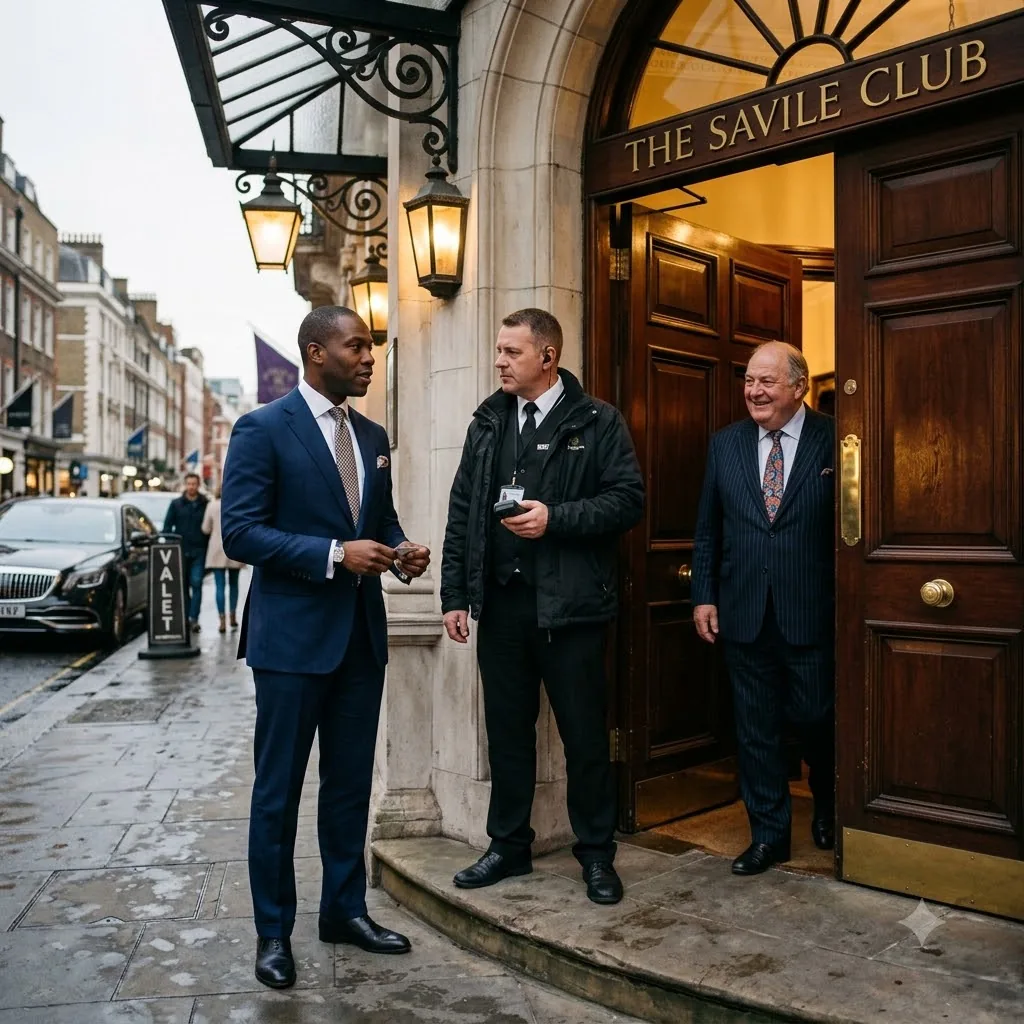
Marcus’s jaw locked. *A cool, rational head.* He was the only person who had remained rational on the front steps of this very building twenty minutes ago. Tom had been the one who validated a security guard’s baseless prejudice, and now Tom was validating the board’s implicit bias. They were comfortable with Marcus as a workhorse, but to accept him as an executive, they needed a narrative where his “raw passion” was successfully tamed by their trusted CEO.
Throughout the next two courses, the pattern repeated with agonizing precision. Every metric of success Marcus had achieved was filtered through Tom’s translation. When Marcus’s cost-saving initiatives were praised, Tom took credit for “giving him the runway.” When Marcus’s overhaul of the HR department was mentioned, Tom framed it as a project he had “tasked the kid with” to build character.
Marcus drank only water. The collar of his bespoke shirt felt increasingly restrictive, like a slowly tightening snare. He realized with chilling clarity what the COO role would actually entail. There would be no autonomy. The promotion was not a recognition of his excellence; it was an expansion of his role as Tom’s shadow. If he accepted the title under these conditions, he would spend the rest of his career doing the heavy lifting while Tom stood at the podium, graciously accepting applause for civilizing him.
As the plates were cleared for dessert, Tom tapped his silver spoon against his wine glass. The gentle chiming silenced the room immediately. Tom stood, smoothing the front of his tailored jacket, and looked down the table with the benevolent, practiced gaze of a statesman.
“We are here tonight to look toward the future,” Tom began, raising his glass. “When I brought Marcus into the executive track seven years ago, he had a lot of raw energy. A lot of… edge.” Tom smiled, a slow, conspiratorial grin that swept across the faces of the board. A few of them chuckled in agreement. “I told the board back then: give me time with him. He is a diamond in the rough. I knew I had to smooth out some of those edges, teach him how we do things in the big leagues. It took patience. It took a lot of late nights. But looking at the man sitting next to me tonight, I think we can all agree the polish has paid off.”
The board members murmured their assent, raising their glasses toward Tom first, and then, as an afterthought, toward Marcus.
“Next week, we vote on the Chief Operating Officer position,” Tom continued, turning his gaze down to Marcus. The CEO’s eyes were cold beneath the warm smile, issuing a silent, unyielding demand. “But before we do, I want Marcus to say a few words. Stand up, Marcus. Tell the committee about your journey. Tell them how much you’ve had to unlearn to get to this table, and let them know you are ready to keep following my lead.”
The room fell into a heavy, expectant silence. Six pairs of eyes locked onto Marcus. They wanted gratitude. They wanted his submission on the public record.
Marcus looked at the crystal water goblet in front of him, the liquid perfectly still. He placed both hands flat on the mahogany table and slowly pushed his chair back.