Story code: ST-000583
Part 1: The Red Protocol
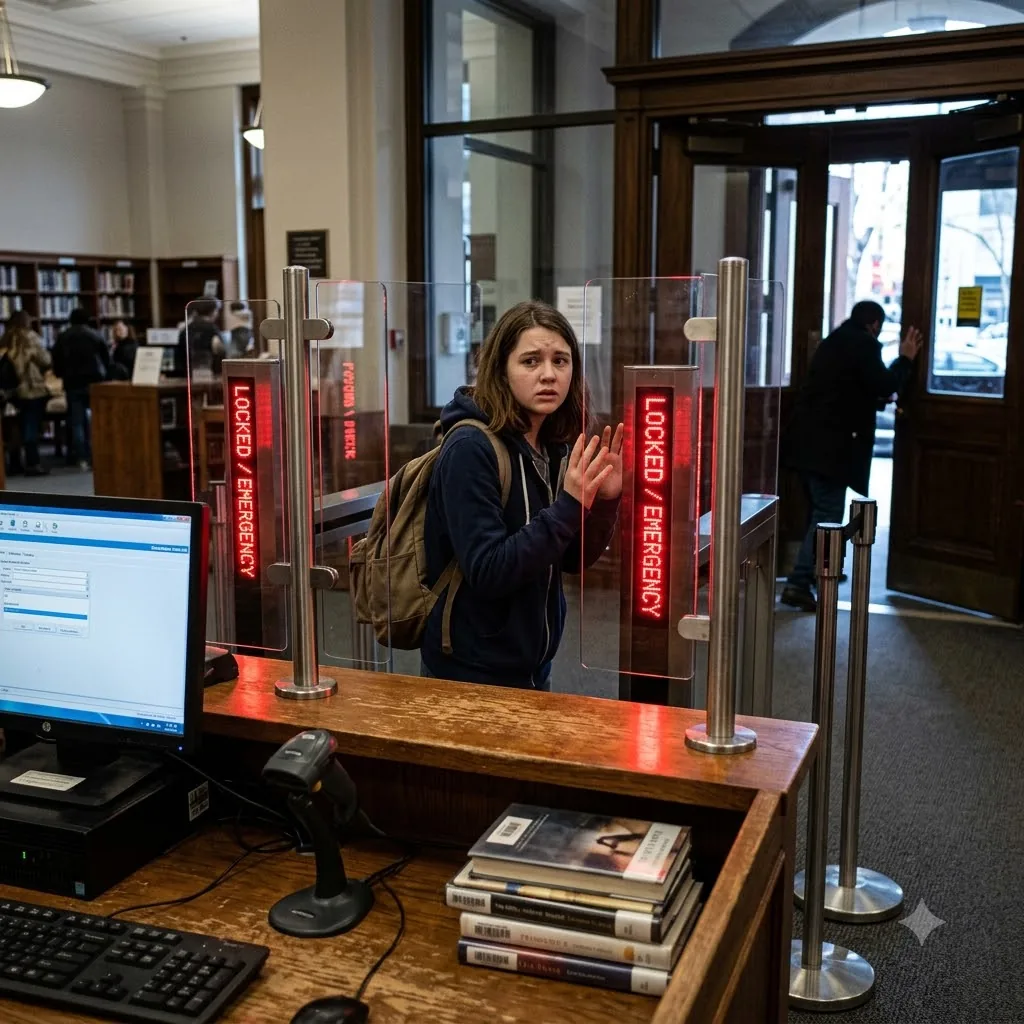
The plexiglass turnstiles slammed shut with a sickening hydraulic thud, trapping the small eighth grader instantly. Overhead, the new automated security nodes pulsed a harsh, silent red, washing the library lobby in the color of a silent emergency. I dropped the stack of returns I was holding. The books hit the carpet with a heavy clatter, but I barely registered the sound. My chest seized. The system was never supposed to flag a manual checkout.
The student stood entirely frozen between the thick, waist-high barriers. They had barely taken a single step toward the exit before the magnetic locks engaged, sealing them inside the choke point. Their knuckles were stark white, gripping the frayed straps of a blue backpack. The automated alert system the district installed over the summer did not use sirens or bells, relying instead on that relentless, strobe-like crimson glare to signal a total localized lockdown. It felt infinitely worse than a loud alarm. The absolute silence made the machine’s judgment feel final and inescapable.
I jogged out from behind the circulation desk, my heart hammering a frantic rhythm against my ribs. I knew exactly what was in that backpack. I knew the specific item the algorithm had detected, even though the barcode was completely absent from the official district database. My hands shook as I reached for the manual override key on my lanyard. Swiping my badge would force the gates open, but the network logs would immediately register that I bypassed a Level One contraband flag. That action would trigger an automatic administrative audit. An audit would lead the IT department straight to the private, uncatalogued collection I maintained in the locked back office. It would lead them directly to my own carefully hidden life.
I approached the turnstile slowly, keeping my hands visible, trying to project a calm authority I absolutely did not feel. The student was trembling, staring straight ahead at the exit doors they could not reach. I spoke in a low, steady voice, assuring them it was just a localized glitch, a known sensitivity error in the new digital scanners. They did not look at me. Their eyes remained wide, fixed on the red light bouncing off the polished linoleum floor. They knew it was no glitch. They knew exactly what they were carrying, and they knew the severe consequences waiting for them if the administration opened that bag.
The school board had pushed this aggressive algorithm to secure the building, promising the parents it would detect unapproved materials, banned media, and anything existing outside the strict new curriculum mandate. The vendor pitched it as a foolproof guardian. What they did not advertise was the sheer speed of its enforcement, or the terrifying way it stripped away all human context and grace. The machine just processed raw data. It scanned a silhouette, read a shielded tag, recognized an unregistered shape, and clamped down like a steel trap.
I swiped my staff card over the proximity reader on the side of the exit gate. The terminal beeped a flat, angry denial tone. Glowing amber text scrolled across the small digital display, spelling out a mandate for immediate administrative presence. The panic I had been desperately pushing down clawed its way up my throat. I could not let a board administrator handle this intervention. The student would be indefinitely suspended, their parents called, their very identity dragged into a public disciplinary hearing. And I would be fired, my own quiet existence exposed and weaponized by the very people who funded this machine.
The student shifted their weight, their right shoulder dipping just enough to shield the rigid contour pressing against the thin fabric of their backpack. It was a hardcover, exactly the size of the item I had slipped them during third period study hall. We had not spoken a single word about the contents. We had only exchanged a fleeting look of mutual, unspoken understanding. Now, that fragile understanding was trapped between two slabs of locked plexiglass, bathed in flashing red light.
I leaned over the main console, frantically typing my master password into the librarian terminal, hoping the offline backdoor I set up last month still possessed network authority. The red lights kept flashing, casting long, distorted shadows across the empty rows of bookshelves. The network was sluggish, actively fighting my commands, resisting my desperate attempt to clear the system queue before the automated notification reached the front office. Every second the system chewed on my request felt like an hour.
The heavy double doors at the far end of the hallway swung open with a loud metallic click that echoed through the terrible silence. The flashing red lights illuminated a tall figure stepping into the library lobby, dressed in the unmistakable tailored suit of a school board member. The person did not rush, taking deliberate, measured steps toward the sealed turnstiles. I stepped directly in front of the trapped student, completely blocking their backpack from view, just as the board member raised a master override keycard toward the administrative terminal.
The plexiglass turnstiles slammed shut with a sickening hydraulic thud, trapping the small eighth grader instantly. Overhead, the new automated security nodes pulsed a harsh, silent red, washing the library lobby in the color of a silent emergency. I dropped the stack of returns I was holding. The books hit the carpet with a heavy clatter, but I barely registered the sound. My chest seized. The system was never supposed to flag a manual checkout.
The student stood entirely frozen between the thick, waist-high barriers. They had barely taken a single step toward the exit before the magnetic locks engaged, sealing them inside the choke point. Their knuckles were stark white, gripping the frayed straps of a blue backpack. The automated alert system the district installed over the summer did not use sirens or bells, relying instead on that relentless, strobe-like crimson glare to signal a total localized lockdown. It felt infinitely worse than a loud alarm. The absolute silence made the machine’s judgment feel final and inescapable.
I jogged out from behind the circulation desk, my heart hammering a frantic rhythm against my ribs. I knew exactly what was in that backpack. I knew the specific item the algorithm had detected, even though the barcode was completely absent from the official district database. My hands shook as I reached for the manual override key on my lanyard. Swiping my badge would force the gates open, but the network logs would immediately register that I bypassed a Level One contraband flag. That action would trigger an automatic administrative audit. An audit would lead the IT department straight to the private, uncatalogued collection I maintained in the locked back office. It would lead them directly to my own carefully hidden life.
I approached the turnstile slowly, keeping my hands visible, trying to project a calm authority I absolutely did not feel. The student was trembling, staring straight ahead at the exit doors they could not reach. I spoke in a low, steady voice, assuring them it was just a localized glitch, a known sensitivity error in the new digital scanners. They did not look at me. Their eyes remained wide, fixed on the red light bouncing off the polished linoleum floor. They knew it was no glitch. They knew exactly what they were carrying, and they knew the severe consequences waiting for them if the administration opened that bag.
The school board had pushed this aggressive algorithm to secure the building, promising the parents it would detect unapproved materials, banned media, and anything existing outside the strict new curriculum mandate. The vendor pitched it as a foolproof guardian. What they did not advertise was the sheer speed of its enforcement, or the terrifying way it stripped away all human context and grace. The machine just processed raw data. It scanned a silhouette, read a shielded tag, recognized an unregistered shape, and clamped down like a steel trap.
I swiped my staff card over the proximity reader on the side of the exit gate. The terminal beeped a flat, angry denial tone. Glowing amber text scrolled across the small digital display, spelling out a mandate for immediate administrative presence. The panic I had been desperately pushing down clawed its way up my throat. I could not let a board administrator handle this intervention. The student would be indefinitely suspended, their parents called, their very identity dragged into a public disciplinary hearing. And I would be fired, my own quiet existence exposed and weaponized by the very people who funded this machine.
The student shifted their weight, their right shoulder dipping just enough to shield the rigid contour pressing against the thin fabric of their backpack. It was a hardcover, exactly the size of the item I had slipped them during third period study hall. We had not spoken a single word about the contents. We had only exchanged a fleeting look of mutual, unspoken understanding. Now, that fragile understanding was trapped between two slabs of locked plexiglass, bathed in flashing red light.
I leaned over the main console, frantically typing my master password into the librarian terminal, hoping the offline backdoor I set up last month still possessed network authority. The red lights kept flashing, casting long, distorted shadows across the empty rows of bookshelves. The network was sluggish, actively fighting my commands, resisting my desperate attempt to clear the system queue before the automated notification reached the front office. Every second the system chewed on my request felt like an hour.
The heavy double doors at the far end of the hallway swung open with a loud metallic click that echoed through the terrible silence. The flashing red lights illuminated a tall figure stepping into the library lobby, dressed in the unmistakable tailored suit of a school board member. The person did not rush, taking deliberate, measured steps toward the sealed turnstiles. I stepped directly in front of the trapped student, completely blocking their backpack from view, just as the board member raised a master override keycard toward the administrative terminal.