Story code: ST-000583
Part 3: Catastrophic Purge
The high-pitched electronic whine of the full-spectrum scan climbed in pitch, vibrating in my teeth. The solid crimson glare painted Elias Vance’s face in harsh, demonic angles. He stood perfectly still, watching the progress bar on the main security console inch forward.
“The audit takes approximately sixty seconds to map the room,” Vance said, his voice easily cutting through the mechanical hum. He tucked his tablet back into his suit jacket, folding his hands together in a posture of absolute victory. “It penetrates fabric, wood, and standard metal casings. It will log every RFID tag, every digital watermark, and every suppressed frequency currently trapped inside this grid.”
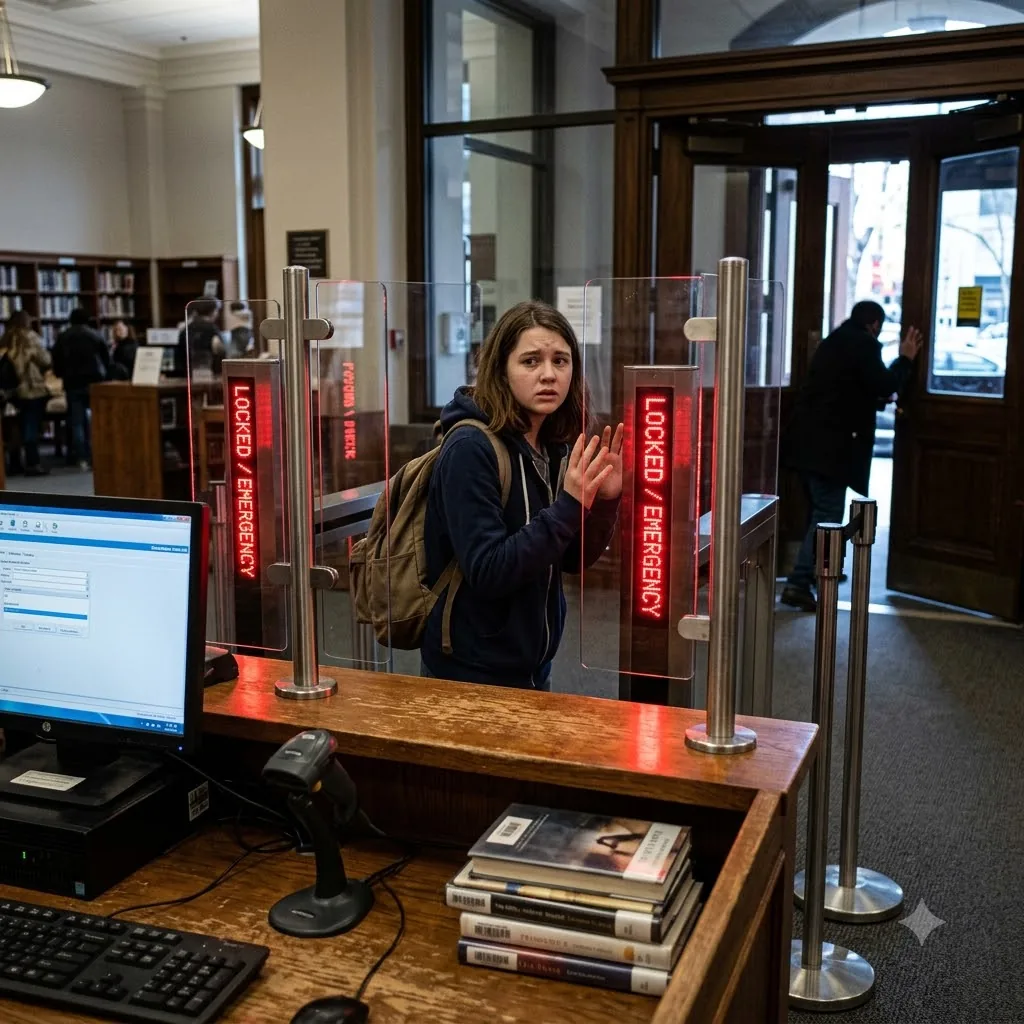
I stood between Vance and the eighth grader, still clutching the blue nylon backpack against my chest. The student let out a hitched, panicky breath, their hands grabbing the back of my cardigan. I could feel them trembling. The heavy steel grilles covering the exits felt like the bars of a cage, and the air was already growing stale, thick with the smell of warm dust and ozone from the sudden deployment of the lockdown measures.
“You’re traumatizing a child over a calibration glitch,” I said, forcing the words through a tight throat.
Vance’s eyes drifted from the console to me. “I am securing the educational environment. If it is a glitch, the audit will clear you both. If it is not, the system will instantly transmit the physical signature of that contraband to the district ledger. There will be no ambiguity. No human error.”
He was right about the transmission. The moment the progress bar hit one hundred percent, the local terminal would compile the scan into a cache file and fire it across the district network. The algorithm would identify the uncatalogued memoir in the backpack. But it wouldn’t stop there. The full-room sweep would penetrate the walls of my locked back office. It would find the encrypted hard drive in my desk drawer. It would log the box of donated, banned literature I had been quietly distributing all semester.
I looked at the primary security console on the wall. The progress bar sat at forty percent.
“Elias,” I said, taking a slow step toward the console, keeping my body squarely between him and the student. “You don’t want to do this. If the system flags an anomaly, it automatically initiates a police response for suspected contraband. Do you really want cruisers pulling up to the school board’s flagship safe zone in broad daylight?”
“I want the truth,” Vance countered, holding his ground. “And the machine doesn’t negotiate.”
Fifty-five percent.
The whine of the scanners peaked, shifting into a rhythmic, pulsing throb as the system began compiling the data it was scraping from the room. I felt a faint static charge lift the hairs on my arms. The machine was reading us. It was reading the book pressed against my ribs. It was building the digital noose.
I slipped my right hand into my pocket, my fingers closing around the thick plastic of my master administrative card. It was different from the standard proximity badge I kept on my lanyard. This was the raw, unnetworked physical key the vendor had given me during installation, the one meant only for catastrophic hardware failures.
Seventy percent.
“Hand over the bag, Marcus,” Vance said, his tone shifting from bureaucratic certainty to something darker, a quiet threat. “Do it now, before the upload completes, and I will note your cooperation in the disciplinary file.”
“Stay behind me,” I whispered to the student.
I lunged for the wall console.
Vance shouted, stepping forward to intercept me, but I was already moving. I slammed my left shoulder into his chest, knocking him off balance just enough to clear my path to the terminal. I ripped the protective plastic cover off the emergency maintenance port and shoved my master card into the slot.
“What are you doing?!” Vance yelled, recovering his footing and grabbing my arm. He yanked hard, but I planted my feet, leaning my entire body weight into the console to shield the keypad.
Eighty-five percent.
The screen flashed, a prompt demanding a command code. I didn’t type a bypass. I didn’t try to cancel the scan. The only way to stop the transmission was to destroy the compilation before it finished.
I hammered my palm against the physical keys, punching in the twelve-digit administrative sequence for a factory-level system purge.
“Stop!” Vance roared, his fingers digging painfully into my bicep. He recognized the sequence on the display. “You’ll wipe the local cache! You’ll blind the whole grid!”
“I know,” I said.
Ninety-five percent. The terminal screen flared bright white, ready to transmit.
I hit the execute key.
The console let out a violent, deafening shriek-a raw blast of audio feedback from the system’s dying process. The solid crimson glare in the room shattered, flickering wildly before snapping off completely. Plunged into sudden darkness, the emergency backup lights kicked on, casting long, pale shadows across the bookshelves. The high-pitched whine spun down into a hollow, dead silence.
The screen on the terminal went black.
Vance released my arm, stepping back as if the console had burned him. He stared at the lifeless glass, his chest heaving. The steel grilles remained locked over the doors, but the system itself was completely, utterly lobotomized. The cache was gone. The scan was gone. The algorithmic evidence he needed had been purged into digital ash.
He turned to me, his face pale in the dim emergency lighting. The polite veneer of the school board administrator was stripped away, replaced by raw, venomous fury.
“You destroyed it,” Vance whispered. “You triggered a hard reset.”
I pulled my master card out of the dead terminal and slipped it back into my pocket. “The system crashed, Elias. I told you it was caught in a loop.”
“Don’t play games with me,” Vance hissed, stepping into my personal space. “I saw you enter the purge command. You deliberately wiped the tracking cache to protect whatever is in that bag. You just destroyed district evidence.”
“I saw the terminal glitching,” I said, my voice steady, though my heart felt like it was going to crack my ribs. I held the backpack out toward him. “If you’d like to manually check the bag now, feel free. But without the algorithmic flag, there’s no probable cause. So if you open it, I’ll have the union rep and a civil rights attorney on the phone before those steel gates go up.”
Vance stared at the blue nylon bag in my hands. Without the system’s timestamped, encrypted RFID scan, a book was just a book. He couldn’t prove it had crossed the scanners. He couldn’t prove it hadn’t just been sitting on a shelf. The machine’s infallible judgment was dead, and without it, he had nothing but his word against mine.
He slowly looked up from the bag, meeting my eyes. He didn’t have the proof, but the lie was dead, too. We both knew exactly what I was, and exactly what war we were now fighting.