Story code: ST-000584
Part 1: The Red Banner
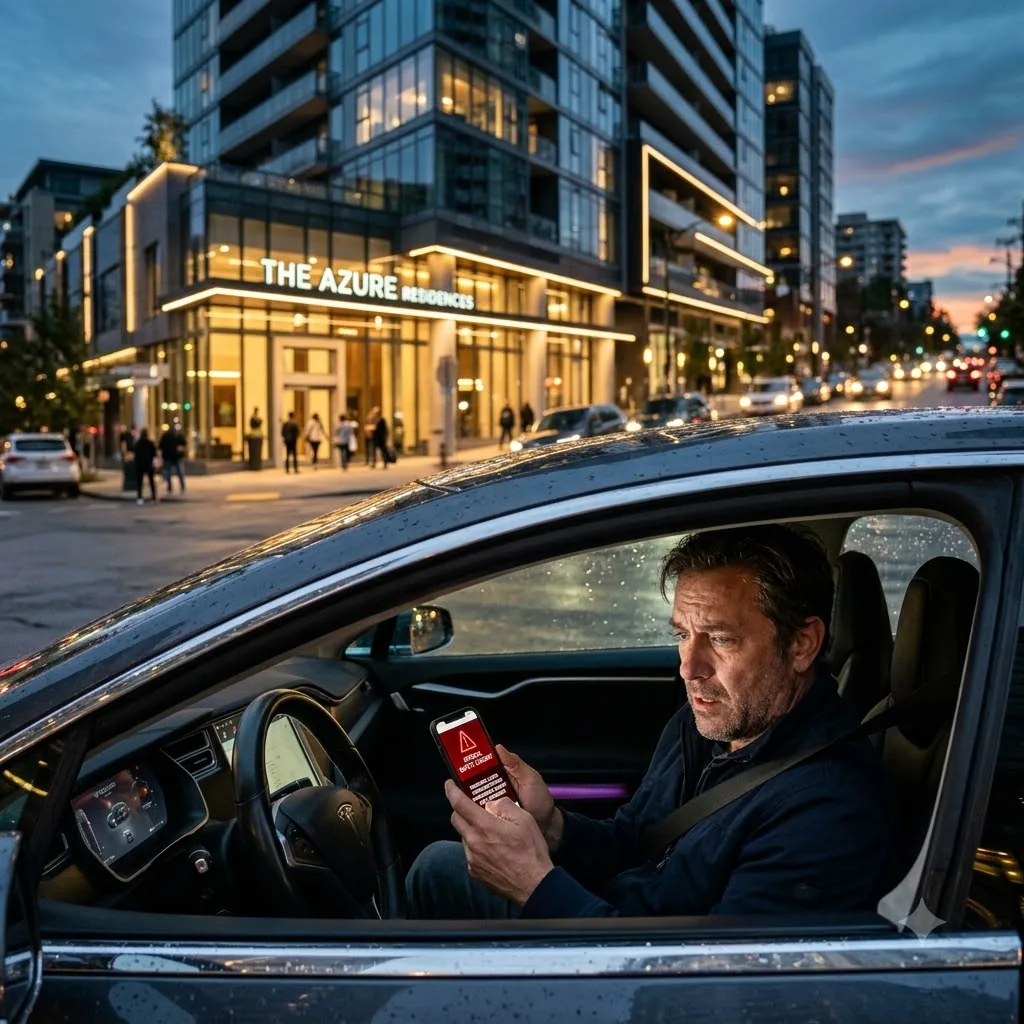
Mateo shifted the sedan into park at the curb of the glass-paneled high-rise, reached to swipe the drop-off confirmation, and watched his screen bleed into a flat, impenetrable gray. The familiar grid of downtown streets vanished, replaced instantly by a stark red banner reading only CRITICAL SAFETY LOCKOUT. His driver profile, his five-star rating, his accumulated earnings for the week-all of it wiped clean from the display in a single silent refresh.
He tapped the screen. Nothing happened. He tapped the red banner, then swiped down, then held the power button to force a restart. The phone booted back up to the exact same dead-end screen. The sterile white glow of the luxury loft’s lobby spilled across his windshield, illuminating the precise patch of earth where his uncle’s hydraulic lifts used to stand. The developers had poured a foot of polished concrete over the oil-stained foundation of the old mechanic shop, erecting this towering monolith of steel and security cameras in its place. Mateo stared at the glass double doors. The passenger, a young man in a tailored linen suit, had already slipped inside, disappearing past a uniformed concierge without a single backward glance.
Mateo rubbed his thumb hard across the phone glass. The red message remained unchanged. A permanent, opaque barrier. He tried to access the trip log to see the last ride, to find a route, a timestamp, any piece of data that could explain the algorithmic execution. The application denied the gesture. The navigation map was gone. The incoming ride queue was gone. The dashboard that had dictated his hours, his income, and his movements for three years had simply ceased to exist, replaced by a wall of code that refused to yield.
Panic is a cold, slow-creeping thing when it arrives via a digital void. Mateo gripped the steering wheel, feeling the worn leather seams pressing into his palms. He looked up at the high-rise again. The building was a fortress of wealth, an antiseptic needle piercing the night skyline, completely indifferent to the ghost of his family’s demolished business beneath its foundation. He had swallowed his pride to accept the fare bringing him back to this exact geographic coordinate. He had kept his car immaculate, offered the sealed bottled water, and maintained the absolute silence the app indicated the passenger preferred. Now he sat idling in the drop-off zone, effectively erased.
He put the car in drive, rolling slowly away from the valet stand to idle in a dark loading zone down the block. He needed the engine running for the air conditioning, but the gas gauge was hovering near a quarter tank. Without the app, he had no income to refill it. Without the app, the car was just a depreciating metal box. He dug into the glove compartment, pulled out his secondary charging cable, and swapped it, irrationally hoping a fresh physical connection might bypass the software error. The screen flared, recognized the charge, and held fast on the lockout warning.
A secondary text message arrived a moment later. It was from an automated, no-reply address, stating a severe violation of community standards had been logged, resulting in immediate and irreversible platform deactivation. There was no specific accusation. There was no context. Just a blunt severance. Mateo stared at the timestamp. The algorithm had terminated his account less than four seconds after the passenger exited the vehicle.
Mateo took a deep breath, fighting the tightening in his chest. He backed out of the application completely, opened a mobile browser, and searched for the driver support hotline. The company had buried the phone number deep within layers of nested help pages, discouraging human contact at every turn. He copied the string of digits, pasted it into his dialer, and pressed the call icon.
The line clicked into a labyrinth of automated menus. Mateo pressed zero. The system told him the input was invalid. He pressed star, then pound, then the number three for critical emergencies. Synthetic hold music, a cheerful acoustic guitar loop, filled the cramped cabin of the sedan. The upbeat tempo mocked the heavy, stagnant air in the car. He stared out the window at the sleek, unblemished exterior of the luxury lofts. Somewhere up in one of those high-floor units, a man in a linen suit was pouring a drink or taking off his shoes, completely unaware that a few screen taps had shattered the life of the driver downstairs. Or worse, completely aware.
Ten minutes passed. The acoustic loop restarted for the seventh time. Mateo’s battery icon dipped. He kept his eyes locked on the red lockout banner, waiting for a crack in the digital wall, waiting for a human voice. The music abruptly cut out, replaced by the hollow, echoing static of an international call center connection.
“Thank you for calling driver support,” a voice said, the cadence flat, rushed, and heavily scripted. “My name is John and I see your account has been flagged for permanent deactivation regarding a critical safety incident. As per policy I cannot disclose the nature of the report, and this decision is final, so I will now disconnect this…”
Mateo shifted the sedan into park at the curb of the glass-paneled high-rise, reached to swipe the drop-off confirmation, and watched his screen bleed into a flat, impenetrable gray. The familiar grid of downtown streets vanished, replaced instantly by a stark red banner reading only CRITICAL SAFETY LOCKOUT. His driver profile, his five-star rating, his accumulated earnings for the week-all of it wiped clean from the display in a single silent refresh.
He tapped the screen. Nothing happened. He tapped the red banner, then swiped down, then held the power button to force a restart. The phone booted back up to the exact same dead-end screen. The sterile white glow of the luxury loft’s lobby spilled across his windshield, illuminating the precise patch of earth where his uncle’s hydraulic lifts used to stand. The developers had poured a foot of polished concrete over the oil-stained foundation of the old mechanic shop, erecting this towering monolith of steel and security cameras in its place. Mateo stared at the glass double doors. The passenger, a young man in a tailored linen suit, had already slipped inside, disappearing past a uniformed concierge without a single backward glance.
Mateo rubbed his thumb hard across the phone glass. The red message remained unchanged. A permanent, opaque barrier. He tried to access the trip log to see the last ride, to find a route, a timestamp, any piece of data that could explain the algorithmic execution. The application denied the gesture. The navigation map was gone. The incoming ride queue was gone. The dashboard that had dictated his hours, his income, and his movements for three years had simply ceased to exist, replaced by a wall of code that refused to yield.
Panic is a cold, slow-creeping thing when it arrives via a digital void. Mateo gripped the steering wheel, feeling the worn leather seams pressing into his palms. He looked up at the high-rise again. The building was a fortress of wealth, an antiseptic needle piercing the night skyline, completely indifferent to the ghost of his family’s demolished business beneath its foundation. He had swallowed his pride to accept the fare bringing him back to this exact geographic coordinate. He had kept his car immaculate, offered the sealed bottled water, and maintained the absolute silence the app indicated the passenger preferred. Now he sat idling in the drop-off zone, effectively erased.
He put the car in drive, rolling slowly away from the valet stand to idle in a dark loading zone down the block. He needed the engine running for the air conditioning, but the gas gauge was hovering near a quarter tank. Without the app, he had no income to refill it. Without the app, the car was just a depreciating metal box. He dug into the glove compartment, pulled out his secondary charging cable, and swapped it, irrationally hoping a fresh physical connection might bypass the software error. The screen flared, recognized the charge, and held fast on the lockout warning.
A secondary text message arrived a moment later. It was from an automated, no-reply address, stating a severe violation of community standards had been logged, resulting in immediate and irreversible platform deactivation. There was no specific accusation. There was no context. Just a blunt severance. Mateo stared at the timestamp. The algorithm had terminated his account less than four seconds after the passenger exited the vehicle.
Mateo took a deep breath, fighting the tightening in his chest. He backed out of the application completely, opened a mobile browser, and searched for the driver support hotline. The company had buried the phone number deep within layers of nested help pages, discouraging human contact at every turn. He copied the string of digits, pasted it into his dialer, and pressed the call icon.
The line clicked into a labyrinth of automated menus. Mateo pressed zero. The system told him the input was invalid. He pressed star, then pound, then the number three for critical emergencies. Synthetic hold music, a cheerful acoustic guitar loop, filled the cramped cabin of the sedan. The upbeat tempo mocked the heavy, stagnant air in the car. He stared out the window at the sleek, unblemished exterior of the luxury lofts. Somewhere up in one of those high-floor units, a man in a linen suit was pouring a drink or taking off his shoes, completely unaware that a few screen taps had shattered the life of the driver downstairs. Or worse, completely aware.
Ten minutes passed. The acoustic loop restarted for the seventh time. Mateo’s battery icon dipped. He kept his eyes locked on the red lockout banner, waiting for a crack in the digital wall, waiting for a human voice. The music abruptly cut out, replaced by the hollow, echoing static of an international call center connection.
“Thank you for calling driver support,” a voice said, the cadence flat, rushed, and heavily scripted. “My name is John and I see your account has been flagged for permanent deactivation regarding a critical safety incident. As per policy I cannot disclose the nature of the report, and this decision is final, so I will now disconnect this…”