Story code: ST-000605
Part 1: The Override
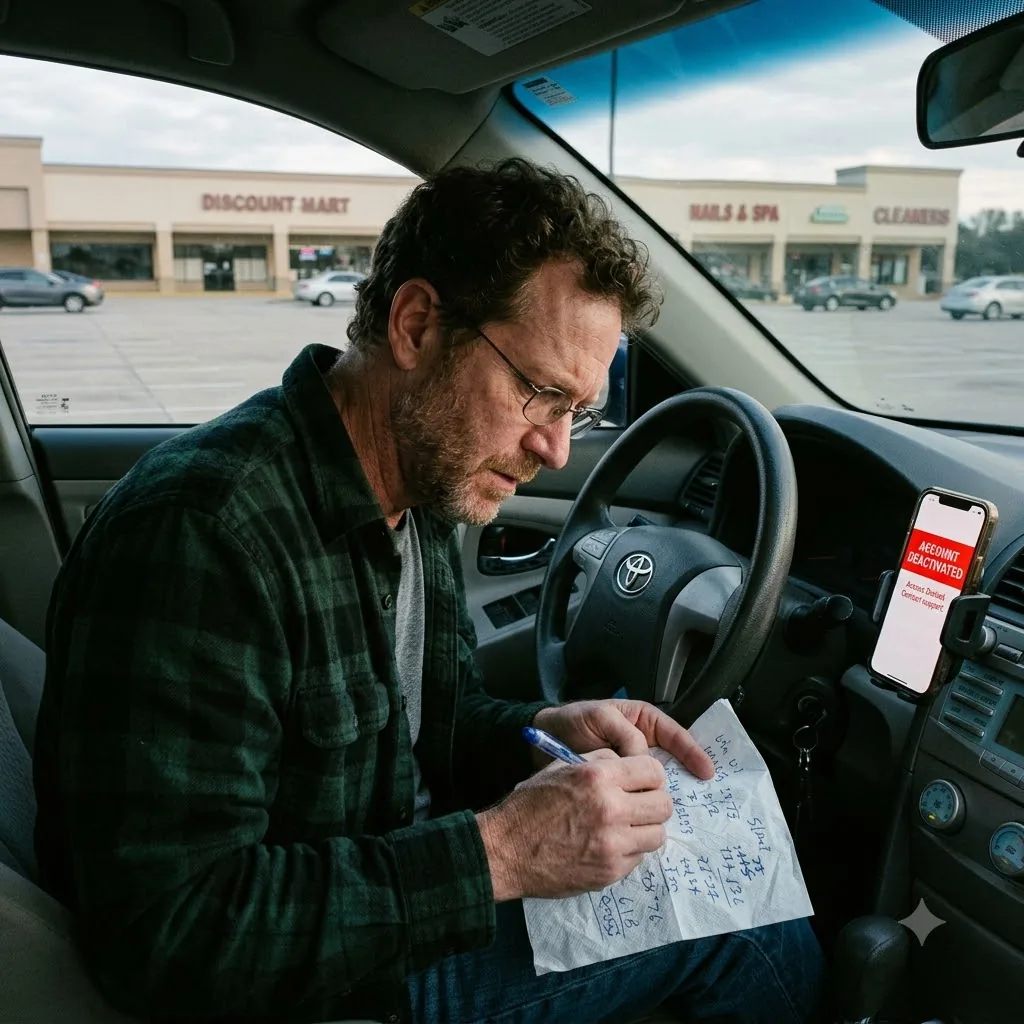
The halogen lights of the big box store parking lot bleached the dashboard bone-white as Marcus stared at the unblinking red banner on his phone. Account Deactivated. The engine idled, burning gas he could no longer afford to replace. He grabbed a crumpled napkin from the center console and a chewed ballpoint pen, flattening the flimsy paper against the leather steering wheel. Four hundred and twelve dollars due in exactly forty-eight hours. His current checking balance sat at thirty-one dollars and fourteen cents. Rent was due in six days. The math did not care about his flawless five-star rating or the three thousand consecutive rides he had completed without a single customer complaint. Repossession was a blind machine process, exactly like the deactivation.
He scratched out the numbers, rewriting them smaller in the corner of the napkin as if shrinking the physical digits might somehow shrink the debt. The ink tore through the soft paper. The car belonged to the bank, the bank required the steady income from the app, and the app had just erased his entire existence. He turned off the ignition. Silence rushed into the cabin, heavy and absolute, broken only by the ticking of the cooling engine block. He had no supervisor to call, no human resources department to email, no living person anywhere in the corporate hierarchy authorized to override a permanent algorithmic ban.
Marcus reached into the backseat and hauled his battered laptop over the center console. He tethered the computer to his phone, watching the battery icon immediately begin to drain. Two weeks ago, a disgruntled former engineer had dumped a massive cache of internal company documents onto an obscure, unindexed forum. Marcus had downloaded the terabyte archive out of mild curiosity, never expecting to actually need it. He navigated through the deeply encrypted folders, bypassing the irrelevant source code directories and marketing division spreadsheets. He was looking exclusively for the backend support architecture.
He opened a massive comma-separated values file labeled Tier 3 Resolution Routing. Row after row of automated server nodes blurred past his tired eyes. He wrote a quick parsing script to apply a rigorous filter, isolating only the nodes responsible for permanent driver terminations in his specific geographical sector. The system, he discovered, did not use local corporate employees. It outsourced the final human review to independent contractors working remotely through heavily masked virtual private networks.
Marcus cross-referenced the exact termination timestamp on his phone with the massive routing logs. The algorithm had flagged him at eight-fourteen. At exactly eight-fifteen, a specific contractor identification number had rubber-stamped the ban. He copied the alphanumeric string and pasted it into a network tracing tool he had kept installed since his previous life in server administration.
The contractor was supposed to be hidden behind impenetrable layers of proxy servers. But human beings were inherently lazy. The routing log showed a momentary lapse, a brief, fraction-of-a-second failure in the contractor’s desktop VPN client that exposed the true outbound IP address. Marcus locked onto the string of numbers. He ran the exposed IP through a premium geolocation database he still had access to. The result materialized on the harsh white screen. It was not a sprawling corporate campus or a massive offshore call center. It was a residential block just twenty miles away.
He drove through the pre-dawn darkness without the radio on, listening only to the hum of the tires on the empty interstate. Every mile burned fuel he could not afford, bringing him closer to an empty tank and a legally repossessed vehicle. The navigation system guided him off the main highway, down a series of winding, tree-lined suburban roads that grew progressively narrower and more isolated. The houses here were set far back from the street, shrouded in thick manicured hedges and motion-sensor security lights.
Marcus parked his car a full block away from the target coordinates. He left his phone face-down in the cupholder. He walked down the damp concrete sidewalk, his heavy footsteps completely muffled by the thick coastal fog clinging to the asphalt. The sprawling house at the very end of the dead-end cul-de-sac was entirely dark, save for a single bluish glow emanating from a ground-floor side window.
The contractor who had hit the button was inside that room. The unseen person who had ended his livelihood with a careless keystroke was sitting right on the other side of the glass. Marcus crossed the expansive, damp lawn, his work boots sinking slightly into the soft, over-watered earth. He reached the side door, noting the digital keypad lock glowing faintly red in the mist. He did not pause to check the perimeter. He raised his heavy steel flashlight and brought the solid metal handle down hard against the glass pane.
The halogen lights of the big box store parking lot bleached the dashboard bone-white as Marcus stared at the unblinking red banner on his phone. Account Deactivated. The engine idled, burning gas he could no longer afford to replace. He grabbed a crumpled napkin from the center console and a chewed ballpoint pen, flattening the flimsy paper against the leather steering wheel. Four hundred and twelve dollars due in exactly forty-eight hours. His current checking balance sat at thirty-one dollars and fourteen cents. Rent was due in six days. The math did not care about his flawless five-star rating or the three thousand consecutive rides he had completed without a single customer complaint. Repossession was a blind machine process, exactly like the deactivation.
He scratched out the numbers, rewriting them smaller in the corner of the napkin as if shrinking the physical digits might somehow shrink the debt. The ink tore through the soft paper. The car belonged to the bank, the bank required the steady income from the app, and the app had just erased his entire existence. He turned off the ignition. Silence rushed into the cabin, heavy and absolute, broken only by the ticking of the cooling engine block. He had no supervisor to call, no human resources department to email, no living person anywhere in the corporate hierarchy authorized to override a permanent algorithmic ban.
Marcus reached into the backseat and hauled his battered laptop over the center console. He tethered the computer to his phone, watching the battery icon immediately begin to drain. Two weeks ago, a disgruntled former engineer had dumped a massive cache of internal company documents onto an obscure, unindexed forum. Marcus had downloaded the terabyte archive out of mild curiosity, never expecting to actually need it. He navigated through the deeply encrypted folders, bypassing the irrelevant source code directories and marketing division spreadsheets. He was looking exclusively for the backend support architecture.
He opened a massive comma-separated values file labeled Tier 3 Resolution Routing. Row after row of automated server nodes blurred past his tired eyes. He wrote a quick parsing script to apply a rigorous filter, isolating only the nodes responsible for permanent driver terminations in his specific geographical sector. The system, he discovered, did not use local corporate employees. It outsourced the final human review to independent contractors working remotely through heavily masked virtual private networks.
Marcus cross-referenced the exact termination timestamp on his phone with the massive routing logs. The algorithm had flagged him at eight-fourteen. At exactly eight-fifteen, a specific contractor identification number had rubber-stamped the ban. He copied the alphanumeric string and pasted it into a network tracing tool he had kept installed since his previous life in server administration.
The contractor was supposed to be hidden behind impenetrable layers of proxy servers. But human beings were inherently lazy. The routing log showed a momentary lapse, a brief, fraction-of-a-second failure in the contractor’s desktop VPN client that exposed the true outbound IP address. Marcus locked onto the string of numbers. He ran the exposed IP through a premium geolocation database he still had access to. The result materialized on the harsh white screen. It was not a sprawling corporate campus or a massive offshore call center. It was a residential block just twenty miles away.
He drove through the pre-dawn darkness without the radio on, listening only to the hum of the tires on the empty interstate. Every mile burned fuel he could not afford, bringing him closer to an empty tank and a legally repossessed vehicle. The navigation system guided him off the main highway, down a series of winding, tree-lined suburban roads that grew progressively narrower and more isolated. The houses here were set far back from the street, shrouded in thick manicured hedges and motion-sensor security lights.
Marcus parked his car a full block away from the target coordinates. He left his phone face-down in the cupholder. He walked down the damp concrete sidewalk, his heavy footsteps completely muffled by the thick coastal fog clinging to the asphalt. The sprawling house at the very end of the dead-end cul-de-sac was entirely dark, save for a single bluish glow emanating from a ground-floor side window.
The contractor who had hit the button was inside that room. The unseen person who had ended his livelihood with a careless keystroke was sitting right on the other side of the glass. Marcus crossed the expansive, damp lawn, his work boots sinking slightly into the soft, over-watered earth. He reached the side door, noting the digital keypad lock glowing faintly red in the mist. He did not pause to check the perimeter. He raised his heavy steel flashlight and brought the solid metal handle down hard against the glass pane.