Story code: ST-000630
Part 1: The Performance
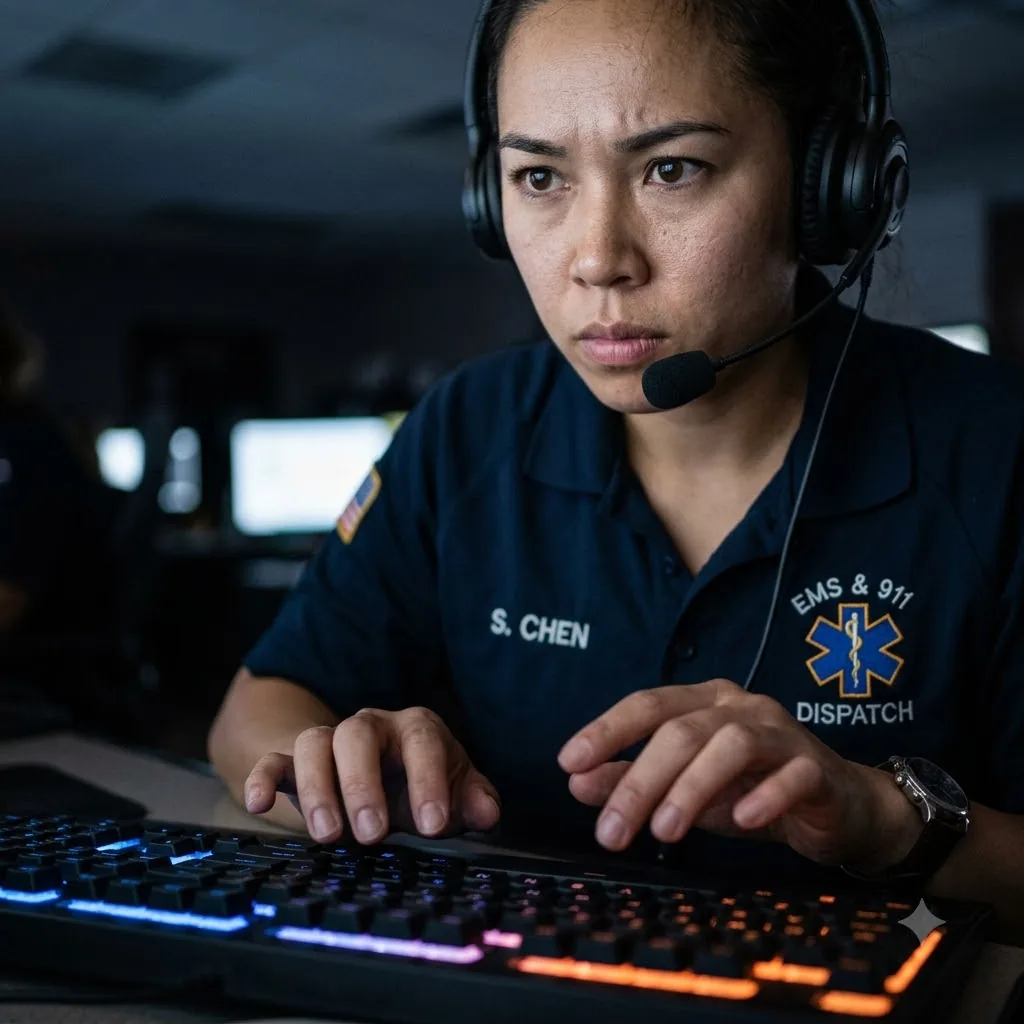
Maya pressed the earpiece tight against her tragus, trying to separate the wet, jagged sobs from the digital static of the incoming line. A woman’s voice was fracturing into hysterics on the other end, burying every usable piece of information under a mountain of performative terror. Maya sat in the dimly lit cavern of the county dispatch center, her posture rigid. Her fingers hovered over the keyboard of her Computer-Aided Dispatch terminal, waiting for a single concrete noun to drop from the screaming.
“State your location,” Maya said. Her tone was flattened into the clinical, practiced drone designed to break through human panic.
The caller only wailed louder, the sound peaking the audio meters on Maya’s primary monitor into a jagged red wave. “He is right there, he is looking right at us, oh god, oh god.”
“I need a location to send help.” Maya typed a blank query into the system, watching the location tracker spin its loading wheel. “Tell me what you see around you.”
“He is going to kill us.” The caller’s breath hitched in a rhythm that felt oddly deliberate. It was a rapid, stuttering intake of air that filled the dead space on the line. “Dr. Aris is right here, he sees it too. Tell her, Doctor. Tell her how close he is.”
Maya strained to hear this second voice. She pressed her palm flat over her free ear to block out the low, constant murmur of the other dispatchers working their own crises. There was nothing on the line but the faint rustle of wind rubbing against a microphone and a distant rhythmic sound she could not identify. There was no deep, reassuring voice of a doctor. There was no secondary track of panic.
“Have the other person speak,” Maya instructed.
“He is frozen,” the caller shrieked. “He is absolutely paralyzed. We both are.”
Maya checked the mapping monitor. The cell tower ping finally resolved, but the radius was disastrously wide. It dropped a massive, glowing red circle over the eastern quadrant of Centennial Park. That meant three hundred acres of paved trails, dense woods, blind switchbacks, and deep ravines. A patrol unit was idling at a red light three minutes out, but Maya had absolutely no specific coordinates to feed their onboard computer.
“Describe the man,” Maya said, keeping her cadence slow and steady.
“He is coming closer. Please, please hurry.”
“I have officers heading to the park. Tell me what the man is wearing so they know who to look for.”
“It is just us out here. It is just me and Dr. Aris and him.” The caller let out another shrieking cry. She seemed to pull the phone away from her mouth so the sound echoed with an outdoor acoustic signature, amplifying the dramatics of her isolation.
Maya closed her eyes, visualizing the caller’s physical movements based on the shifting audio field. The panic was incredibly loud, yet it completely lacked the primal, suffocating throat-lock of genuine, imminent terror. Real victims in immediate proximity to a violent threat whispered. They hid behind trees or under cars. They stopped breathing entirely so they would not be heard. This caller was projecting. She was broadcasting her fear into the receiver as if performing for a camera or ensuring the back row of a theater could hear every syllable.
“Tell me exactly what the man is doing right now,” Maya said.
“He is threatening us. He is threatening two completely innocent people.”
The phrasing snagged hard in Maya’s mind. It was far too formal. It was too perfectly constructed for a moment of supposed mortal peril. She turned the headset volume dial up to the absolute maximum, ignoring the painful, tinny spike of the woman’s crying as it drilled into her eardrum. Maya listened past the caller, hunting for the ambient truth of the environment beneath the digital noise.
She heard dry leaves crunching. She heard a slow, steady gait moving across loose gravel. It was not a run. It was not a charge.
“Give me a physical description.” Maya hit the priority prompt on her keyboard to alert the responding officers she was gathering suspect data. “Height, weight, clothing.”
“He is an absolute maniac.” The caller gasped, a loud, sucking intake of air that vibrated the microphone casing. “He is aggressive. Dr. Aris is a respected academic, we are out here doing research, and this monster is hunting us.”
“I need a description to protect you and your colleague.”
“We need police right now.”
Maya kept her voice entirely level, refusing to match the escalating energy. “Officers are approaching the park perimeter. They need to know what they are walking into.”
The caller went silent for a fraction of a second. The sudden absence of sobbing left a strange, heavy vacuum on the line. In that microsecond, Maya heard the rhythmic background noise again. It sounded almost mechanical, or perhaps like a heavy, wet exhalation extremely close to the ground. Then the caller’s wail returned, pitched much higher, sharper, and utterly desperate to cover the gap in the recording.
“He is pulling something out,” the caller screamed.
Maya leaned forward, her shoulders locking into a tight knot of tension. “Tell me what he has.”
“He is reaching into his coat. He is going to kill us.”
“Describe the object.”
The caller’s voice suddenly dropped an octave. The performative hysterics vanished completely, replaced by a hard, crystalline clarity that pierced straight through the headset audio to ensure the recording caught the exact word.
“He has a gun.”
Maya slammed her finger onto the Priority One Override key, her screen flashing bright red as the mandatory lethal-force protocol locked her out of any further de-escalation.
Maya pressed the earpiece tight against her tragus, trying to separate the wet, jagged sobs from the digital static of the incoming line. A woman’s voice was fracturing into hysterics on the other end, burying every usable piece of information under a mountain of performative terror. Maya sat in the dimly lit cavern of the county dispatch center, her posture rigid. Her fingers hovered over the keyboard of her Computer-Aided Dispatch terminal, waiting for a single concrete noun to drop from the screaming.
“State your location,” Maya said. Her tone was flattened into the clinical, practiced drone designed to break through human panic.
The caller only wailed louder, the sound peaking the audio meters on Maya’s primary monitor into a jagged red wave. “He is right there, he is looking right at us, oh god, oh god.”
“I need a location to send help.” Maya typed a blank query into the system, watching the location tracker spin its loading wheel. “Tell me what you see around you.”
“He is going to kill us.” The caller’s breath hitched in a rhythm that felt oddly deliberate. It was a rapid, stuttering intake of air that filled the dead space on the line. “Dr. Aris is right here, he sees it too. Tell her, Doctor. Tell her how close he is.”
Maya strained to hear this second voice. She pressed her palm flat over her free ear to block out the low, constant murmur of the other dispatchers working their own crises. There was nothing on the line but the faint rustle of wind rubbing against a microphone and a distant rhythmic sound she could not identify. There was no deep, reassuring voice of a doctor. There was no secondary track of panic.
“Have the other person speak,” Maya instructed.
“He is frozen,” the caller shrieked. “He is absolutely paralyzed. We both are.”
Maya checked the mapping monitor. The cell tower ping finally resolved, but the radius was disastrously wide. It dropped a massive, glowing red circle over the eastern quadrant of Centennial Park. That meant three hundred acres of paved trails, dense woods, blind switchbacks, and deep ravines. A patrol unit was idling at a red light three minutes out, but Maya had absolutely no specific coordinates to feed their onboard computer.
“Describe the man,” Maya said, keeping her cadence slow and steady.
“He is coming closer. Please, please hurry.”
“I have officers heading to the park. Tell me what the man is wearing so they know who to look for.”
“It is just us out here. It is just me and Dr. Aris and him.” The caller let out another shrieking cry. She seemed to pull the phone away from her mouth so the sound echoed with an outdoor acoustic signature, amplifying the dramatics of her isolation.
Maya closed her eyes, visualizing the caller’s physical movements based on the shifting audio field. The panic was incredibly loud, yet it completely lacked the primal, suffocating throat-lock of genuine, imminent terror. Real victims in immediate proximity to a violent threat whispered. They hid behind trees or under cars. They stopped breathing entirely so they would not be heard. This caller was projecting. She was broadcasting her fear into the receiver as if performing for a camera or ensuring the back row of a theater could hear every syllable.
“Tell me exactly what the man is doing right now,” Maya said.
“He is threatening us. He is threatening two completely innocent people.”
The phrasing snagged hard in Maya’s mind. It was far too formal. It was too perfectly constructed for a moment of supposed mortal peril. She turned the headset volume dial up to the absolute maximum, ignoring the painful, tinny spike of the woman’s crying as it drilled into her eardrum. Maya listened past the caller, hunting for the ambient truth of the environment beneath the digital noise.
She heard dry leaves crunching. She heard a slow, steady gait moving across loose gravel. It was not a run. It was not a charge.
“Give me a physical description.” Maya hit the priority prompt on her keyboard to alert the responding officers she was gathering suspect data. “Height, weight, clothing.”
“He is an absolute maniac.” The caller gasped, a loud, sucking intake of air that vibrated the microphone casing. “He is aggressive. Dr. Aris is a respected academic, we are out here doing research, and this monster is hunting us.”
“I need a description to protect you and your colleague.”
“We need police right now.”
Maya kept her voice entirely level, refusing to match the escalating energy. “Officers are approaching the park perimeter. They need to know what they are walking into.”
The caller went silent for a fraction of a second. The sudden absence of sobbing left a strange, heavy vacuum on the line. In that microsecond, Maya heard the rhythmic background noise again. It sounded almost mechanical, or perhaps like a heavy, wet exhalation extremely close to the ground. Then the caller’s wail returned, pitched much higher, sharper, and utterly desperate to cover the gap in the recording.
“He is pulling something out,” the caller screamed.
Maya leaned forward, her shoulders locking into a tight knot of tension. “Tell me what he has.”
“He is reaching into his coat. He is going to kill us.”
“Describe the object.”
The caller’s voice suddenly dropped an octave. The performative hysterics vanished completely, replaced by a hard, crystalline clarity that pierced straight through the headset audio to ensure the recording caught the exact word.
“He has a gun.”
Maya slammed her finger onto the Priority One Override key, her screen flashing bright red as the mandatory lethal-force protocol locked her out of any further de-escalation.