Story code: ST-000643
Part 1: The Deactivation
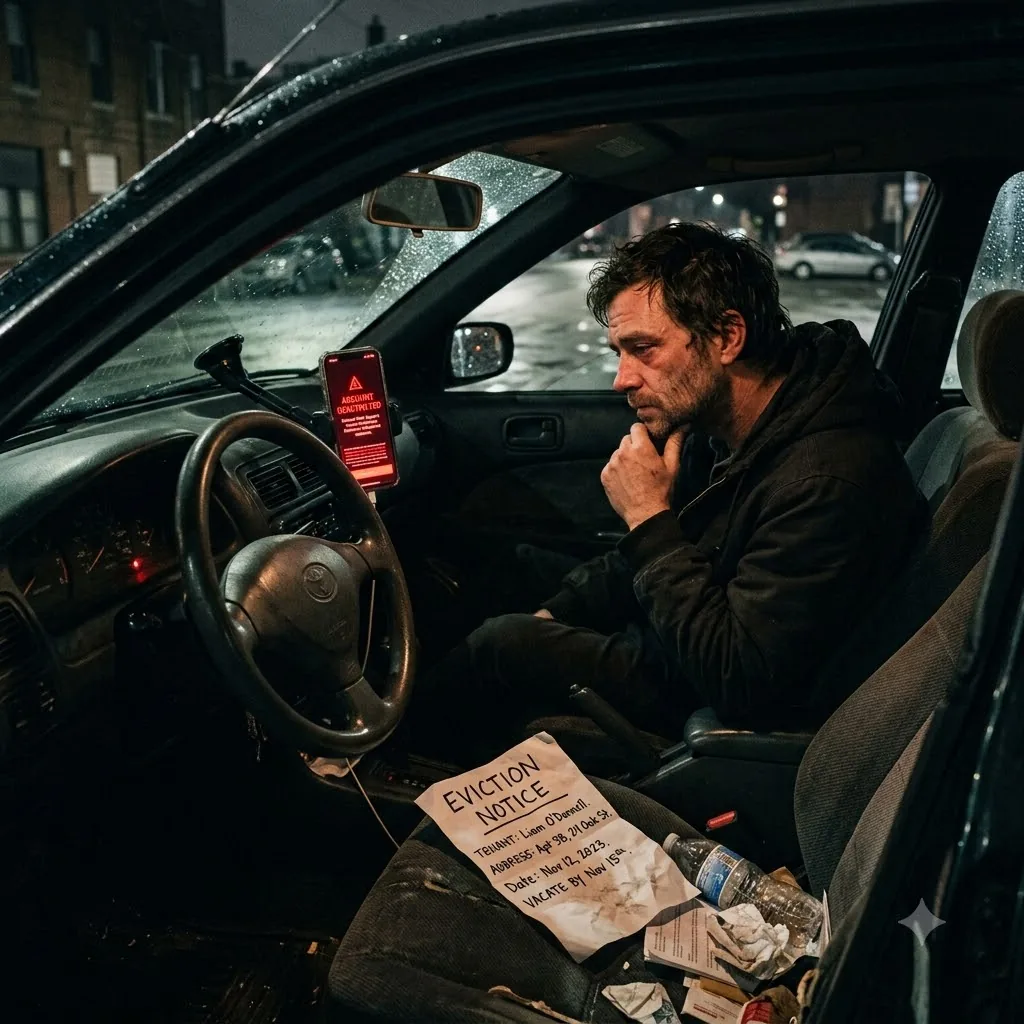
Marcus stared at the steering wheel of his idling Corolla, parked in the heavy shadow of the St. Jude billing annex, tapping out the exact math on his thigh. He needed thirty-eight rides, zero breaks, and thirty-six hours of continuous driving to beat the Friday eviction notice currently taped to his apartment door. He reached for the dashboard mount to accept the incoming surge ping, but the familiar green map vanished. The screen flashed a solid, unyielding red.
Account Permanently Deactivated.
He blinked at the block text. The engine rattled, vibrating up through the worn floorboards and into his bad leg. He tapped the screen. He swiped down with a trembling thumb to refresh the cellular connection. The red barrier remained, absolute and indifferent. The small gray text below the bold header cited a generic violation of terms, though it provided no specifics, no passenger incident report, and no human name to contact.
Marcus shifted into park and killed the engine to save gas. The silence in the cabin was immediate, heavy with the smell of stale coffee and cracked dashboard vinyl. In the passenger seat sat a thick manila folder holding the fourteen-thousand-dollar medical debt judgment that had systematically drained his savings down to the coins resting in his cup holder. The hospital annex loomed through the dirty windshield, a concrete block of administrative offices where his proposed payment plans had been rejected by tired clerks all morning.
He picked up the phone. His thumb hammered the small blue appeal button at the bottom of the screen. A loading wheel spun for two agonizing seconds before spitting out an automated prompt. The text stated the security team’s decision was final and could not be reviewed under any circumstances. He force-closed the app and reopened it. He restarted the phone entirely. He sat in the sweltering, quiet car while the screen booted back up, illuminating his exhausted, hollow-eyed reflection in the dark glass.
The red screen reappeared the moment the app launched.
Thirty-eight rides stood between him and sleeping in this sedan permanently. He had calculated the average city fare, the peak hour surges around the financial district, and the precise amount of regular unleaded he could afford to burn. The math was flawless. The survival plan was brutal but entirely achievable. Now, a silent algorithm had executed a total shut-out.
He stepped out of the Corolla. The afternoon heat radiating off the asphalt hit him in a suffocating wave. He needed air. He needed a human being to look at his driver history, his five-star rating, the thousands of hours he had logged for this platform over the last three years. He paced the length of the faded white parking lines, staring at the unblinking phone in his hand. There was no support number for independent contractors, only an automated chat function that led in infinite, useless loops of pre-written answers.
He typed a frantic, misspelled message into the support portal. He explained the impending eviction. He mentioned the crushing medical debt from the warehouse accident. He begged for a temporary reinstatement, just through Friday night so he could make rent. The reply generated in less than a second. It was a cheerful template thanking him for his past partnership and reiterating that the platform could no longer utilize his services moving forward.
Marcus looked up at the third floor of the billing annex. He had just spent three hours inside that sterile building, arguing with a supervisor about the sudden wage garnishments. The hospital judgment had been finalized on Tuesday. The eviction notice arrived on Wednesday. The platform deactivation felt like a coordinated strike, a digital guillotine dropping precisely when his neck was completely exposed to the blade.
He got back into the car and slammed the heavy door. The heat inside was already stifling, pressing against his chest. He pulled up his checking account on his phone. The available balance read fourteen dollars and thirty cents. The rent demand required eight hundred and fifty dollars by tomorrow evening to halt the county sheriff lockout.
He opened the rideshare app again. He tried to log in using his phone number. The system rejected it. He tried his backup email address. The system rejected it. He stared at the bold red letters until the edges of his vision blurred. This platform was his only income stream since the spinal injury. The medical debt had cost him his logistics job when he could no longer lift the required fifty pounds. Driving was the only work that accommodated the lingering, burning pain in his lower back.
He placed the phone on the passenger seat, right on top of the stack of medical bills. The reality of the red screen was settling into his chest, tight and freezing cold despite the heat. A faceless system had erased his livelihood without warning, without cause, and without any avenue for defense. There was no regional manager to yell at. There was no local field office to visit. The digital entity that controlled his survival was completely untouchable.
Marcus looked at the brass keys dangling in the ignition. He looked at the fuel gauge resting just a hair below a quarter tank. He grabbed the phone again. He opened the web browser and searched for the rideshare company’s corporate headquarters. The map populated a sleek glass tower downtown, exactly forty-two miles away.
He put the car in drive and pulled out of the hospital parking lot. The red screen on his dashboard mount glowed like a warning beacon as he merged onto the interstate, gripping the worn leather wheel until his knuckles turned white. He watched the miles tick down on the GPS. The automated system had decided he was dead weight. He needed to find the physical server, the actual building, the flesh-and-blood executives hiding behind the code. He pressed his foot down on the accelerator, pushing the old engine hard as the downtown skyline materialized through the smog. The dashboard pinged a sharp, high-pitched low-fuel warning, but Marcus kept his foot pinned to the floorboards.
Marcus stared at the steering wheel of his idling Corolla, parked in the heavy shadow of the St. Jude billing annex, tapping out the exact math on his thigh. He needed thirty-eight rides, zero breaks, and thirty-six hours of continuous driving to beat the Friday eviction notice currently taped to his apartment door. He reached for the dashboard mount to accept the incoming surge ping, but the familiar green map vanished. The screen flashed a solid, unyielding red.
Account Permanently Deactivated.
He blinked at the block text. The engine rattled, vibrating up through the worn floorboards and into his bad leg. He tapped the screen. He swiped down with a trembling thumb to refresh the cellular connection. The red barrier remained, absolute and indifferent. The small gray text below the bold header cited a generic violation of terms, though it provided no specifics, no passenger incident report, and no human name to contact.
Marcus shifted into park and killed the engine to save gas. The silence in the cabin was immediate, heavy with the smell of stale coffee and cracked dashboard vinyl. In the passenger seat sat a thick manila folder holding the fourteen-thousand-dollar medical debt judgment that had systematically drained his savings down to the coins resting in his cup holder. The hospital annex loomed through the dirty windshield, a concrete block of administrative offices where his proposed payment plans had been rejected by tired clerks all morning.
He picked up the phone. His thumb hammered the small blue appeal button at the bottom of the screen. A loading wheel spun for two agonizing seconds before spitting out an automated prompt. The text stated the security team’s decision was final and could not be reviewed under any circumstances. He force-closed the app and reopened it. He restarted the phone entirely. He sat in the sweltering, quiet car while the screen booted back up, illuminating his exhausted, hollow-eyed reflection in the dark glass.
The red screen reappeared the moment the app launched.
Thirty-eight rides stood between him and sleeping in this sedan permanently. He had calculated the average city fare, the peak hour surges around the financial district, and the precise amount of regular unleaded he could afford to burn. The math was flawless. The survival plan was brutal but entirely achievable. Now, a silent algorithm had executed a total shut-out.
He stepped out of the Corolla. The afternoon heat radiating off the asphalt hit him in a suffocating wave. He needed air. He needed a human being to look at his driver history, his five-star rating, the thousands of hours he had logged for this platform over the last three years. He paced the length of the faded white parking lines, staring at the unblinking phone in his hand. There was no support number for independent contractors, only an automated chat function that led in infinite, useless loops of pre-written answers.
He typed a frantic, misspelled message into the support portal. He explained the impending eviction. He mentioned the crushing medical debt from the warehouse accident. He begged for a temporary reinstatement, just through Friday night so he could make rent. The reply generated in less than a second. It was a cheerful template thanking him for his past partnership and reiterating that the platform could no longer utilize his services moving forward.
Marcus looked up at the third floor of the billing annex. He had just spent three hours inside that sterile building, arguing with a supervisor about the sudden wage garnishments. The hospital judgment had been finalized on Tuesday. The eviction notice arrived on Wednesday. The platform deactivation felt like a coordinated strike, a digital guillotine dropping precisely when his neck was completely exposed to the blade.
He got back into the car and slammed the heavy door. The heat inside was already stifling, pressing against his chest. He pulled up his checking account on his phone. The available balance read fourteen dollars and thirty cents. The rent demand required eight hundred and fifty dollars by tomorrow evening to halt the county sheriff lockout.
He opened the rideshare app again. He tried to log in using his phone number. The system rejected it. He tried his backup email address. The system rejected it. He stared at the bold red letters until the edges of his vision blurred. This platform was his only income stream since the spinal injury. The medical debt had cost him his logistics job when he could no longer lift the required fifty pounds. Driving was the only work that accommodated the lingering, burning pain in his lower back.
He placed the phone on the passenger seat, right on top of the stack of medical bills. The reality of the red screen was settling into his chest, tight and freezing cold despite the heat. A faceless system had erased his livelihood without warning, without cause, and without any avenue for defense. There was no regional manager to yell at. There was no local field office to visit. The digital entity that controlled his survival was completely untouchable.
Marcus looked at the brass keys dangling in the ignition. He looked at the fuel gauge resting just a hair below a quarter tank. He grabbed the phone again. He opened the web browser and searched for the rideshare company’s corporate headquarters. The map populated a sleek glass tower downtown, exactly forty-two miles away.
He put the car in drive and pulled out of the hospital parking lot. The red screen on his dashboard mount glowed like a warning beacon as he merged onto the interstate, gripping the worn leather wheel until his knuckles turned white. He watched the miles tick down on the GPS. The automated system had decided he was dead weight. He needed to find the physical server, the actual building, the flesh-and-blood executives hiding behind the code. He pressed his foot down on the accelerator, pushing the old engine hard as the downtown skyline materialized through the smog. The dashboard pinged a sharp, high-pitched low-fuel warning, but Marcus kept his foot pinned to the floorboards.