Story code: ST-000661
Part 1: The Wellness Mandate
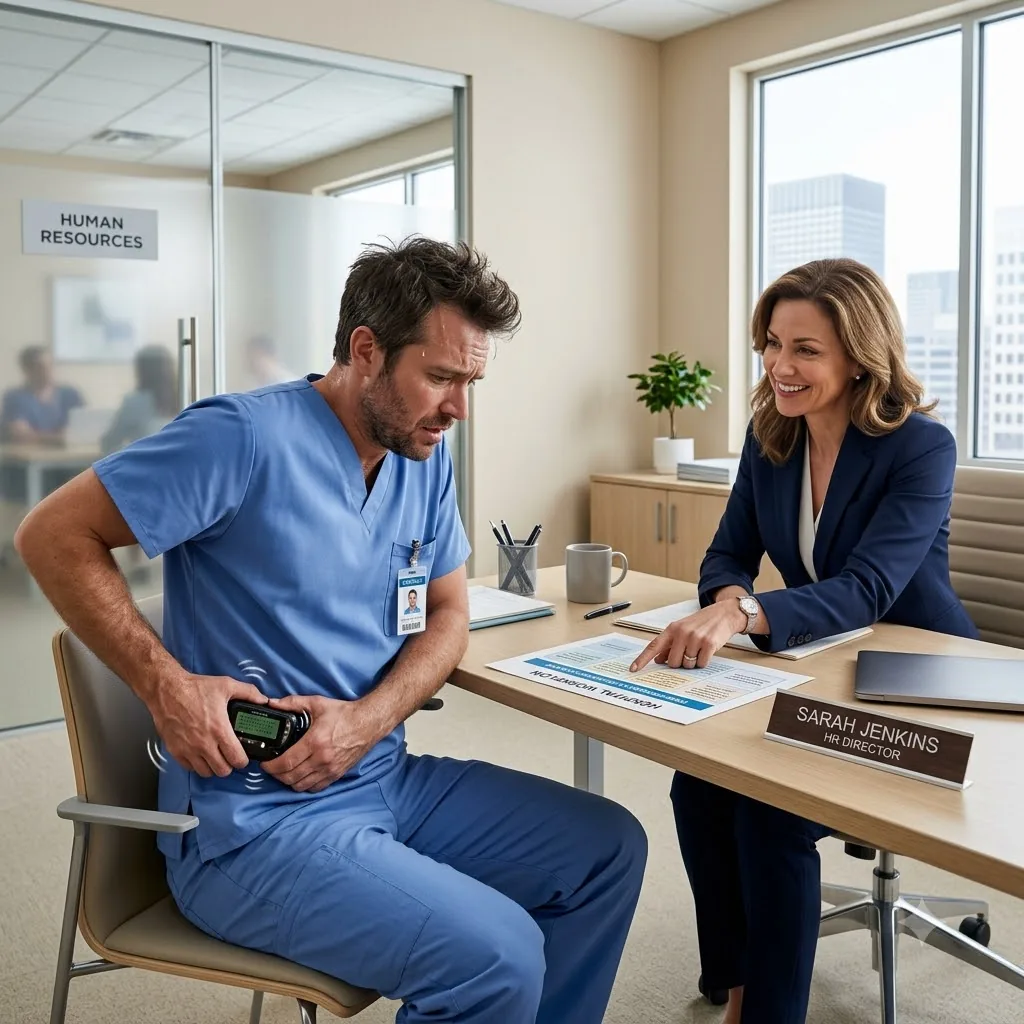
The beige, soundproof walls of the human resources suite swallowed all ambient noise from the hospital, leaving only the relentless, bone-rattling vibration of the emergency pager strapped to Dr. Marcus Thorne’s ribs. It had been going off for three consecutive minutes. Across the pristine glass desk, a smiling compliance officer named Evelyn tapped a manicured finger against a laminated chart labeled Provider Wellness Alignment Matrix.
Thorne reached down to silence the plastic device, his thumb grazing the illuminated red priority code that meant a patient was rapidly crashing in the trauma bay downstairs. He shifted his weight toward the door.
Evelyn held up her hand, a gesture as sharp and unyielding as a physical barricade. She informed him that leaving the room before completing the mandatory breathing module would result in an automatic, immediate suspension of his clinical privileges.
The pager vibrated again, a long, continuous buzz that rattled Thorne’s teeth. He explained that a priority code required his immediate presence in the emergency department. He kept his voice level, trying to pierce through the aggressively calm atmosphere of the office.
Evelyn did not blink. She slid a tablet across the desk. The screen displayed a digital lotus flower expanding and contracting in a simulated rhythm. She told him that hospital policy prioritized physician mental alignment to ensure optimal patient outcomes. She instructed him to inhale for a count of four, hold for four, and exhale for four.
Thorne looked at the door. The heavy oak paneling separated him from the stairwell that led directly to the surgical floor. He calculated the distance, estimating it would take him exactly thirty-four seconds to reach the double doors of Trauma One if he sprinted. He took a half step toward the exit.
Evelyn stood up. She smoothed the front of her blazer and reminded him that security protocols were now integrated with the compliance grid. If he bypassed the wellness module, his electronic keycard would instantly deactivate. He would not be able to open the stairwell door, nor would he be able to access the scrub room. He would be an unauthorized visitor in his own hospital.
The pager stopped for a fraction of a second, only to resume with a frantic, stuttering pattern. It was a secondary alarm. The situation downstairs was deteriorating.
Thorne gripped the edge of the glass desk. He told Evelyn that someone was actively dying. He stated the facts plainly, stripping away any medical jargon to make the reality unavoidable. A human being was bleeding out or crashing, and he was the only on-call trauma surgeon in the building.
Evelyn maintained her serene, unnerving smile. She noted his elevated stress levels. She pointed out that his current physiological state was exactly why the administration had implemented the alignment matrices. An uncentered doctor was a liability. She tapped the tablet screen again, restarting the expanding digital lotus flower.
She ordered him to sit back down in the ergonomically designed chair. She told him to place his feet flat on the floor and align his spine.
Thorne felt the vibration of the pager traveling up his side, echoing in his chest cavity. The sheer absurdity of the beige room felt like a hallucination. There were no medical instruments here, no monitors, no smell of antiseptic or copper. There was only a potted synthetic fern and a woman enforcing a corporate mandate while a life drained away two floors below.
He reached for his belt, unclipping the pager to show her the screen. The glaring red text displayed the trauma bay number and the sequence of frantic codes sent by the charge nurse. He thrust the device toward her line of sight, demanding she acknowledge the reality of the alarm.
Evelyn did not look at the screen. She looked at Thorne’s hand. She noted that his grip was tense, a clear indicator of adrenal overload. She warned him that aggressively presenting an electronic device constituted a micro-hostility under the new workplace harmony guidelines. She tapped her keyboard, bringing up his personnel file on her monitor.
She informed him that she was adding a note about his resistance to wellness protocols.
The pager buzzed a third time, switching to a high-priority continuous alarm that meant the code team had initiated chest compressions. The vibration was a physical weight against his palm. Thorne shoved the pager back onto his belt and turned his back on Evelyn, lunging for the heavy oak door.
He grasped the brass handle and pulled.
Evelyn’s voice remained perfectly calm as she announced she was clicking the suspension override. A loud, electronic click echoed through the soundproof room. The deadbolt on the office door slammed shut with a heavy metallic thud, sealing them inside.
The beige, soundproof walls of the human resources suite swallowed all ambient noise from the hospital, leaving only the relentless, bone-rattling vibration of the emergency pager strapped to Dr. Marcus Thorne’s ribs. It had been going off for three consecutive minutes. Across the pristine glass desk, a smiling compliance officer named Evelyn tapped a manicured finger against a laminated chart labeled Provider Wellness Alignment Matrix.
Thorne reached down to silence the plastic device, his thumb grazing the illuminated red priority code that meant a patient was rapidly crashing in the trauma bay downstairs. He shifted his weight toward the door.
Evelyn held up her hand, a gesture as sharp and unyielding as a physical barricade. She informed him that leaving the room before completing the mandatory breathing module would result in an automatic, immediate suspension of his clinical privileges.
The pager vibrated again, a long, continuous buzz that rattled Thorne’s teeth. He explained that a priority code required his immediate presence in the emergency department. He kept his voice level, trying to pierce through the aggressively calm atmosphere of the office.
Evelyn did not blink. She slid a tablet across the desk. The screen displayed a digital lotus flower expanding and contracting in a simulated rhythm. She told him that hospital policy prioritized physician mental alignment to ensure optimal patient outcomes. She instructed him to inhale for a count of four, hold for four, and exhale for four.
Thorne looked at the door. The heavy oak paneling separated him from the stairwell that led directly to the surgical floor. He calculated the distance, estimating it would take him exactly thirty-four seconds to reach the double doors of Trauma One if he sprinted. He took a half step toward the exit.
Evelyn stood up. She smoothed the front of her blazer and reminded him that security protocols were now integrated with the compliance grid. If he bypassed the wellness module, his electronic keycard would instantly deactivate. He would not be able to open the stairwell door, nor would he be able to access the scrub room. He would be an unauthorized visitor in his own hospital.
The pager stopped for a fraction of a second, only to resume with a frantic, stuttering pattern. It was a secondary alarm. The situation downstairs was deteriorating.
Thorne gripped the edge of the glass desk. He told Evelyn that someone was actively dying. He stated the facts plainly, stripping away any medical jargon to make the reality unavoidable. A human being was bleeding out or crashing, and he was the only on-call trauma surgeon in the building.
Evelyn maintained her serene, unnerving smile. She noted his elevated stress levels. She pointed out that his current physiological state was exactly why the administration had implemented the alignment matrices. An uncentered doctor was a liability. She tapped the tablet screen again, restarting the expanding digital lotus flower.
She ordered him to sit back down in the ergonomically designed chair. She told him to place his feet flat on the floor and align his spine.
Thorne felt the vibration of the pager traveling up his side, echoing in his chest cavity. The sheer absurdity of the beige room felt like a hallucination. There were no medical instruments here, no monitors, no smell of antiseptic or copper. There was only a potted synthetic fern and a woman enforcing a corporate mandate while a life drained away two floors below.
He reached for his belt, unclipping the pager to show her the screen. The glaring red text displayed the trauma bay number and the sequence of frantic codes sent by the charge nurse. He thrust the device toward her line of sight, demanding she acknowledge the reality of the alarm.
Evelyn did not look at the screen. She looked at Thorne’s hand. She noted that his grip was tense, a clear indicator of adrenal overload. She warned him that aggressively presenting an electronic device constituted a micro-hostility under the new workplace harmony guidelines. She tapped her keyboard, bringing up his personnel file on her monitor.
She informed him that she was adding a note about his resistance to wellness protocols.
The pager buzzed a third time, switching to a high-priority continuous alarm that meant the code team had initiated chest compressions. The vibration was a physical weight against his palm. Thorne shoved the pager back onto his belt and turned his back on Evelyn, lunging for the heavy oak door.
He grasped the brass handle and pulled.
Evelyn’s voice remained perfectly calm as she announced she was clicking the suspension override. A loud, electronic click echoed through the soundproof room. The deadbolt on the office door slammed shut with a heavy metallic thud, sealing them inside.