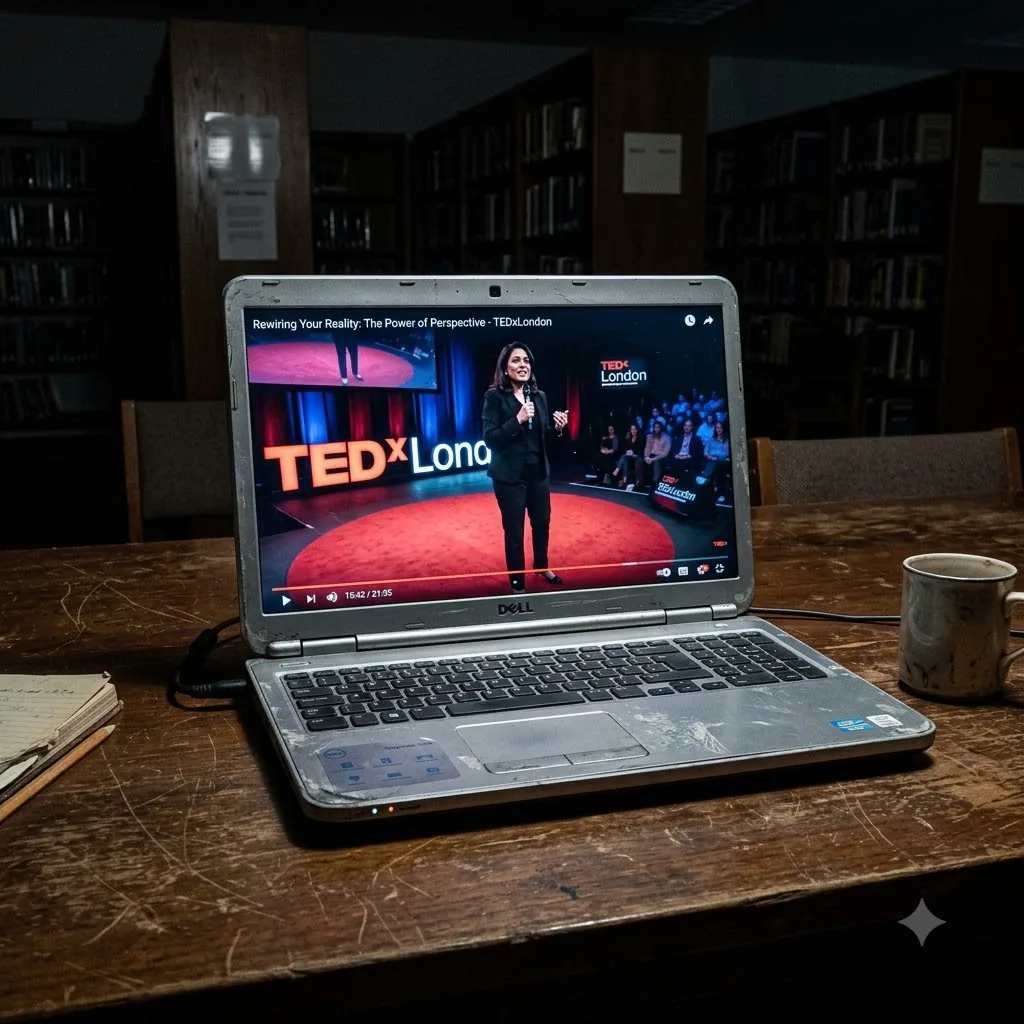
Story code: ST-000665
Part 3: Fatal Syntax
Mateo closed the email from Ascendancy’s legal team. The $250,000 threat remained burned into his retinas, but the panic that had gripped him in the library was suddenly gone, replaced by a cold, surgical clarity. His phone battery ticked down to thirteen percent. He didn’t have twenty-four hours to retract his truth. He had exactly whatever time was left in that small lithium cell.
He stood up, shoved the cracked phone into his pocket, and walked out of the library into the blinding glare of the San Jose afternoon.
The TEDx VIP mixer and investor showcase was happening three blocks away at the Grand Fairmont. Mateo knew this because the event’s promotional materials had been spammed across his social feed all week, but he also knew the Fairmont’s layout intimately. Two years ago, when Ascendancy was just a buggy alpha build, he and Julian had snuck into a similar conference at this exact hotel to corner angel investors near the restrooms. Back then, they were a desperate team. Today, Mateo was a ghost.
He bypassed the grand lobby with its vaulted ceilings and crystal chandeliers, opting for the delivery alley running parallel to the hotel’s kitchen loading docks. He waited behind a dumpster until a chaotic wave of catering staff wheeled a line of towering dessert carts up the ramp. Mateo slipped in right behind them, keeping his head down, blending perfectly into the frantic background noise of the service corridor. He took the service elevator up to the mezzanine level.
The Magnolia Suite was tucked away at the end of a plush, heavily carpeted hallway. The heavy double doors were propped wide open, spilling the low murmur of wealthy networking and the clinking of heavy glass out into the corridor. Mateo stopped just outside the frame, remaining in the shadow of a large decorative fern.
Inside, fifty of Silicon Valley’s most aggressive venture capitalists and tech journalists were arranged in a semicircle of leather chairs. At the front of the room stood Julian Chase.
Julian had shed his suit jacket, rolling up his sleeves in a calculated display of casual brilliance. He held a sleek silver tablet, the screen mirrored perfectly to an eighty-inch 4K smart board mounted on the wall behind him.
“The beauty of the Ascendancy platform isn’t just the user interface,” Julian told the crowd, his voice dropping into the intimate, persuasive register he used to secure funding. “It’s the architecture. The bedrock. When I was building this engine from the ground up, alone in that freezing garage, I knew the routing logic had to be flawless. Every line of code was a drop of sweat. I didn’t rely on frameworks. I wrote the core routing protocols myself.”
A murmur of appreciative approval rippled through the audience.
Mateo pulled his phone from his pocket. Twelve percent.
He opened his mobile browser and typed in a raw IP address, followed by a specific, undocumented directory path: `/api/v1/sandbox/sys_admin_override`.
It wasn’t a hack. It wasn’t malware. It was the key to his own house. Three years ago, when the original server kept buckling under memory leaks at three in the morning, Mateo had hard-coded an emergency break-glass sequence into the database’s bedrock. It was a diagnostic trapdoor meant to force a hard system halt and dump the system logs, preventing catastrophic data corruption. Julian’s new, expensive engineering team had spent the last year building a stunning, frictionless UI, but they hadn’t bothered to rip out Mateo’s foundational plumbing.
A black terminal screen loaded on Mateo’s shattered display. A tiny white cursor blinked, waiting for authorization.
Mateo’s thumbs flew across the glass, typing the command string from sheer muscle memory.
`execute_panic_dump(true);`
At the front of the room, Julian pulled up the live analytics dashboard. “Let me show you the live transaction pipeline,” Julian purred, his manicured finger hovering over the tablet. “Real-time data processing, zero latency.”
He tapped his screen.
Mateo pressed ‘Send’.
The pristine white Ascendancy dashboard on the eighty-inch monitor vanished. It didn’t buffer. It didn’t lag. The interface violently ruptured, replaced instantly by a glaring wall of neon-red monospace text.
The room went dead silent.
Julian offered a practiced, charming chuckle. “Ah. The legendary live-demo curse strikes again. Give me one second, folks. Probably a venue firewall issue.”
He tapped the refresh icon on his tablet. Nothing happened. He swiped back. The red text remained locked on the giant display.
Mateo stepped silently through the heavy doors, leaning against the back wall of the suite. He watched Julian swipe frantically at the glass, his thumb jabbing harder with each failed attempt.
“Just a little caching error,” Julian said, his voice tightening. The confident cadence of his TEDx talk was rapidly unraveling.
A woman in a sharp navy blazer sitting in the front row leaned forward, her eyes narrowing as she read the code on the smart board. “Julian, that’s not a caching error. That’s a core database panic.”
Julian swallowed hard, a visible bead of sweat forming near his perfectly styled hairline. “Right. Yes. I’ll just force a reboot on the…”
He trailed off. He didn’t know how to reboot the instance because he didn’t know how the engine actually worked. He was a marketer trapped inside a machine he couldn’t operate.
Mateo typed a second line into his phone. `print_sys_logs(verbose);`
The red text on the massive screen scrolled upward violently, replaced by a dense, unavoidable block of developer notes hard-coded into the architecture’s core. The font was blown up to eighty inches, broadcasting to the entire room.
`FATAL SYNTAX ERROR. CORE ROUTING ENGINE HALTED.`
`DEPENDENCY ‘M-SILVA-ROOT’ UNRESOLVED.`
`// AUTHOR: MATEO SILVA.`
`// WARNING: ARCHITECTURE BUILT BY M. SILVA UNDER DURESS.`
`// UNAUTHORIZED ACCESS ATTEMPT DETECTED.`
`// MANUAL OVERRIDE REQUIRED AT LINE 4092.`
The venture capitalists stared at the screen. The silence in the room was absolute, thick and heavy.
The woman in the navy blazer looked from the board directly to Julian. “Who is M. Silva?” she asked, her tone completely devoid of the warmth from five minutes ago. “And why is the system locking you out of your own architecture?”
Julian’s polished smile was entirely gone. His face drained of color. He stared at the error log as if it were written in ancient Sumerian. “It’s… it’s just a legacy tag,” he stammered, his eyes darting around the room. “A minor contractor we used very early on. He left some messy scaffolding behind. It’s nothing.”
“If he’s a minor contractor, Julian,” a voice rang out from the back of the room, “then fix the syntax error.”
Every head in the Magnolia Suite turned.
Mateo stood by the door, his cracked phone glowing in his hand. He wasn’t wearing a bespoke suit. He looked exactly like the exhaustion Julian had just spent an hour trying to romanticize on stage.
Julian froze, the silver tablet slipping slightly in his sweaty grip. His eyes locked onto Mateo. The slick PR armor, the aggressive legal threats, the perfectly curated social media narrative-none of it mattered in the face of a broken compiler.
“Go ahead,” Mateo said, his voice quiet but carrying clearly across the silent, electrified room. “You just told them every line of code was your sweat in that garage. Line 4092 is broken. You have the floor. Fix it.”
Julian stared at the glaring red wall of text, then back to Mateo. He opened his mouth, but no words came out.