Story code: ST-000674
Part 1: The Intake Receipt
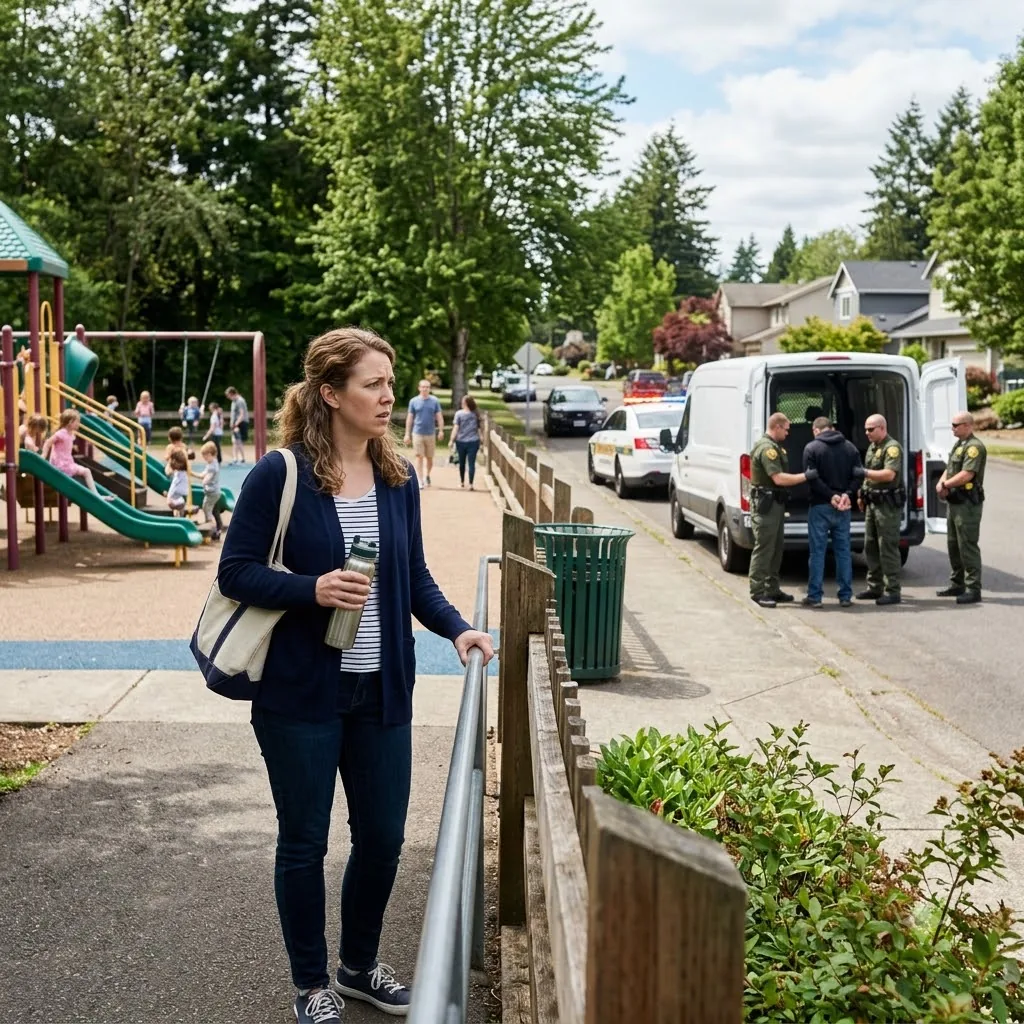
The metallic scrape of the rifle being pulled from Marcus’s shoulder strap echoed sharply over the playground woodchips. Sarah gripped the chain-link fence, releasing a long breath as the deputy locked the weapon into a rigid plastic evidence tube. The heavy clack of the tube shutting signaled the end of a six-month nightmare.
Marcus did not struggle as the second deputy cinched thick nylon zip-ties around his wrists. He just stared at the oak tree, his jaw set in the same stubborn line that had infuriated Sarah at every city council meeting. She had stood at the podium week after week, demanding the neighborhood be made safe, demanding the city enforce the new ordinance against open carry in public recreation zones. The mayor had signed it Tuesday. It was Friday morning, and the law was working exactly as she had designed it.
The playground was empty of children, the swings hanging motionless in the damp morning air. Sarah watched from the edge of the basketball court as the deputies patted Marcus down. They moved with a strange, synchronized efficiency. They did not wear the standard navy-blue uniforms of the county sheriff. Instead, they wore tactical grey vests over black long-sleeve shirts, their badges replaced by matte black Velcro patches bearing a serial number and a barcode.
Sarah frowned, adjusting her grip on her travel mug. She had expected flashing red and blue lights, the crackle of a police radio, the familiar black-and-white cruiser pulling up to the curb. Instead, a pristine white Ford Transit van idled silently on the grass near the drinking fountain. It had no municipal seals. No light bar. Just dark tinted windows and a blank license plate housing that held a temporary dealer tag.
The deputies guided Marcus toward the rear of the van. The heavy double doors swung open, revealing a stark, stainless-steel interior that looked more like a mobile veterinary clinic than a holding cell. Marcus stepped up into the back. The doors slammed shut with a heavy, vacuum-sealed thud.
One of the deputies turned to walk back to the driver’s seat. As he pulled a ring of keys from his belt, a folded piece of yellow paper slipped from his vest pocket. It fluttered down, landing perfectly flat on the damp grass next to the rusted base of the seesaw.
The deputy did not notice. He climbed into the driver’s seat, and the transit van pulled away immediately, its tires barely leaving a trace on the lawn as it merged onto the street and vanished around the corner.
The park was suddenly very quiet. The threat was gone. Sarah had won. The neighborhood was safe.
But her eyes stayed fixed on that bright yellow square on the grass. The color was entirely out of place against the muted greens and browns of the park.
She stepped off the concrete court and walked slowly across the playground. Her boots crunched against the woodchips. She knelt beside the seesaw and picked up the paper.
It was a carbon copy of a carbon copy, the text printed in the dot-matrix style of a commercial invoice. The header did not display a police department crest or municipal court seal. It bore the logo of a company called Apex Secure Holdings LLC, complete with a corporate routing number and a customer service extension.
Sarah ran her thumb over the waxy surface of the paper. She scanned down to the section labeled Asset Intake and Processing.
Beneath Marcus’s full legal name and address, the document listed a series of itemized charges. It did not list criminal statutes or bail amounts. It read like a predatory hospital bill.
There was a Subject Acquisition Fee for fifteen hundred dollars. Below that, a Transit Surcharge for four hundred dollars.
Sarah swallowed hard. She read the next line.
Daily Containment Unit Rental, Tier Two. Eight hundred and fifty dollars per day. Mandatory Minimum Duration thirty days.
Next to that line, a bolded subtext stated that all accumulated debts would be secured via automatic property lien against the subject’s primary residence upon intake.
This was not an arrest record. It was a pre-authorized billing statement.
She stared at the numbers, her mind struggling to reconcile the safety ordinance she had championed with the corporate invoice in her hand. The city council had promised a streamlined enforcement process to keep the parks safe. They had promised the new public-private partnership would save tax dollars.
She looked at the bottom of the invoice. The final line item was Firearm Confiscation and Destruction Processing. The fee was three thousand dollars. The total estimated billing for month one was over thirty-four thousand dollars, marked to accrue at eighteen percent interest after thirty days.
A cold knot formed in Sarah’s stomach. She had wanted Marcus disarmed and removed from the park. She had wanted to protect her kids from a stubborn ideologue parading around with a rifle. She had never asked to financially destroy him, to have an unnamed corporation seize his home to pay for his own cage.
A shadow fell over the yellow paper.
Sarah jerked her head up. A second white transit van had just turned the corner, rolling silently past the park entrance, slowing to a crawl directly in front of her house across the street.
The metallic scrape of the rifle being pulled from Marcus’s shoulder strap echoed sharply over the playground woodchips. Sarah gripped the chain-link fence, releasing a long breath as the deputy locked the weapon into a rigid plastic evidence tube. The heavy clack of the tube shutting signaled the end of a six-month nightmare.
Marcus did not struggle as the second deputy cinched thick nylon zip-ties around his wrists. He just stared at the oak tree, his jaw set in the same stubborn line that had infuriated Sarah at every city council meeting. She had stood at the podium week after week, demanding the neighborhood be made safe, demanding the city enforce the new ordinance against open carry in public recreation zones. The mayor had signed it Tuesday. It was Friday morning, and the law was working exactly as she had designed it.
The playground was empty of children, the swings hanging motionless in the damp morning air. Sarah watched from the edge of the basketball court as the deputies patted Marcus down. They moved with a strange, synchronized efficiency. They did not wear the standard navy-blue uniforms of the county sheriff. Instead, they wore tactical grey vests over black long-sleeve shirts, their badges replaced by matte black Velcro patches bearing a serial number and a barcode.
Sarah frowned, adjusting her grip on her travel mug. She had expected flashing red and blue lights, the crackle of a police radio, the familiar black-and-white cruiser pulling up to the curb. Instead, a pristine white Ford Transit van idled silently on the grass near the drinking fountain. It had no municipal seals. No light bar. Just dark tinted windows and a blank license plate housing that held a temporary dealer tag.
The deputies guided Marcus toward the rear of the van. The heavy double doors swung open, revealing a stark, stainless-steel interior that looked more like a mobile veterinary clinic than a holding cell. Marcus stepped up into the back. The doors slammed shut with a heavy, vacuum-sealed thud.
One of the deputies turned to walk back to the driver’s seat. As he pulled a ring of keys from his belt, a folded piece of yellow paper slipped from his vest pocket. It fluttered down, landing perfectly flat on the damp grass next to the rusted base of the seesaw.
The deputy did not notice. He climbed into the driver’s seat, and the transit van pulled away immediately, its tires barely leaving a trace on the lawn as it merged onto the street and vanished around the corner.
The park was suddenly very quiet. The threat was gone. Sarah had won. The neighborhood was safe.
But her eyes stayed fixed on that bright yellow square on the grass. The color was entirely out of place against the muted greens and browns of the park.
She stepped off the concrete court and walked slowly across the playground. Her boots crunched against the woodchips. She knelt beside the seesaw and picked up the paper.
It was a carbon copy of a carbon copy, the text printed in the dot-matrix style of a commercial invoice. The header did not display a police department crest or municipal court seal. It bore the logo of a company called Apex Secure Holdings LLC, complete with a corporate routing number and a customer service extension.
Sarah ran her thumb over the waxy surface of the paper. She scanned down to the section labeled Asset Intake and Processing.
Beneath Marcus’s full legal name and address, the document listed a series of itemized charges. It did not list criminal statutes or bail amounts. It read like a predatory hospital bill.
There was a Subject Acquisition Fee for fifteen hundred dollars. Below that, a Transit Surcharge for four hundred dollars.
Sarah swallowed hard. She read the next line.
Daily Containment Unit Rental, Tier Two. Eight hundred and fifty dollars per day. Mandatory Minimum Duration thirty days.
Next to that line, a bolded subtext stated that all accumulated debts would be secured via automatic property lien against the subject’s primary residence upon intake.
This was not an arrest record. It was a pre-authorized billing statement.
She stared at the numbers, her mind struggling to reconcile the safety ordinance she had championed with the corporate invoice in her hand. The city council had promised a streamlined enforcement process to keep the parks safe. They had promised the new public-private partnership would save tax dollars.
She looked at the bottom of the invoice. The final line item was Firearm Confiscation and Destruction Processing. The fee was three thousand dollars. The total estimated billing for month one was over thirty-four thousand dollars, marked to accrue at eighteen percent interest after thirty days.
A cold knot formed in Sarah’s stomach. She had wanted Marcus disarmed and removed from the park. She had wanted to protect her kids from a stubborn ideologue parading around with a rifle. She had never asked to financially destroy him, to have an unnamed corporation seize his home to pay for his own cage.
A shadow fell over the yellow paper.
Sarah jerked her head up. A second white transit van had just turned the corner, rolling silently past the park entrance, slowing to a crawl directly in front of her house across the street.