Story code: ST-000720
Part 1: The Canvas Duffel
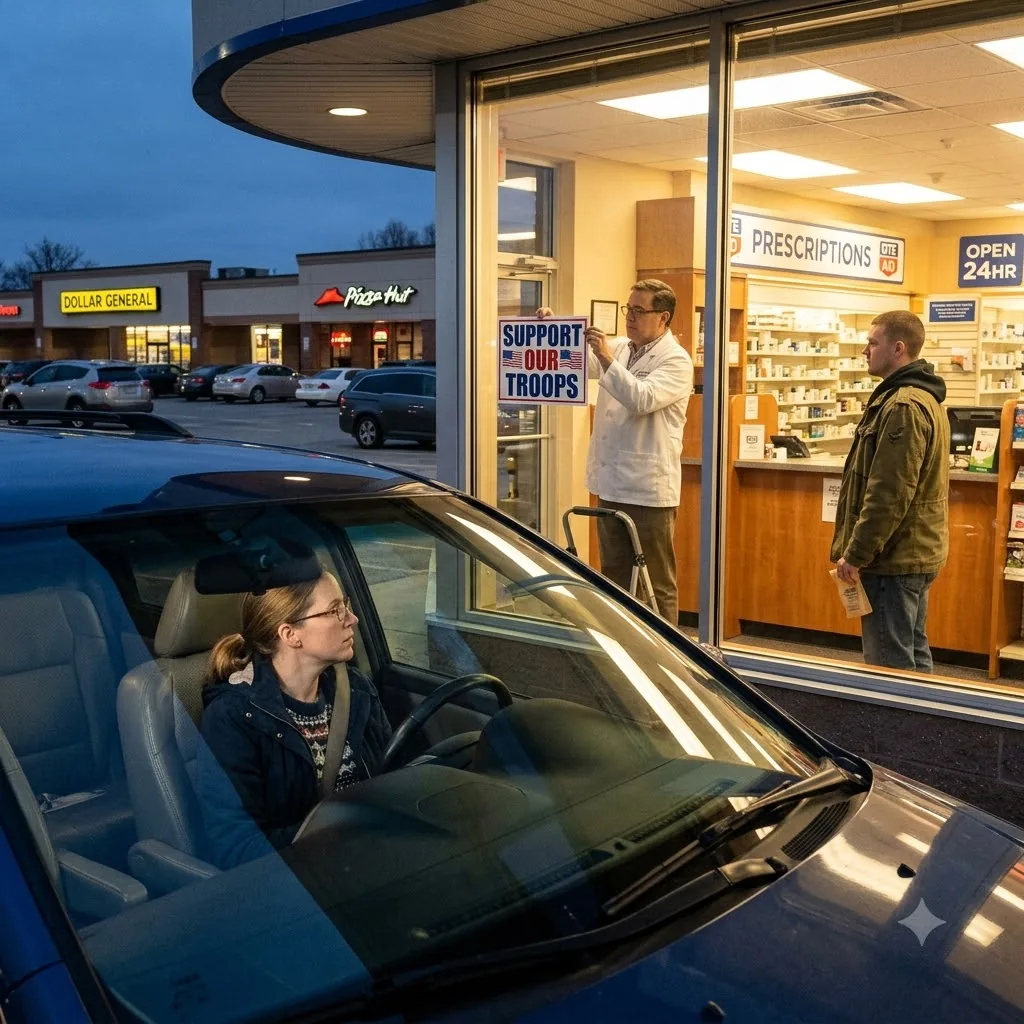
Brenda watched through the glare of her minivan windshield as the kid in the olive-drab surplus jacket braced his trembling hands against the pharmacy drop-off counter. The pharmacist, a man with perfectly parted silver hair and a crisp white coat, stepped back from the register. Instead of looking at the shaking young man, the pharmacist reached out to adjust a life-sized cardboard display. The bold red, white, and blue lettering arched over a printed soldier, declaring ‘Support Our Troops’ in bright, aggressive colors. The pharmacist aligned the cardboard boots perfectly with the edge of the consultation window, completely ignoring the physical collapse happening inches away.
Even through the double-pane glass of the storefront, Brenda could read the scene with absolute clarity. The veteran’s jaw clenched. His knuckles went white on the laminate surface as he leaned forward, his mouth moving in a desperate, rapid plea. The pharmacist shook his head, holding up a single, manicured finger in a gesture of absolute dismissal. He turned his back entirely, walking down a short aisle to alphabetize a row of allergy medications.
Brenda shifted in the driver’s seat. The vinyl burned through her jeans. She reached into the passenger footwell and hoisted a faded green canvas duffel bag onto the center console. Her movements were practiced, stripped of any hesitation. She unzipped the main compartment and pulled out four rectangular boxes of Narcan. She snapped a thick industrial rubber band around them, securing them into a tight, accessible block. She wedged the block back into the bag, nestling it right next to a manual blood pressure cuff, a sealed bundle of clean syringes, and a handful of bright blue tourniquets. She zipped the bag half-shut, leaving the opening wide enough for her hand to slide in without catching.
Outside, a hot summer wind lifted the heavy vinyl banners hung from the town’s streetlamps. Each banner featured the face of a local soldier in dress uniform, framed by golden laurels and civic pride. Brenda stared at the third pole down the avenue. The wind folded the vinyl over itself, obscuring the name and the young, smiling face printed there. Her chest tightened until her ribs ached. She forced her eyes away, refusing to look at the streetlamp, fixing her gaze back on the pharmacy window.
The boy in the surplus jacket had finally stepped away from the counter. He stumbled backward, his combat boots dragging on the linoleum, and fell heavily into one of the plastic waiting-room chairs. He pulled his knees tightly to his chest. He wrapped his arms around his legs, tucking his chin down as violent tremors began to shake his entire frame. The sweat on the back of his neck caught the fluorescent lighting.
The pharmacist returned to his register. An elderly woman with a wicker purse stepped up, sliding a greeting card and a box of mints across the scanner. The pharmacist smiled broadly, chatted with her, and then pointed directly to the cardboard soldier display. He tapped the plastic donation jar sitting right beside it. The woman nodded eagerly and dropped a folded dollar bill into the slot. The pharmacist beamed, handing over her receipt with a slight, theatrical bow. The boy in the chair squeezed his eyes shut, practically vibrating in his seat, utterly invisible to the commerce of patriotism happening exactly ten feet away.
Brenda felt the familiar, cold pressure building at the base of her skull. It was the same icy clarity that always came when the waiting was over and the time for observation had ended. She grabbed the heavy canvas handles of the duffel bag. The sheer weight of the medical supplies grounded her. She kicked the driver-side door open and stepped out onto the scorching asphalt. The afternoon heat hit her like a physical blow, thick with the smell of melting tar and car exhaust.
She locked the van with a sharp chirp of the key fob and strode toward the automatic doors. Her path took her directly under the row of memorial banners. The shadow of the third banner passed over her shoulders, offering a brief, useless second of shade. She did not look up. She kept her eyes locked on the sliding glass doors of the pharmacy, tracking the movements of the pharmacist as he turned his back again to file paperwork.
The doors parted with a mechanical hum. A blast of cold, sterilized air rushed over her face, carrying the sharp, institutional scent of rubbing alcohol and cheap lavender soap. The young veteran flinched at the sound of the doors, his head snapping up from his knees. His eyes were wide and blown out, darting around the room in sheer panic before fixing heavily on the floor tiles. The pharmacist looked up from his computer monitor, adjusting his wire-rimmed glasses. A default, customer-service smile began to stretch across his face.
The smile faltered immediately as Brenda bypassed the velvet line of stanchions. She did not follow the maze. She marched straight for the drop-off counter, her boots echoing sharply on the linoleum. The pharmacist opened his mouth, raising a hand to point toward the ‘Wait Here’ sign posted at the front of the queue.
Brenda did not slow down. She reached the counter, planted her feet, and swung the heavy canvas duffel off her shoulder in one fluid motion. She slammed it down onto the glass-topped consultation counter. The deafening crack echoed through the aisles, rattling the cardboard soldier display and silencing the store entirely.
Brenda watched through the glare of her minivan windshield as the kid in the olive-drab surplus jacket braced his trembling hands against the pharmacy drop-off counter. The pharmacist, a man with perfectly parted silver hair and a crisp white coat, stepped back from the register. Instead of looking at the shaking young man, the pharmacist reached out to adjust a life-sized cardboard display. The bold red, white, and blue lettering arched over a printed soldier, declaring ‘Support Our Troops’ in bright, aggressive colors. The pharmacist aligned the cardboard boots perfectly with the edge of the consultation window, completely ignoring the physical collapse happening inches away.
Even through the double-pane glass of the storefront, Brenda could read the scene with absolute clarity. The veteran’s jaw clenched. His knuckles went white on the laminate surface as he leaned forward, his mouth moving in a desperate, rapid plea. The pharmacist shook his head, holding up a single, manicured finger in a gesture of absolute dismissal. He turned his back entirely, walking down a short aisle to alphabetize a row of allergy medications.
Brenda shifted in the driver’s seat. The vinyl burned through her jeans. She reached into the passenger footwell and hoisted a faded green canvas duffel bag onto the center console. Her movements were practiced, stripped of any hesitation. She unzipped the main compartment and pulled out four rectangular boxes of Narcan. She snapped a thick industrial rubber band around them, securing them into a tight, accessible block. She wedged the block back into the bag, nestling it right next to a manual blood pressure cuff, a sealed bundle of clean syringes, and a handful of bright blue tourniquets. She zipped the bag half-shut, leaving the opening wide enough for her hand to slide in without catching.
Outside, a hot summer wind lifted the heavy vinyl banners hung from the town’s streetlamps. Each banner featured the face of a local soldier in dress uniform, framed by golden laurels and civic pride. Brenda stared at the third pole down the avenue. The wind folded the vinyl over itself, obscuring the name and the young, smiling face printed there. Her chest tightened until her ribs ached. She forced her eyes away, refusing to look at the streetlamp, fixing her gaze back on the pharmacy window.
The boy in the surplus jacket had finally stepped away from the counter. He stumbled backward, his combat boots dragging on the linoleum, and fell heavily into one of the plastic waiting-room chairs. He pulled his knees tightly to his chest. He wrapped his arms around his legs, tucking his chin down as violent tremors began to shake his entire frame. The sweat on the back of his neck caught the fluorescent lighting.
The pharmacist returned to his register. An elderly woman with a wicker purse stepped up, sliding a greeting card and a box of mints across the scanner. The pharmacist smiled broadly, chatted with her, and then pointed directly to the cardboard soldier display. He tapped the plastic donation jar sitting right beside it. The woman nodded eagerly and dropped a folded dollar bill into the slot. The pharmacist beamed, handing over her receipt with a slight, theatrical bow. The boy in the chair squeezed his eyes shut, practically vibrating in his seat, utterly invisible to the commerce of patriotism happening exactly ten feet away.
Brenda felt the familiar, cold pressure building at the base of her skull. It was the same icy clarity that always came when the waiting was over and the time for observation had ended. She grabbed the heavy canvas handles of the duffel bag. The sheer weight of the medical supplies grounded her. She kicked the driver-side door open and stepped out onto the scorching asphalt. The afternoon heat hit her like a physical blow, thick with the smell of melting tar and car exhaust.
She locked the van with a sharp chirp of the key fob and strode toward the automatic doors. Her path took her directly under the row of memorial banners. The shadow of the third banner passed over her shoulders, offering a brief, useless second of shade. She did not look up. She kept her eyes locked on the sliding glass doors of the pharmacy, tracking the movements of the pharmacist as he turned his back again to file paperwork.
The doors parted with a mechanical hum. A blast of cold, sterilized air rushed over her face, carrying the sharp, institutional scent of rubbing alcohol and cheap lavender soap. The young veteran flinched at the sound of the doors, his head snapping up from his knees. His eyes were wide and blown out, darting around the room in sheer panic before fixing heavily on the floor tiles. The pharmacist looked up from his computer monitor, adjusting his wire-rimmed glasses. A default, customer-service smile began to stretch across his face.
The smile faltered immediately as Brenda bypassed the velvet line of stanchions. She did not follow the maze. She marched straight for the drop-off counter, her boots echoing sharply on the linoleum. The pharmacist opened his mouth, raising a hand to point toward the ‘Wait Here’ sign posted at the front of the queue.
Brenda did not slow down. She reached the counter, planted her feet, and swung the heavy canvas duffel off her shoulder in one fluid motion. She slammed it down onto the glass-topped consultation counter. The deafening crack echoed through the aisles, rattling the cardboard soldier display and silencing the store entirely.